
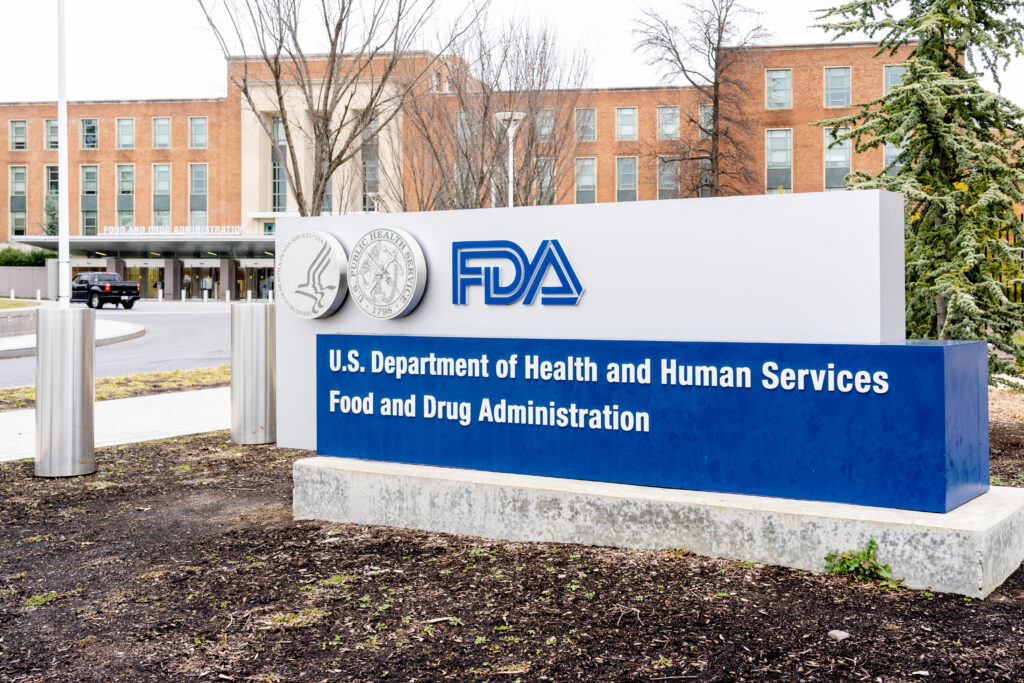
The FDA has finalized guidance outlining how the pharma industry should approach promotional labeling and advertising for prescription biological reference products, biosimilar products and interchangeable biosimilars to make sure they’re factual and accurate.
The document, Promotional Labeling and Advertising Considerations for Prescription Biological Reference Products, Biosimilar Products, and Interchangeable Biosimilar Products: Questions and Answers, provides guidance for industry with a clearer framework for developing promotional communications about complex biologics in a way that is accurate, non-misleading and consistent with FDA-approved labeling.
A revised draft of the document was issued on April 25, 2024, which has now been finalized with a minor revision to clarify that guidance recommendations apply “regardless of the medium of communication (e.g., paper, digital).”

The guidance, laid out in a Q&A format, aims to address common industry questions related to the promotion of biologics licensed under section 351(a) of the Public Health Service Act (PHS Act), along with biosimilar and interchangeable biosimilar products approved under section 351(k).
The FDA also issued the document to fulfill a Biosimilar User Fee Amendments of 2022 (BsUFA III) requirement to provide updated guidance specifically focused on promotional labeling and advertising considerations for interchangeable biosimilars.
The guidance outlines that to qualify as interchangeable, a biosimilar must not only demonstrate biosimilarity but also show it can be expected to produce the same clinical results as the reference product in any patient.
For products given more than once, the applicant must also prove that switching between the biosimilar and the reference product poses no greater safety or efficacy risk than staying on the reference product alone.
Interchangeable biosimilars may be substituted at the pharmacy level without a prescriber’s intervention.
The final guidance follows another industry draft guidance document that the FDA issued in October (Scientific Considerations in Demonstrating Biosimilarity to a Reference Product: Updated Recommendations for Assessing the Need for Comparative Efficacy Studies), which could remove the requirement for comparative efficacy studies for many biosimilar drug applications. This means biosimilars could be approved based on detailed analytical and pharmacokinetic data instead of expensive and time-consuming clinical trials, accelerating paths to approval.
XTALKS WEBINAR: Mastering Inspection Readiness for FDA’s AI Tool Elsa
Live and On-Demand: Monday, December 15, 2025, at 1pm EST (10am PST)
Register for this free webinar to learn how inspection readiness can evolve to meet the demands of AI-enabled regulatory oversight.

The guidance around promotional labelling and communications arrives at an important time as more biosimilars enter the US market and interchangeable designations expand, leading to increased promotional activity.
This has raised concerns about the potential for inaccurate comparisons, overstated claims or marketing that may confuse patients and prescribers about the similarities and differences between biologics and biosimilars.
At the core of the guidance is the FDA’s reminder that promotional labeling and advertising for all prescription biological products, whether a reference biologic, a biosimilar or an interchangeable biosimilar, must remain truthful, non-misleading and compliant with the Federal Food, Drug and Cosmetic Act.
This includes presenting a fair balance of benefits and risks and disclosing all material facts that would be relevant to prescribers or patients.
The agency stresses that promotional materials should not suggest clinical superiority, interchangeability or product differentiation where such claims are not supported by evidence or FDA approval.
The document covers the core requirements for promotional communications involving reference and biosimilar products, how companies should properly identify each product type in marketing materials and what considerations apply when presenting clinical study data that supported the reference product’s licensure, particularly when that information also appears in both products’ FDA-approved labeling.
The FDA also outlines what firms should keep in mind when making comparisons between a biosimilar and its reference product in promotional claims.
The guidance provides examples and addresses evolving marketing practices, scientific communication norms and different promotional channels.
In addition to outlining what companies should and should not do, the FDA highlights procedural expectations. Firms are encouraged, though not required, to submit draft promotional materials to the agency for voluntary advisory review prior to dissemination.
Once promotions are published or distributed, companies must comply with standard post-marketing submission requirements, including filing Form FDA 2253 with specimen copies of all promotional labeling and advertising.
The final guidance also reflects broader policy momentum around biosimilar adoption. The FDA expanded the scope of the document to explicitly include interchangeable biosimilars, fulfilling regulatory commitments under the BsUFA III.
The framework comes at a time of increasing scrutiny around pharma advertising. Earlier this year, the Trump administration, including HHS Secretary Robert F. Kennedy Jr., has been considering sweeping restrictions on direct-to-consumer (DTC) pharmaceutical advertising amid concerns about misleading claims and over-medicalization. If adopted, the changes could dramatically reshape how drugmakers market their products and how patients receive information about treatments.
In June, independent Senators Bernie Sanders of Vermont and Angus King of Maine also introduced the End Prescription Drug Ads Now Act, which would put a complete ban on pharmaceutical companies from engaging in DTC advertising across television, radio, print, digital platforms and social media.













Join or login to leave a comment
JOIN LOGIN