
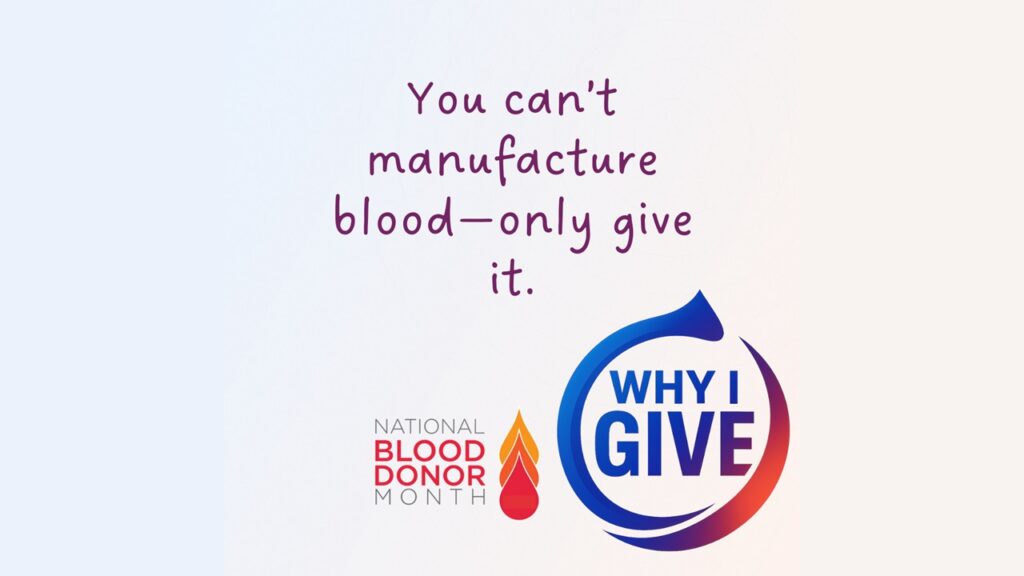
Every January, National Blood Donor Month shines a spotlight on one of the most essential yet often overlooked pillars of healthcare: the blood supply.
Established in the US in 1970 by President Richard Nixon, the month-long observance recognizes voluntary blood donors and raises awareness about the ongoing need for safe, reliable blood donations, especially during winter, when shortages are most common.
The initiative was established to recognize that volunteer blood donors are the only source of lifesaving blood products. Unlike many medical treatments that can be manufactured or synthesized, blood can only be provided through the generosity of individuals willing to help others in times of medical need and support healthcare systems.

In Canada, the Canadian Blood Services’ long-standing slogan, “Blood, it’s in you to give,” serves as a reminder that blood is physically in every eligible donor. You already have what patients need, no special skill, training or equipment required.
The Canadian Blood Services has also declared that it needs 1 million new donors by 2030 to “fuel Canada’s lifeline.”
Blood transfusions are a critical component of modern medicine. Approximately one in seven patients admitted to a hospital require blood.
From emergency trauma care and complex surgeries to cancer treatment and chronic disease management, donated blood saves millions of lives each year. Yet despite advances in medical technology, there is still no substitute for human blood.
According to the blooddonormonth.org, more than 6.8 million annual blood donations are needed in the US, and more than 13.6 million volunteer donors donate blood every year.
A Seasonal Strain on the Blood Supply
Winter months pose unique challenges for blood collection. Severe weather, seasonal illnesses such as the cold and flu, along with busy holiday schedules, often reduce donor turnout amid an increased risk of blood shortages.
According to blood collection organizations, donations typically drop in January, making it one of the most critical times of the year to encourage both new and returning donors.
This seasonal dip can have real consequences. Blood products have limited shelf lives: red blood cells last about 42 days, while platelets must be used within five days.
The Red Cross also cites the month of January as an often challenging time for the agency to collect blood products to meet the needs of patients, especially after a busy holiday season, it says.
“When fewer people donate, blood products can start to disappear from hospital shelves,” says the Red Cross.
Who Benefits from Blood Donations?
Every donation has the potential to help multiple patients. A single unit of blood can be separated into red blood cells, plasma and platelets, supporting a wide range of medical needs, including trauma and emergency care for accident victims; cancer treatments and bone marrow transplants; major surgeries, including cardiac and orthopedic procedures; obstetric care for complications during childbirth; and chronic conditions such as sickle cell disease and anemia.
Patients with sickle cell disease, in particular, rely on regular blood transfusions to manage symptoms and prevent life-threatening complications, underscoring the importance of a diverse donor pool.
Advances in Blood Donation and Artificial Blood Technologies
Innovation is transforming how blood is collected, tested and distributed. Advances in donor screening, pathogen testing and data analytics have improved both the safety and efficiency of blood systems worldwide.
Digital platforms and electronic health records are also helping blood organizations better manage inventories, forecast demand and personalize donor outreach. These tools are becoming increasingly important as healthcare systems face growing pressures from aging populations, complex treatments and public health emergencies.
Artificial blood innovations aim to address the limitations of donated human blood, its short shelf life, dependence on volunteer donors and challenges around matching, by developing substitutes that can perform specific functions, most notably oxygen transport.
Current approaches include hemoglobin-based oxygen carriers, perfluorocarbon compounds that dissolve oxygen, lab-grown red blood cells derived from stem cells and emerging nano- and bioengineered carriers.
There has been recent progress in artificial oxygen carriers (AOCs), which are designed to mimic red blood cells’ oxygen-transport function. These lab-synthesized oxygen-carrying liquids are being developed as substitutes for traditional transfusions and are advancing through various stages of preclinical and translational research, with the goal of supporting trauma and emergency care when donor blood isn’t available.
This year, Japan initiated one of the world’s first clinical trials of artificial blood using hemoglobin vesicles. The vesicles can be stored at room temperature for up to two years and do not require blood-type matching, a major potential breakthrough.
While these technologies show promise, particularly for emergency care, trauma settings, remote locations and patients with rare blood types, none can yet replicate the full range of functions performed by human blood, such as immune defense and clotting.
As a result, artificial blood is best viewed as a potential complement rather than a replacement for donated blood.
Who Can Donate?
While eligibility requirements vary by country and organization, most healthy adults can donate blood.
Many people are surprised to learn they qualify, and first-time donors often cite lack of awareness, not medical ineligibility, as the main reason they haven’t donated before.
National Blood Donor Month is an ideal time to learn about eligibility, donation types (such as whole blood, plasma or platelets) and how often individuals can donate safely. It’s also about recognizing the often-overlooked importance of blood donation and reminding people that donating blood is one of the simplest ways to make a tangible difference.
As healthcare systems continue to manage complex patient needs and prepare for unforeseen emergencies, a strong and resilient blood supply remains essential.













Join or login to leave a comment
JOIN LOGIN