

Chicago is gaining recognition as an emerging hub, drawing major new investments and national attention to the region’s potential. Rising healthcare needs, the cost of drug development and the demand for biomanufacturing capacity are further pushing stakeholders to look inland.
Xtalks Clinical Edge™: Issue 6 — Supporting Next-Gen Clinical Research to Advance Therapies
Xtalks Clinical Edge™ is a magazine for clinical research professionals and all who want to be informed about the latest trends and happenings in clinical trials. This magazine immerses you in a world where industry leaders, patient advocates and top researchers converge to provide the most insightful perspectives on clinical trials.

The Chicago Biomedical Consortium (CBC), supported by the Searle Funds at The Chicago Community Trust, was created to bridge the gap between academic science and clinical application, using structured programs to turn discoveries into venture-ready companies. Since 2021, Dr. Michelle Hoffmann, PhD, has served as the CBC’s Executive Director, where she reorganized the consortium to focus on commercializing local university science and training regional PhD talent in biotech translation.
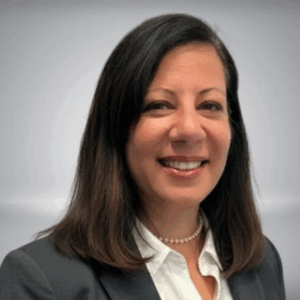
Executive Director
Chicago Biomedical Consortium (CBC)
In this Xtalks Clinical Edge interview, Dr. Hoffmann shares why the Midwest matters, how CBC supports translation from bench to bedside and what it takes to prepare the next generation of biotech leaders.
Why the Midwest Is the Next Frontier
Asked why Chicago and the Midwest are important for building a biotech hub right now, Dr. Hoffmann pointed to both tradition and opportunity.
“While coastal biotech hubs have shown the power of concentrated resources and collaboration, the next frontier lies in harnessing the vast amount of innovation emerging across the Midwest.”
She highlighted the region’s universities — Michigan, Chicago, Illinois, Northwestern, Washington University — as well as its strong history of engineering. “Just as the Midwest once led the way in building railroads, steel and construction equipment, today it’s poised to build a new generation of biological innovations, like new proteins, new nucleic acids and new cells.”
AI and computing power are now amplifying this ingenuity. “A lot of this is going to be driven not just by our engineering ingenuity, but by the computing power and AI that allows us to harness biology’s complexity, driving innovation across sectors and laying the foundation for a stronger bioeconomy.”
Chicago’s healthcare legacy also matters. “Our rich tradition of healthcare in Chicago and Illinois makes us understand not just how to make molecules, but how to make molecules that work for people.”
CBC’s Twofold Mission
Beyond company creation, the CBC is helping strengthen the biomedical ecosystem with a dual focus.
“The CBC has a twofold mission. The first is a problem that affects everyone, not just in the US but everywhere, which is that scientists make a lot of innovations; very few of them come out and become actual therapeutics.”
Instead of telling scientists what to discover, the CBC aims to apply private-sector rigor to advance translation of academic discoveries with the most potential into biopharma programs ready for venture or industry investment in Illinois.
Its second mission is driving economic growth and enhancing the regional ecosystem by establishing new biotech companies in Illinois and creating connectivity between academia, industry and investors.
Events like the CBC’s Chicago BioCapital Summit bring in global investors to meet innovators. The event first focused on Chicago’s universities, then expanded to Illinois, and now includes additional Midwestern universities to give investors a broader look at what the region has to offer. “We’ve been able to put Chicago and Illinois on the map, and that’s really important,” Dr. Hoffmann said.
– Michelle Hoffmann, PhD, Executive Director, Chicago Biomedical Consortium (CBC)
From Biology to Medicine
One of CBC’s core goals is tackling the innovation gap between academic breakthroughs and clinical trials. Why do so many ideas fail to make that leap?
“The fundamental building blocks for new therapeutics come from biology, which is what scientists study every day. But biology is not medicine. It’s related, of course, but turning biological discovery into a therapeutic is a completely different process.”
She explained that academics often study small areas of biology without the broader engineering perspective needed for therapeutic translation. As she emphasized earlier, “biotech is a team sport.”
The CBC examines projects through a broader approach, looking at science, competition, financing, manufacturing, regulatory and clinical development, even when discoveries haven’t yet entered animal models.
Her spinal cord injury example illustrates why product profiles must be defined early.
“For example, we have professors who are studying spinal cord injury, and they think that they have a novel way of repairing neurons in animal models, but that’s not the same as a human. A human has to take it. We know how spinal cord injury occurs. We know that there are different severities. We know that there’s a range of potential ways that if a treatment did work, it would affect the patient…”
She continued by laying out the range of possible outcomes:
- Walking again with no lasting problems
- Remaining wheelchair bound, but with improved dexterity to use a straw or fork
“These represent very different product profiles,” she said. And how they are defined ultimately shapes both animal studies and clinical trial design.
Without this structured approach, inventions could remain “simply biology.” Investors, with limited risk appetite, rarely support projects without a clear therapeutic pathway. And that’s the gap the CBC aims to close.
Navigating the Valley of Death
The conversation then turned to the “valley of death” in translational research.
“Well, again, we go back to it’s a team sport and it’s not something that professors should be able to navigate on their own, right? That’s not what they’re trained for.”
Dr. Hoffmann reflected on her own path: “I myself have a PhD. It took quite some time. My research career spanned about 10 years across undergraduate, graduate and postdoc education. It took me another 15 years after that to truly understand biotech.”
Simply adding funding is not enough, she said. “We need something in the middle. We need a structure that’s set up to take those inventions that come out of the university and make them ready for investors. And this is something we call the greenhouse.”
Within this greenhouse, some “seeds” won’t survive, but those that do can thrive in industry and venture environments. Many academics tend to fail because they form companies too early, without likely realizing how long and resource-intensive the process is. The CBC’s greenhouse could support the structure to evaluate viability before that leap.
– Michelle Hoffmann, PhD, Executive Director, Chicago Biomedical Consortium (CBC)
Not Just Exposure, but Building Cars
This work often centers around the CBC’s Entrepreneurial Fellows Program, which embeds junior scientists in translational projects to help move discoveries from university labs toward commercialization.
Asked whether the CBC’s work was akin to giving academics “practice” before they enter the real world, Dr. Hoffmann outlined the program’s significance with a simple but powerful analogy:
“Let me put it this way. You have a car. Somebody, somewhere in a university, developed all the ideas for that car: the combustion engine, the computer electronics and things like that. We don’t expect all those professors to form a company and build a car; in this case, car companies take that technology and put it together. But what if you have a technology that doesn’t exist yet? Each professor could build their own company. Or you could have a completely separate entity, like Ford, for instance, that says, ‘I’m going to take those components and I’m going to see if we can build something with them.’ We will talk to you about what you invented, how you invented it, and how useful it is. But we know how to build cars, and we are going to see whether we can take your parts and put them together into a car.”
The CBC acts like that assembler, bringing pieces together into viable entities while keeping academics involved, but not burdened with tasks beyond their expertise.
Anchoring Innovation & Retaining Talent in Chicago
How does the CBC ensure startups stay rooted in Chicago?
“Our strength lies in our homegrown approach, built on deep collaboration with leading local universities, including the University of Illinois, the University of Chicago and Northwestern.”
The Fellows program extends the CBC’s expertise, embedding trained scientists who work side by side with academics to develop products. These fellows aren’t traditional founders, but future operators committed to Illinois. Early spinouts already demonstrate how this approach helps companies remain in the region.
When asked how the CBC keeps talent from leaving for coastal hubs, Dr. Hoffmann emphasized the same strategy. “While it isn’t the academic’s job to launch companies themselves, many of their postdocs and graduate students are eager to do so. We aim to help grow the companies in a way that would enable those PhDs to stay here and work within these companies and contribute to building the biotech ecosystem here in Chicago and Illinois.”
Training the Next Generation
The CBC’s Entrepreneurial Fellows Program is now entering its fifth class, preparing the next wave of biotech leaders. The program immerses scientists in everything beyond the bench.
Dr. Hoffmann explained the skills and perspectives fellows need to develop in order to succeed:
- How healthcare is delivered in the US
- Why most drugs fail in Phase I and common pitfalls to avoid
- How money flows, from venture capital to pharma investments
- How to evaluate molecules: target engagement, off-target effects, preclinical validation
- Approaches to dosing and defining product profiles
- Manufacturing requirements, especially for biologics
- Regulatory steps, including Investigational New Drug (IND) filings and trial readiness
She emphasized that fellows don’t need to master all of these, but they must know who to consult. “There is no expert in biotech. And the people that say they are, it’s because they know the right people to ask.”
Policy and the Bioeconomy
Finally, Dr. Hoffmann turned to the role of policymakers. She noted that the US university system has long been one of the world’s strongest drivers of innovation and stressed the importance of safeguarding it for the future. She called for sustained university funding and stronger translational structures like the CBC. Lawmakers, she said, also need to ensure that innovations actually reach the American people, highlighting the importance of moving discoveries from labs into real-world applications.
Protecting the US bioeconomy, she added, is also a matter of national security, affecting not just health but food and fuel supplies. “There is a national security task force that was developed three or four years ago, to look at how the US is doing in terms of biotechnology. And this isn’t just for human health, this is for everything because it is a national security issue.”
With global competition accelerating investments, she argued, the US must strengthen its innovation and technology pipelines. Chicago, with its natural resources, universities and AI capabilities, is well-positioned to play a central role.
Through the CBC, Dr. Hoffmann is building a model that identifies high-potential discoveries, nurtures them through the greenhouse, anchors them with local talent and prepares fellows for leadership. As this interview reveals, the biotech map of the future won’t just be coastal, it will also run through the heart of the country.
If you want your company to be featured on Xtalks.com, please email [email protected].








Join or login to leave a comment
JOIN LOGIN