

As biologics pipelines expand across multiple therapeutic modalities, innovators are under growing pressure to align manufacturing strategy with the realities of clinical development. Early-phase programs often face fluctuating demand, compressed timelines and uncertainty around scale, making traditional large-scale infrastructure difficult to rely on alone.
In this Xtalks Spotlight interview, we spoke with experts from FUJIFILM Biotechnologies, Azam Razzaq, Senior Director of Bioprocess Strategy and Development, and Tibor Nagy, Director of Bioprocess Strategy and Development, about how next-gen single-use manufacturing ecosystems are addressing these challenges.

Senior Director of Bioprocess Strategy
and Development
FUJIFILM Biotechnologies

Director of Bioprocess Strategy
and Development
FUJIFILM Biotechnologies
Azam and Tibor discussed how flexible single-use facilities support rapid configuration, multi-modality processing and evolving approaches to scale. Beyond traditional scale-up and scale-out models, they explore how connected and continuous strategies, including scale-on, can help maintain productivity while preserving agility during early- and mid-stage development.
The conversation examined how standardized global platforms can reduce development risk as programs move between sites. They also explored how modern single-use designs are being engineered to improve sustainability by lowering water, energy and material intensity.
Speed as a Defining Requirement in Early-Phase Supply
For early-stage programs, timelines are often unforgiving. Delays in manufacturing readiness can ripple into trial start dates, funding milestones and overall program viability.
Tibor noted that early clinical programs rarely require continuous, high-volume production. Instead, demand is often intermittent, with one or two mid-scale batches needed around clinical trial timelines, making very large stainless-steel facilities a poor operational fit at this stage.
“For early-phase programs, speed is everything,” said Tibor. “Every week of delay in manufacturing can push back clinical trials, which jeopardizes the whole funding of innovators and increases program risk. This causes a big problem.”
Single-use manufacturing is not without trade-offs, particularly around material use and suitability for steady, high-volume commercial supply. However, Tibor emphasized that these considerations are often weighed against the realities of early- and mid-stage clinical demand, where flexibility and fast turnaround can be critical.
Single-use facilities are designed to remove some of the most time-intensive steps associated with traditional stainless-steel manufacturing. By eliminating cleaning-in-place (CIP) and sterilization-in-place (SIP) activities, teams can reduce turnaround time between campaigns and prepare suites more quickly for the next batch.
“With single-use, you can eliminate cleaning in place and sterilization in place activities, and quickly swap pre-sterilized flow paths,” Tibor said. “That allows much faster turnaround in the cleanrooms.”
This approach is particularly well-suited to the intermittent batch schedules typical of early clinical development, where demand may fluctuate and extended downtime can introduce unnecessary friction.
Moving Beyond Scale-Up: Introducing “Scale-On”
While scale-up remains essential for commercial supply, it is not always the best fit for clinical programs with variable demand. In response, manufacturers are increasingly combining scale-up, scale-down and scale-out strategies with newer productivity-focused approaches.
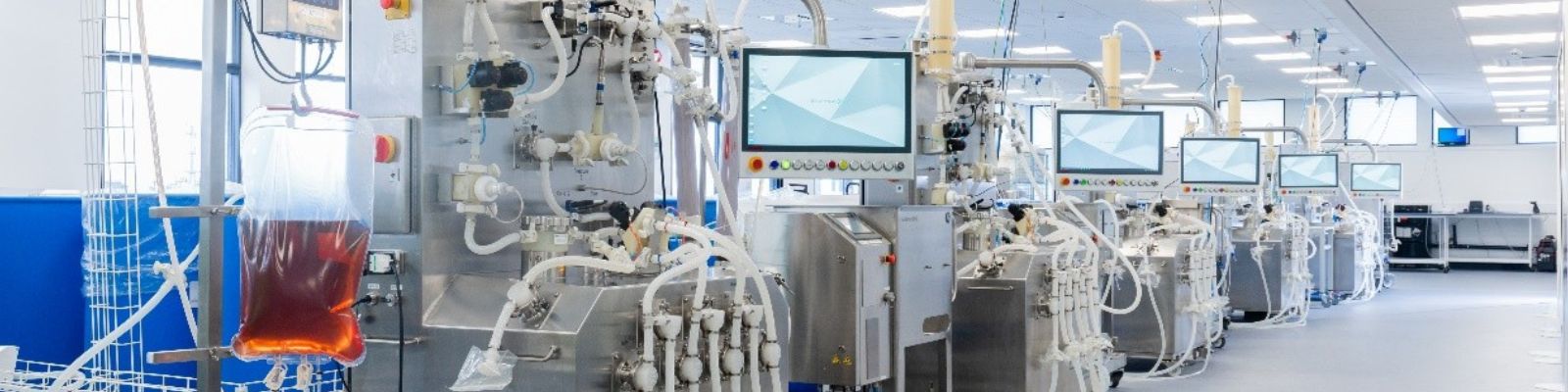
At FUJIFILM Biotechnologies, these scale-on approaches are supported by modular downstream platforms such as SymphonX™, which enable connected, parallel and continuous processing, as well as integrated upstream-downstream configurations deployed through platforms like MaruX™ within flexible facilities.
These approaches are deployed within flexible single-use facilities such as Borealis, a mid-scale, multimodal biologics manufacturing site in the UK.
“Scale-on allows a change in productivity, not just production,” said Azam.
Rather than increasing vessel size alone, scale-on approaches focus on how material moves through upstream and downstream operations. In traditional batch processing, each unit operation must complete all of its cycles before the next step can begin, which can introduce idle time.
Connected and parallel processing models allow downstream steps to begin as soon as material becomes available, enabling operations to overlap rather than run strictly sequentially and shortening overall processing time.
“By using connected parallel processing, once the first cycle is complete, we can immediately move to the next step,” Azam said. “That reduces overall processing time and can significantly increase facility throughput.”
In addition to improving schedule agility, these approaches can reduce hold times and limit overproduction, which is particularly important for products with stability constraints.
Reducing Development Risk Through Global Consistency
As programs progress through clinical milestones, they often move between sites or regions. Each transfer introduces the potential for variability, revalidation and retraining, all of which can add risk.
Azam explained that aligning processes, equipment and operator expertise across sites helps reduce variability as programs move through development.
This consistency is supported by kojoX™, a global manufacturing philosophy that guides how facilities are designed, operated and digitalized across sites.
Azam outlined how kojoX informs process development by establishing defined operating ranges that align with facility and equipment capabilities as programs advance. He noted that this is supported by a unified digital backbone across modular facilities, including harmonized control systems and electronic batch documentation, which can simplify data capture, review and release. Over time, integrating these systems into connected and continuous processing formats may support higher levels of automation.
Standardized facility layouts, harmonized workflows and consistent equipment families help reduce friction during site transfers. Familiar systems allow operators to apply existing knowledge, while shared qualification approaches limit duplication of effort.
“Using the same equipment families across the global network allows us to qualify systems once and leverage that experience at other sites with reduced effort,” Azam said.
Azam added that this approach helps reduce deviations, lowers equipment qualification and training burdens. This enables faster alignment across global teams, allowing programs to operate more consistently regardless of where they are executed.
Sustainability Without Sacrificing Speed or Flexibility
Sustainability has become a core expectation in biomanufacturing, but environmental goals must be balanced against the need for speed and flexibility in clinical supply.
“Reducing environmental footprint does not compromise operational efficiency in modern single-use facilities,” Tibor said.
Eliminating CIP and SIP processes significantly reduces water for injection requirements and avoids the need for large volumes of cleaning solutions and rinse cycles. Tibor also pointed to on-demand, right-sized buffer preparation as an important sustainability lever, helping reduce excess storage, transport and waste.
Energy efficiency is improved by removing steam and gas-fired boilers from the facility, reducing overall utility demand. Tibor noted that modern single-use facilities can further lower energy intensity through smaller cleanroom footprints enabled by modular skids, the use of ozonated (“cold”) water for injection systems and the incorporation of heat-recovery approaches.
He also addressed common concerns around material use in single-use systems, noting that disposable flow paths can be reused within validated campaign windows and that flexible facility design helps avoid rebuilds, excess capacity and overproduction.
“By removing steam in place and cleaning in place, optimizing the water for injection and buffer management, reusing the flow path and designing the facility for energy recovery, we can shrink the environmental footprint significantly. The facility remains modular and configurable, and therefore, we maintain the speed and agility required by modern biologics programs,” Tibor concluded.
In the interview, Azam and Tibor brought to light how early manufacturing decisions are increasingly shaping clinical outcomes, particularly when flexibility, standardization and connected processing are designed in from the outset.
This article was created in collaboration with the sponsoring company and the Xtalks editorial team.






Join or login to leave a comment
JOIN LOGIN