
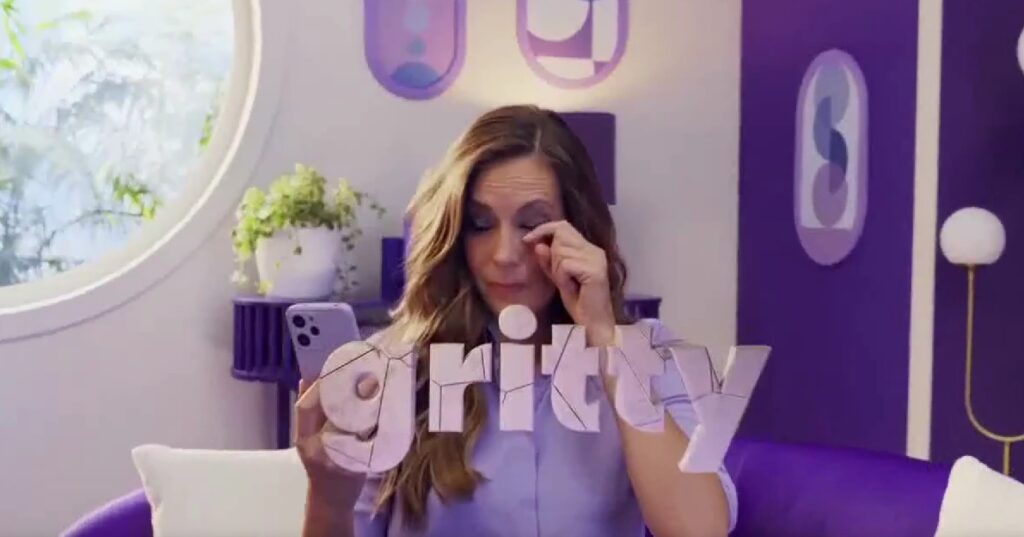
Bausch + Lomb enlisted American sportscaster Erin Andrews last year as the face of its “MIEBO ohh yeah” campaign. The partnership aims to raise awareness about both dry eye disease (DED) and the Miebo’s differentiated approach to treatment.
Andrews was at a campaign pop-up installation in Times Square as part of the campaign.
The campaign features a 45-second ad that opens with familiar scenarios: someone rubbing their eyes after prolonged screentime, another blinking under bright light and people playing video games. A shorter 15-second version of the ad is also available on iSpot.tv.

The ad opens with the narrator asking, “Dry eyes still, gritty? Let them feel Meibo, ohh yeah.”
Unlike traditional DED treatments that emphasize inflammation, Miebo’s messaging focuses on tear evaporation, a root mechanism increasingly recognized in the ocular surface disease field.
Related: Tryptyr (Acoltremon) Wins FDA Nod, Offering a New Mechanism for Treating Dry Eye Disease
According to Bausch + Lomb, tear evaporation is “the top cause” of DED, and the brand’s messaging explicitly highlights this differentiation.
As part of an integrated multichannel rollout, the company is running immersive brand activations in New York, such as 3D billboards in Times Square from October to December and a “MIEBO Experience” photo booth exhibit, which opened October 14, to explore common scenarios that can lead to dry eye symptoms, such as airplanes and frequent flying.
The New York events are part of a national push that spans TV, digital and social media, as well as influencer partnerships, connecting through the shared tagline, “Miebo ohh yeah.”
As part of the broader campaign, Andrews will share her own experience with DED.
By showing everyday environments, screen-driven work, outdoor light, social interaction, the ad aims to highlight the discomfort of DED and make prescription treatment feel relevant earlier and more integrated in the patient journey.
In a category crowded with anti-inflammatory drops, Miebo stakes a claim on tear evaporation, which may resonate with prescribers and patients alike.
Approved by the FDA in May 2023, Miebo is billed by Bausch + Lomb as the first prescription drop designed to directly address tear evaporation. The drug forms a protective layer on the ocular surface to slow evaporation, which the company characterizes as the leading cause of DED.
Because most rival therapies work through different mechanisms (e.g., inflammation control or tear production), Bausch + Lomb has leaned into education and marketing to underscore what sets Miebo apart.
The ad doesn’t deeply communicate how quickly relief can be expected or what severity of disease is targeted.
The campaign arrives at a time of expansion within the DED space, marked by growing patient awareness, increasing screen-time and rising demand for prescription solutions beyond over-the-counter drops.
Miebo’s early commercial success signals are strong: Bausch + Lomb raised its full-year sales guidance from ~$95 million to $150 million to $160 million, after Q2 generated ~$42 million in revenue.
Bausch + Lomb CEO Brent Saunders is projecting peak sales to hit well over $500 million.
As more therapies emerge (meibomian gland dysfunction, tear-film stabilizers), Bausch + Lomb continues to focus on tear evaporation as a key differentiator.
The dry eye market continues to grow with new entrants. In June, the FDA approved Alcon’s Tryptyr (acoltremon), the first TRPM8 receptor agonist touted to treat both the signs and symptoms of DED by stimulating natural tear production.









Join or login to leave a comment
JOIN LOGIN