
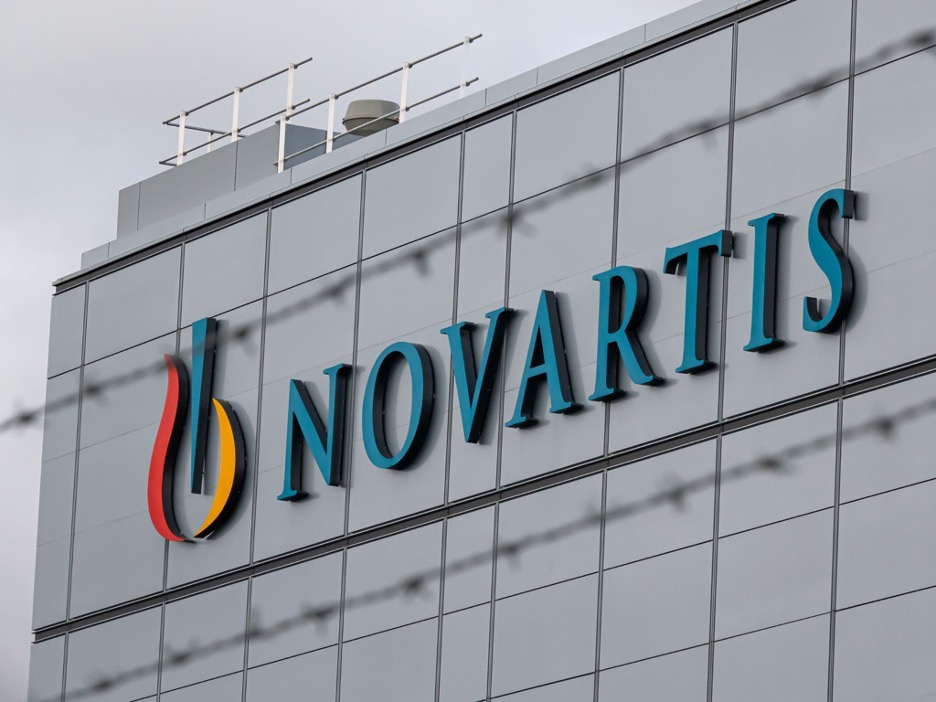
Novartis is continuing its global restructuring efforts, with the company confirming another round of layoffs affecting 114 employees at its US headquarters in East Hanover, New Jersey.
The move reflects an ongoing strategic shift aimed at streamlining operations and focusing on core growth areas.

The layoffs were outlined in a WARN notice, according to which the layoffs will take effect June 26 to November 27 this year.
The latest cuts are part of a broader transformation initiative that Novartis has been executing over the past few years. The company has been working to simplify its organizational structure, improve efficiency and sharpen its focus on innovative medicines following its spin-off of Sandoz in 2023.
The Swiss pharma has also been gradually reducing its US workforce in recent years. With the separation of its generics and biosimilars arm Sandoz, Novartis’ US workforce fell by nearly 12% year over year to 12,846 full-time equivalents in 2023. By the end of last year, the company reported 12,556 full-time employees in the country.
Novartis has implemented multiple rounds of cuts linked to its New Jersey headquarters alone. In September, the company outlined plans to lay off 58 employees within its US medical affairs organization. Earlier in 2025, a broad restructuring of its cardiovascular commercial unit impacted 427 roles.
On a global scale, Novartis is among a small number of major pharmaceutical companies that have consistently reduced headcount annually between 2021 and 2025, according to recent industry analysis.
While Novartis has positioned these changes as necessary to remain competitive in a rapidly evolving pharmaceutical landscape, the restructuring has resulted in repeated workforce reductions across multiple sites.
While Novartis’ US commercial and general and administrative functions have been scaled down, Novartis expanded its manufacturing workforce by 25% last year to 1,479 employees.
In line with an industry-wide push to mitigate potential pharmaceutical tariffs under the Trump administration, the company also announced a $23 billion investment in February to strengthen its US manufacturing and R&D footprint.
Related: Pharma and Biotech Layoffs 2026 Watch
Novartis Breaks Ground on $23B Biomedical Research Hub in San Diego
Over the past year, several major companies have announced workforce reductions as they restructure pipelines to cut expenses and prioritize late-stage or high-return assets.
Many pharma job cuts are a part of restructuring efforts linked to looming patent cliffs. Novartis is facing a significant patent cliff over the next few years, with the most pronounced pressure expected around 2025 to 2026. This period is expected to mark a peak wave of loss of exclusivity for several key products, most notably the company’s major heart failure therapy Entresto (sacubitril/valsartan), which represents a substantial portion of the company’s revenue base.
Novartis recently lost a legal bid to block a US generic version of Entresto from entering the market before patent expiration in November 2026. Following the court ruling, MSN Pharmaceuticals launched its generic Novadoz in the US in July 2025. The product, sold through Novadoz Pharmaceuticals, is available in all doses, providing a lower-cost alternative to the brand-name, with options to save over 90% via GoodRx.
Other products, including asthma blockbuster Xolair (omalizumab), as well as hematology and oncology assets such as Promacta (eltrombopag) and thrombocytopenia drug Tasigna (nilotinib), are also expected to face generic or biosimilar competition during this timeframe.
The company has previously indicated that 2026 will be a particularly important year for operating profit pressure due to these expiries, describing it as one of its most significant patent loss periods to date.
However, this near-term impact is expected to be temporary, as Novartis continues to build out its newer growth portfolio. Key products such as psoriasis drug Cosentyx (secukinumab), oncology treatments Kisqali (ribociclib), Scemblix (asciminib), Pluvicto (lutetium Lu 177 vipivotide tetraxetan) and cholesterol-lowering injection Leqvio (inclisiran) are protected well into the 2030s and are expected to help offset revenue losses over time.
Novartis is also advancing several new rare disease launches in autoimmune indications, including BTK inhibitor Rhapsido (remibrutinib) for chronic spontaneous urticaria (CSU). The company is also introducing two therapies for rare kidney diseases, Vanrafia (atrasentan) and Fabhalta (iptacopan), for IgA nephropathy.
Meanwhile, its dual-mechanism, B-cell-depleting antibody ianalumab (VAY73) is approaching market entry following two positive Phase III trials in Sjögren’s syndrome, with a pivotal first-line immune thrombocytopenia (ITP) readout anticipated later this year.










Join or login to leave a comment
JOIN LOGIN