
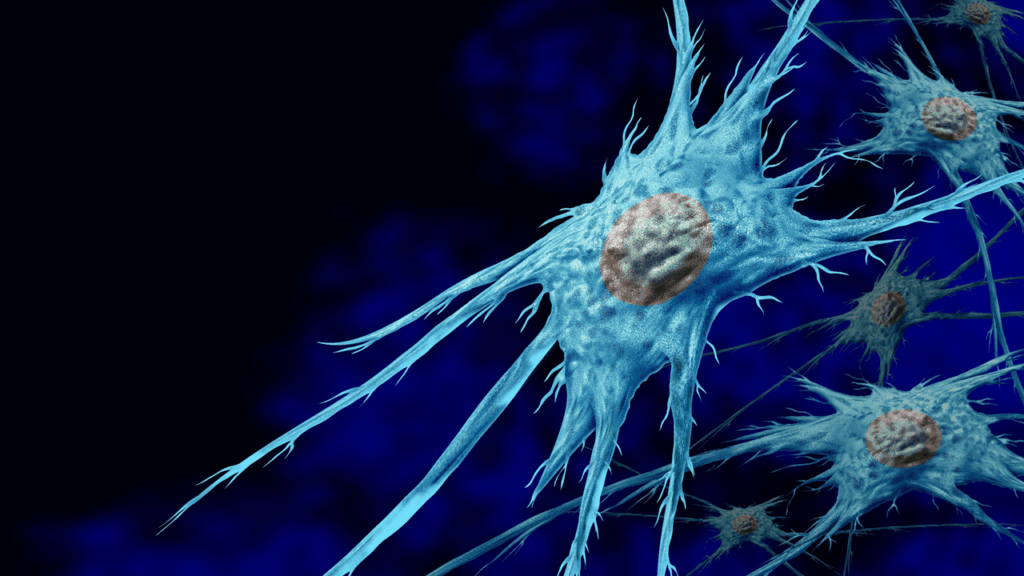
While stem cells and CAR-T therapies have dominated cell-based research headlines for over a decade, one Houston-based biotech believes another cell type could quietly transform the field.
FibroBiologics, a clinical-stage biotech company, is investigating the use of fibroblast cells as therapeutic agents to treat chronic diseases ranging from multiple sclerosis (MS) and degenerative disc disease to wound healing, cancer and even age-related immune decline.

Chairman, CEO and Founder
FibroBiologics

CSO
FibroBiologics
Leading this effort are Pete O’Heeron, Founder, Chairman and CEO, and Dr. Hamid Khoja, the company’s Chief Scientific Officer.
Together, they’ve built one of the world’s largest intellectual property portfolios focused on fibroblast-based therapeutics, with more than 270 patents and applications.
They’re advancing the first clinical program designed to bring these cells from the lab to the clinic.
“There are two main types of cells you can use to treat chronic disease and regenerate tissue: stem cells, which everyone’s heard of, and fibroblasts, which almost no one has heard about in a therapeutic context,” O’Heeron said.
Read Xtalks Clinical Edge™ Issue 6
Xtalks Clinical Edge is a magazine for clinical research professionals and all who want to be informed about the latest trends and happenings in clinical trials. This magazine immerses you in a world where industry leaders, patient advocates and top researchers converge to provide the most insightful perspectives on clinical trials.

Why Fibroblasts May Outperform Stem Cells
Fibroblasts are the body’s most abundant connective tissue cells, responsible for producing extracellular matrix proteins such as collagen and fibronectin that maintain structural integrity and promote healing.
Unlike stem cells, which have been shown to spontaneously differentiate, fibroblasts are fully differentiated and highly resilient under culture conditions, enabling reproducible manufacturing and consistent therapeutic output.
As O’Heeron and Khoja detailed in a recent article comparing fibroblasts and stem cells, the two share several surface markers and regenerative capabilities, yet fibroblasts demonstrate greater stability, faster proliferation and easier scalability for therapeutic use.
– Pete O’Heeron
O’Heeron explained this distinction with characteristic clarity: “Stem cells are inherently unstable; they want to be anything other than what they are. Fibroblasts, on the other hand, are stable, fully differentiated and durable. You can harvest them from a small skin biopsy and generate hundreds of thousands of doses from that single sample.”
FibroBiologics’ research suggests that fibroblasts combine the regenerative and immune-modulatory benefits of mesenchymal stem cells (MSCs) with superior scalability, stability and cost efficiency. The company’s early studies indicate that fibroblasts not only survive better in culture but also maintain their normal characteristics even after many rounds of expansion, a crucial factor for clinical-grade manufacturing.
Lessons from Early Studies: Potency, Stability and Novel Formulations
As the first team to potentially use fibroblasts therapeutically, FibroBiologics has had to chart new territory in both science and process development.
“Everything we’re doing is brand new,” said Khoja. “We’re learning new lessons every day.”
One of the team’s key innovations lies in delivering fibroblasts as three-dimensional spheroids rather than single-cell suspensions. “We’ve found that when fibroblasts are administered in spheroid form, they elicit a much lower immune response, exactly what you want from a therapeutic cell,” Khoja explained. “You don’t want the immune system attacking the cells you’re introducing.”
The company has also optimized methods to differentiate fibroblasts into other cell types, such as chondrocytes (cells critical for cartilage repair), in as little as three days. “We hope to fine-tune that process to produce a therapeutically usable product very quickly, and we’ve secured patent protection on that capability,” Khoja added.
Perhaps one of the most intriguing findings involves the role of fibroblasts in human longevity. FibroBiologics has developed organoids containing fibroblasts that restore thymic function, enabling the production of new T-cells in animal models. The company is progressing this technology toward clinical development.
“By your sixties, you’ve lost about 90% of your thymic function,” Khoja said. “When that happens, your immune system no longer recognizes or destroys cancer cells effectively. By stabilizing organoids with fibroblasts, we’ve been able to recover that lost immune functionality.”
Manufacturing at Scale: From CDMO to In-House GMP Plans
As fibroblast-based therapies advance toward clinical testing, manufacturing remains a critical focus. FibroBiologics has partnered with a CDMO to produce its first clinical batches, including spheroid formulations, for an upcoming Phase I/II trial in diabetic foot ulcers planned for early 2026.
“This is the first time a CDMO has manufactured fibroblast spheroids for therapeutic use,” Khoja noted. “It’s been challenging, but our partners have been instrumental in helping us optimize the process.”
The company’s long-term goal is to bring manufacturing in-house within its Houston facilities, which have been designed with GMP capabilities in mind.
“Once the diabetic ulcer trial concludes, we plan to expand internal production for our other clinical programs,” said Khoja. “Full control over manufacturing will allow us to ensure quality, consistency and scalability as we move into additional indications.”
Translating Fibroblast Science into Multiple Clinical Applications
FibroBiologics views fibroblast therapy not as a single treatment, but as a platform technology capable of generating multiple therapeutic verticals. “We’re not only developing platforms, we’re developing platforms inside a platform,” O’Heeron explained.
For example, the company’s wound care program begins with diabetic foot ulcers but is expected to expand to other chronic and post-surgical wounds, burn injuries and perhaps even consumer wound-healing products.
“Eventually, you may see this technology in over-the-counter bandages that help wounds close faster and heal better,” O’Heeron said.
Beyond wound healing, FibroBiologics is developing programs for degenerative disc disease and orthopedic applications, alongside its human longevity platform that focuses on immune rejuvenation through thymic organoid restoration.
“Hamid’s team is working on exciting early-stage orthopedic research,” O’Heeron added. “Each of these represents a platform in itself.”
The Path to the Clinic: Immune Modulation and Chronic Disease
Dr. Khoja sees fibroblasts making their first major impact in chronic diseases driven by immune dysfunction. “Our data show that these cells are potent immune modulators,” he said.
“They help bring the immune system back into homeostasis, which can reduce chronic inflammation and support the body’s natural regenerative processes.”
This dual effect of modulating immune activity while promoting tissue repair positions fibroblast therapy as a potential disease-modifying approach for conditions such as MS, psoriasis, rheumatoid arthritis and type 1 diabetes.
Looking ahead, Khoja envisions fibroblast-based treatments not only for managing chronic inflammation but also for preventing its onset in at-risk populations.
“If you can stabilize immune regulation early,” he said, “you may be able to prevent cardiovascular, renal and hepatic diseases before they manifest.”
Redefining the Cell Therapy Landscape
Both O’Heeron and Khoja believe fibroblasts could fundamentally reshape the cell therapy field.
“Stem cells have potential, but they’ve turned out to be far more difficult to manufacture and scale than people expected,” said Khoja. “Fibroblasts don’t have those limitations.”
O’Heeron agreed, noting that the simplicity, stability and potency of fibroblasts could enable widespread clinical adoption. “You’ve only seen one stem cell product reach approval in recent years, and that’s because of instability and complexity,” he said. “Fibroblasts are robust, consistent and cost-effective. They can shape the next decade of cell-based therapeutics.”
As awareness grows, the team hopes the field will begin to recognize fibroblasts not merely as structural support cells but as active therapeutic agents capable of influencing immunity, regeneration and longevity.
– Dr. Hamid Khoja
The Next Chapter in Cell Therapy Innovation
With 270+ patents, multiple therapeutic platforms and first-in-human studies on the horizon, FibroBiologics is driving progress at the intersection of cell biology and clinical translation.
By unlocking the therapeutic potential of fibroblasts, which are the body’s most abundant cells in connective tissue, the company aims to make regenerative medicine more stable, scalable and accessible for chronic diseases that have long lacked durable solutions.
As O’Heeron put it, fibroblasts “actually began the entire stem cell revolution,” and today, they may be poised to lead a new one of their own.










Join or login to leave a comment
JOIN LOGIN