

Often dismissed as a mild discomfort, dry eye disease (DED) can have profound physical, psychological and social impacts.
DED affects an estimated 16 million people in the US, yet only a fraction receive consistent treatment.
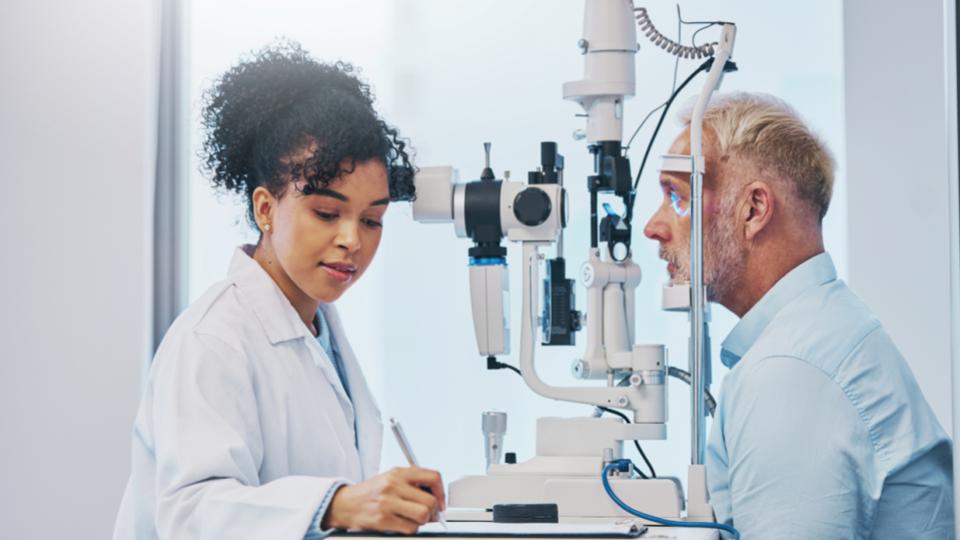
In an interview with Xtalks, Elizabeth Jeffords, CEO of Iolyx Therapeutics, shares how Iolyx is shifting the paradigm with a precision immunology approach to treatment.
Read Xtalks Clinical Edge™ Issue 6 Featuring Iolyx Therapeutics and More
Xtalks Clinical Edge is a magazine for clinical research professionals and all who want to be informed about the latest trends and happenings in clinical trials. This magazine immerses you in a world where industry leaders, patient advocates and top researchers converge to provide the most insightful perspectives on clinical trials.

The Hidden Burden of Dry Eye Disease
“People think that this is a small problem or a small disease, and it’s just not,” said Jeffords. “This isn’t rare, it’s not unusual. We know that it happens, and we should be able to get those patients to the doctor and get them on some sort of drugs.”
Despite its high prevalence, DED remains vastly underdiagnosed. On average, patients report seeing multiple doctors before receiving a formal diagnosis and beginning treatment.
Jeffords believes part of the delay stems from how DED is perceived, not as a serious, vision-robbing or quality-of-life impacting condition, but rather as a minor nuisance.
“And I think one last reason why it’s underdiagnosed and underreported and undertreated is that it is predominantly female,” she said. “And we all know that in women’s health, it’s something that we miss. We don’t ask women what’s really happening with their health.”
DED is more prevalent among women and becomes increasingly common with age, especially in postmenopausal individuals.
According to a national epidemiological analysis, the likelihood of developing dry eye increases significantly after age 50, indicating a clear link between hormonal changes and ocular surface dysfunction.
More Than Discomfort: The Mental Health Toll
DED is far more than eye irritation.
Jeffords paints a vivid picture: “If you think about all the times you’ve had an eyelash in your eye or a piece of dirt in your eye… if you imagined having that eyelash in your eye, but every hour of every day and you had no tears to wash it out, that is what dry eye feels like.”
This ongoing irritation is not only painful but also isolating. In fact, nearly 67% of patients make lifestyle adjustments solely to manage their symptoms. Among these, 32% reduce their screen time and 25% avoid outdoor activities like walking or driving in windy weather. These adjustments, although subtle, significantly impact personal freedom and daily life.
DED can also affect mental health. Studies show that over 25% of patients report symptoms of depression or anxiety. This connection between ocular discomfort and psychological distress is becoming increasingly recognized in ophthalmic care.
“Only 20% of patients say that their treatments actually make a difference,” Jeffords added. “So it’s time for us to all do something.”
Rethinking Clinical Development
While drug development in ophthalmology advances, DED presents unique challenges. Jeffords credits the FDA with providing clear guidance that requires both a measurable symptom (such as dryness or pain) and a sign (like corneal staining) as endpoints for clinical trials.
“We really like to do trials that are real life, real patients in their real experience.”
— Elizabeth Jeffords
“What’s really fascinating is that you don’t always have the signs correlating with the symptoms,” she noted. “When you get very severe disease, you can actually lose sensation in the eye. So if you start to feel better in your dry eye, sometimes that’s not a good sign.”
Iolyx favors real-world clinical trials over testing models like dry eye chambers, emphasizing the importance of real-world effectiveness.
Decentralization and Digital Tools
Jeffords is enthusiastic about decentralized clinical trials (DCTs), especially for DED.
“This is something, a product that you’ll use at home. It is an eye drop. So decentralized trials are great.”
She believes digital health tools can expand access and speed up diagnosis.
“Now we have homegrown apps where you can take a picture on your camera of your fundus or your retina or your cornea and send that into your ophthalmologist. That advance could be really profound for retinal health.”
Uncovering the Autoimmune Connection
Recent research suggests that up to half of DED patients have an underlying autoimmune disease. Iolyx is building its pipeline with this patient subset in mind.
“If you have these TH17 and TH1 immune cells, they turn on the fire alarm in the body,” explained Jeffords. “You don’t get systemic drugs into the eye. They just don’t pass through the eye in the same way that they do to the rest of the body.”
Iolyx’s solution is to deliver targeted therapies directly to the eye, addressing local inflammation.
“Can we look at those patients with autoimmune disease where their alarm bells are ringing in their eyes… and get a drug locally to the eye that could then help with that alarm fire?”
Precision Immuno-Ophthalmology
Jeffords envisions a future for ophthalmology that mirrors the trajectory of oncology.
“We learned that breast cancer isn’t breast cancer. Breast cancer is HER2-positive or triple-negative breast cancer. And you don’t treat them the same way,” she said. “Yet that’s what we’ve been doing with dry eye. We’ve been treating everybody the same way.”

Iolyx Therapeutics
The future, she believes, lies in precision immuno-ophthalmology, where treatment is customized based on underlying causes, especially immune involvement.
Iolyx is preparing for Phase III trials. “We’ve seen really lovely results so far on our corneal staining and our symptoms,” Jeffords said. “We want to bring that forward and get patients involved in trial and testing these drugs.”
As research into DED accelerates, the focus is shifting from symptom relief to understanding the underlying causes, including the immune and hormonal factors that drive the condition in millions of patients.
With precision therapies on the horizon and real-world clinical trials embracing patient diversity, innovators like Iolyx Therapeutics are helping to reframe DED not as a minor irritation but as a chronic disease worthy of serious medical attention.
“We’re not just making better eye drops,” said Jeffords. “We’re changing how we think about eye disease.”












Join or login to leave a comment
JOIN LOGIN