
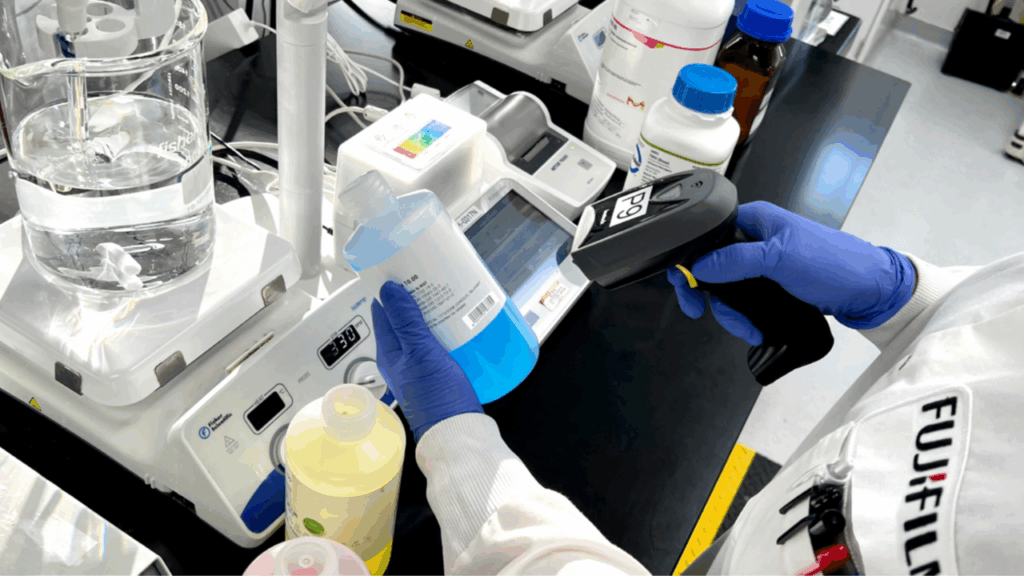
It is a common misconception that the road to a successful biologic formulation is a well-worn and well-known path that is easy to travel. We must keep in mind that every molecule has its own “personality,” and therefore can respond very differently to stressors, conditions, and formulation components, even if the only change is one amino acid. The road that seems to be well-traveled will inevitably have some surprising twists and turns that are better navigated with strong, scientific, data-driven decisions along the journey. Successful formulation journeys start with a roadmap where scientific studies and decision points are used to create a route for understanding a molecule’s personality and viability to help it along the way to the ultimate user — the patients. In formulation development, the roadmap is composed of molecular information that is collected using innovative, information-rich, and scientifically sound computational, biophysical, and biochemical analysis. With our proven techniques and methods, we collect as much information as possible about your molecule so we can prepare a detailed roadmap for you. Here is a quick look at some of the critical statements and questions we ask to examine your molecule and understand its personality (strengths and liabilities):
Using your molecule’s sequence and computational techniques, such as modeling software and AI technologies, we explore inherent properties of your molecule to optimize its formulation journey:
- Is there an optimal pH or formulation component that should be considered?
- Is the molecule prone to viscosity or solubility issues at the target concentration? Will viscosity reducing formulation components need to be investigated?
- Where are the “hot spots” for potential aggregation or chemical denaturation?
Using biophysical analysis, we go deeper to look at:
- How likely is your molecule to self-associate by light scattering (dynamic light scattering, multi-angle light scattering in-line with SEC or composition gradient-MALS)?
- Will particulates become an issue during the stress of purification and formulation (Micro-Flow Imagining MFITM, HIACTM, AURATM)?
- How well is your molecule folded as indicated by spectroscopy (circular dichroism, fluorescence, FTIR) and stability analysis (differential scanning calorimetry, isothermal chemical denaturation)?
Using biochemical techniques, we look at profiles and rate of degradation:
- What potential chemical degradation mechanisms might be at play (mass spectrometry, SE-HPLC, reduced and non-reduced CE, or icIEF)?
These are questions that we ask and information that we gather to start to map out the path to a successful formulation development journey for your molecule. At FUJIFILM Biotechnologies, we are flexible and adjust our approach to your needs, so we can evaluate your molecule for manufacturability, efficacy, quality control, and cost effectiveness, but most importantly, for producing the safest product for patients.
With molecular-based information in hand, our next step is to take your molecule through an “obstacle course” of stress conditions to find out what needs to be mitigated by formulation conditions. Temperature, freeze/thaw, agitation, oxidation, and pH stress are some of the obstacles that the molecule will face. How the molecule responds to these stressors, although artificially induced, sets the stage for the selection of the formulation components that will be investigated for their stability enhancing effects, as well as the nature of the formulation (frozen, refrigerated, room temperature, or lyophilized).
Now that our road map is better defined, the real formulation development journey begins.
Briefly, we start with a “wide net” matrix of buffers, pH, and excipients that have been selected based upon the approved protein therapeutic inactive ingredient database. Given over 8+ years of proven success with this buffer matrix and the targeted analyses used for protein personality assessment, the top buffer type(s), pH range, and stabilizing excipients can be identified efficiently during the first weeks of experimentation. The time for narrowing in on the final formulation is at hand. The next stage involves a “narrow net” matrix of buffers that are tailored for your molecule with the goal of maximizing stability. After several weeks of accelerated and real time stability, data for up to 40 assay parameters have been collected using a combination of biophysical and biochemical testing. At the end of this “narrow net” screen, the strongest stability-indicating data has been assessed using a desirability matrix approach to arrive at the top 2-3 formulations for your protein.
Now it is time to really challenge the protein and the formulations by using extended light scattering to study the predictive solubility of your molecule in the chosen formulation. At the end of this deep dive into protein self-interaction, a top advisable protein concentration is recommended, and the final two formulations are selected. To close out the formulation development journey for a liquid formulation, we execute a confirmatory study using both accelerated and real-time stability, biophysical and biochemical analysis, and degradation rate investigations to select the final formulation of the protein in time for the first large scale run that connects the upstream and downstream processes. We collect several months of real time stability data to overlap with data coming from larger scale runs. In as short as three months, your molecule will be ready to head to the pre-clinical toxicology studies that will enable future patient treatments.
What happens if the molecule and its delivery require a lyophilized formulation? Our freeze-drying knowledge and our in-house lab scale lyophilizer with SMART™ technology allow us to pursue a lyophilized formulation either in parallel or in a staggered fashion to the liquid formulation.
We believe our integrated approach with all aspects of analytical and process development gives our formulation development programs a great deal of added advantages. The same information that drives our selection of a formulation for your molecule can be used to identify and mitigate potential stability issues during upstream and downstream operations. In fact, our formulation development functional area gets involved in a program as early as the “vial crack” for cell culture or fermentation.
All of us in our integrated process development team at FUJIFILM Biotechnologies take the journey together with you toward the goal of bringing life-saving therapeutics to patients around the world as your Partners for Life.
To learn more about formulation development and how we can help to progress your molecule from lab to clinic to market, contact FUJIFILM Biotechnologies today.
About the Author:

MADISON WHITE, Senior Scientist
Madison White is a Senior Scientist within FUJIFILM Biotechnologies global Process Development team. Based in RTP, North Carolina, USA, Madison has 10+ years of experience supporting the delivery of client programs for early phase therapies and oversees design and implementation of formulation development and biophysical characterization studies for partners around the globe. Madison holds a BS in Chemical Engineering, with a concentration in Biomolecular Engineering, from North Carolina State University.



Join or login to leave a comment
JOIN LOGIN