
In 2025, medtech M&A not only reached $97.6 billion, but it was also the highest total in more than a decade, with just 46 announced deals through November 30. Acquirers seemed to concentrate on technologies such as AI-driven analytics, robotics and connected-care platforms, according to PwC.
Likewise, in early 2026, JP Morgan reported that medtech M&A totaled $26.6 billion across 38 deals in Q1 2026, while venture funding reached $2.5 billion across 79 rounds. Series B and later rounds accounted for $2.1 billion, compared with $0.4 billion for Seed and Series A rounds.
The US has remained the main center of medtech venture investment, with $18.3 billion invested in US companies from 2024 through Q1 2026 out of $27.0 billion globally.
This gain in dealmaking and funding continues with AcuityMD announcing $80 million in new funding to expand its AI platform for the medical device industry in April. Medtronic completed its $585 million acquisition of CathWorks, adding an AI- and computational science-based coronary assessment platform to its cardiovascular portfolio.
While some companies are building devices used directly in procedures or long-term treatment, others are supporting imaging, monitoring and research operations. That mix is what enhances the companies featured across the Financial Times’ The Americas’ Fastest-Growing Companies 2026 list.
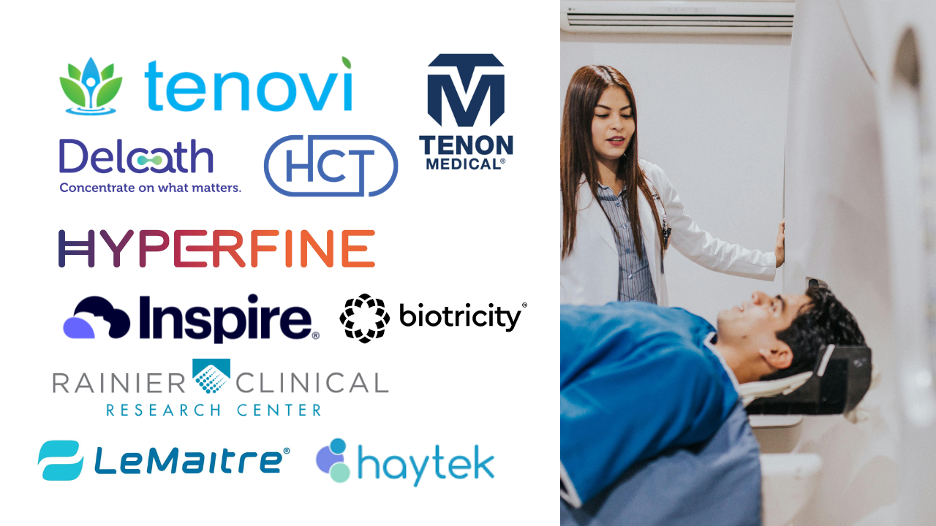
Below, we spotlight 10 fastest growing medtech companies of 2026 from Financial Times’ list, spanning connected care and imaging to specialty devices, contract research and vascular products.

1. Tenovi (Rank 8)
Tenovi is a Portsmouth, New Hampshire-based company focused on remote patient monitoring. It provides cellular-connected medical devices and software that help healthcare organizations gather patient data at home without relying on Bluetooth pairing or app-heavy setup. Tenovi has partnered with Xandar Kardian and CCN Health on contactless monitoring for senior living. The system uses radar-based sensing to track heart rate, respiratory rate, sleep patterns and movement without requiring the resident to wear or handle a device.
2. Tenon Medical (Rank 19)
Tenon Medical is based in Los Gatos, California, and develops devices for sacroiliac, or SI, joint disorders. Its Catamaran platform is used in SI joint fusion procedures for patients with chronic pain linked to SI joint dysfunction. Tenon has expanded patent protection around the Catamaran SI Joint Fusion system, building on 10 patents issued in 2025, including five from the United States Patent and Trademark Office and five issued internationally.
3. Delcath Systems (Rank 38)
Delcath Systems, based in Queensbury, New York, develops liver-directed cancer treatment systems. Its Hepzato kit in the US and Chemosat in Europe are designed to deliver melphalan directly to the liver while limiting broader systemic exposure. In April 2026, Delcath said Chemosat was included in the new ESMO-EURACAN clinical practice guideline for uveal melanoma. The guideline cited two Phase III trials supporting its use in liver-dominant metastatic disease.
4. Hyperfine (Rank 41)
Hyperfine is a Guilford, Connecticut-based imaging company known for its portable brain MRI system, Swoop. The company is trying to bring imaging closer to the bedside, especially in emergency and critical care settings. Hyperfine’s next-gen Swoop system and its latest Optive AI software, which helps improve MRI image quality and streamline scan workflow, received CE and UKCA marks, clearing them for sale in Europe and the UK.
5. Inspire Medical Systems (Rank 110)
Inspire Medical Systems is based in Golden Valley, Minnesota, and develops implantable neurostimulation technology for obstructive sleep apnea. Its system is used mainly for patients who cannot tolerate or do not benefit enough from continuous positive airway pressure (CPAP) therapy. In January 2026, the company shared preliminary full-year 2025 revenue of about $912 million.

6. Haytek Lentes (Rank 164)
Haytek Lentes is based in Rio de Janeiro, Brazil, and supplies ophthalmic lenses to the B2B optical market. The company emphasizes digitally designed, made-to-measure lenses for different vision needs. They have been listed on FT’s fastest growing list six times in a row. Haytek said it would exhibit at Expo Óptica 2026, a São Paulo trade show for the optical and hearing sectors, held from April 9 to 12.
7. Rainier Clinical Research Center (Rank 165)
Rainier Clinical Research Center is based in Renton, Washington, and runs Phase I to Phase IV clinical trials for biopharma and medical device sponsors. The center says it has completed more than 700 studies across areas such as diabetes, early-phase research and medical devices. In November 2025, Rainier invited Seattle-area residents to join diabetes studies, and its current studies page shows ongoing enrollment activity in metabolic disease and related areas.
8. HCT (Rank 177)
HCT is based in Holliston, Massachusetts, and distributes and manufactures medical device products used in pharmacy, vascular access and critical care. Its website says the company’s products are chosen to improve patient safety while reducing staff time and consumable costs for healthcare facilities and specialty pharmacies. HCT’s 2026 featured-brand pages group products across compounding pharmacy, vascular access and critical care.
9. Biotricity (Rank 213)
Biotricity is a Redwood City, California-based company focused on remote cardiac monitoring and chronic care management. Its products sit at the intersection of connected devices, diagnostics and ongoing patient follow-up. In February 2026, Biotricity said it had delivered its third consecutive quarter of positive EBITDA, bringing in more money than it spent on operating costs, and that its app user base had grown from 4,500 to more than 44,000 in two years.
10. LeMaitre Vascular (Rank 253)
LeMaitre Vascular is based in Burlington, Massachusetts, and develops devices, implants and services for the treatment of peripheral vascular disease. Its portfolio includes vascular grafts, patches, shunts, valvulotomes and other products used by vascular surgeons. Its 2025 annual report said LeMaitre has completed 25 acquisitions since its founding.
FAQs
Why are remote monitoring and AI showing up so often in medtech?
These tools can help clinicians track patients more closely, use data faster and extend care beyond the hospital or clinic. In medtech, AI is often used to support imaging, workflow, diagnostics or commercial planning rather than replacing clinicians.
Why are later-stage medtech companies attracting more funding?
Later-stage medtech companies often have more clinical validation, clearer regulatory plans or early commercial traction. That can make them feel less risky to investors than earlier-stage companies that are still proving out their technology.
If you want your company to be featured on Xtalks.com, please email [email protected].















Join or login to leave a comment
JOIN LOGIN