
With Phase III data expected in mid-June 2026, F2G’s olorofim program highlights how rare antifungal studies rely on patient access, site expertise and diagnostic infrastructure.
In anti-infective drug development, a treatment either reaches a patient in time or clinicians are left with few options.
Patients with leukemia, lymphoma, bone marrow transplants or solid organ transplants can become immunocompromised because of the treatments they receive. A weak immune system can leave them vulnerable to environmental molds such as Aspergillus. This fungus is commonly found in the air and on surfaces but usually controlled by a healthy immune system.
F2G is developing olorofim, a first-in-class orotomide antifungal, for rare and difficult-to-treat invasive fungal infections. With Phase III data expected in mid-June 2026, the company is approaching a clinical milestone for a program that spans severe mold infections and coccidioidomycosis, commonly known as Valley fever.
F2G’s global footprint across the UK, US and Austria, along with its partnership with Shionogi, also shows how rare infectious disease development depends on where clinical expertise, diagnostic infrastructure, commercial teams and global partners are located.
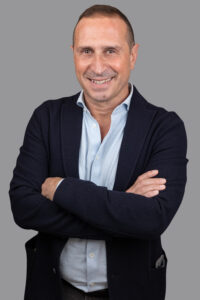
Xtalks sat down with Francesco M. Lavino, CEO of F2G, about the company’s work on olorofim, the challenges of developing therapies for rare fungal infections and the global infrastructure needed to support complex infectious disease trials.
Addressing the “Untreatable”: The High Stakes of Invasive Fungal Infections
A pharmacist by training, Francesco began as a sales representative selling antibiotics and later worked at Merck across antibiotics and antifungals.
Anti-infectives are a challenging area for pharma companies, but also one that has made a noticeable change to life expectancy, according to Francesco.
“I think that is one of the very few classes of drug that really made the difference in people’s life expectancy,” Francesco said.
Invasive aspergillosis is one of the main infections F2G is targeting.
Get industry leading pharma and biotech news, events and expert insights delivered to your inbox.

Francesco described Aspergillus as the “green that grows on your lemon in the fridge,” noting that the fungus is common in the environment. It does not need to be transmitted from one person to another.
This is not an issue for most people, but for immunocompromised patients, it can be very different.
Treatments for leukemia, lymphoma or transplant care can suppress the immune system.
Those patients may be responding to cancer treatment, only to develop a severe fungal infection while their immune system is weakened.
“If they do not get effective treatment, they die. Sorry for being that blunt,” Francesco said.
F2G is also studying olorofim in rare fungal infections such as Scopulariopsis, Lomentospora and Scedosporium. These infections are much less common than invasive aspergillosis, but they can also occur in immunocompromised patients and may have limited treatment options.
Another focus is coccidioidomycosis, or Valley fever, a fungal infection found primarily in the US Southwest, especially Arizona and Southern California. Unlike invasive aspergillosis in severely immunocompromised patients, Valley fever can occur in people who are not immunocompromised. In severe cases, it can spread beyond the lungs, including to the central nervous system.
“Fungi are biologically very similar to humans. So finding a target that is effective but safe is very hard,” he said.
There are relatively few antifungal drug classes. Francesco described azoles as the most widely used class, but said they can be limited by drug-drug interactions, tolerability issues, breakthrough infections and cases where patients do not respond.
Amphotericin B can be effective, but kidney toxicity is a concern, especially because fungal infection treatment can be prolonged. Echinocandins are important for Candida yeast infections, but are not the main option for invasive aspergillosis.
From Salvage Treatment to Phase III: Olorofim’s Development Path
Olorofim belongs to a new antifungal class called orotomides, which are designed to work differently from existing antifungal classes. The drug inhibits fungal dihydroorotate dehydrogenase, or DHODH, an enzyme involved in pyrimidine biosynthesis.
“By starving the fungus of pyrimidine, a lot of things happen to the DNA, RNA, the cell wall, but the bottom line is that olorofim is a potent fungicidal agent against this fungus,” Francesco said.
Olorofim is targeted to molds, including Aspergillus and some other rare fungi. It does not have activity against Candida, and Francesco said its selectivity for fungal DHODH helps explain its safety profile.
F2G’s development program began with what Francesco called “treating the untreatable.”
The company studied olorofim in patients with confirmed infections who had limited or no remaining treatment options. The Phase IIb open-label, single-arm study enrolled 202 patients, including 101 with aspergillosis, 41 with coccidioidomycosis, or Valley fever, and others with rare mold infections.
Historical controls in similar patients without effective treatment had a three-month all-cause mortality of around 90%. In F2G’s study, the three-month all-cause mortality among the 101 aspergillosis patients was 27%.
Because the study was single-arm and open-label, the comparison was not from a randomized head-to-head trial. Still, Francesco said the data helped support regulatory recognition for the program.
Olorofim has received FDA Breakthrough Therapy designation for invasive aspergillosis and other rare mold infections, as well as for central nervous system coccidioidomycosis. It has also received orphan drug status in the US and Europe, and Qualified Infectious Disease Product designation in the US.
F2G has also completed enrollment in its Phase III OASIS trial, a global randomized controlled study comparing olorofim with AmBisome in patients with invasive aspergillosis. Enrollment was completed in November 2025, with data expected by mid-June 2026.
Assuming positive data, F2G plans to prepare for a New Drug Application (NDA) by the end of 2026, with a potential US approval and launch in 2027. The company is also preparing a Phase II program in Valley fever, with the first patient expected toward the end of 2026.
What Rare Infection Trials Need From Locations
For F2G, olorofim’s development has not only been a scientific challenge. It has also required a global clinical trial strategy.
“Infectious disease trials are very complicated,” Francesco began.
Trial sponsors have to identify where patients are likely to be diagnosed and whether those locations have the infrastructure, expertise and patient flow needed to enroll a rare infection study.
The OASIS trial also required a very specific patient profile: patients with invasive aspergillosis who could not receive an azole, had failed treatment or had other limitations with standard therapy.
F2G opened about 140 sites globally to enroll 225 patients over about four years. He later described that as an average of 1.4 patients per site.
For life science locations, that detail is important. It shows that trial readiness is not only about having hospitals or investigators.
“What you’re really looking at is the incidence of the disease, quality of the infrastructure and ability to enroll,” Francesco said.
In fungal infections, clinicians may rely on supporting tests such as galactomannan, a marker associated with Aspergillus, or PCR testing.
That means a hospital’s ability to participate in a trial may depend on whether it can detect the infection quickly and reliably.
Sponsors need to know whether the comparator drug is available in the country or hospital where the trial is being conducted.
Drug-drug interactions were an important driver for enrollment in Europe, but even experienced clinicians had to understand the different scenarios where a patient could be enrolled.
“You really need expertise, availability of testing and drugs, of course, the willingness to enroll because it’s a lot of work,” Francesco said.
F2G’s own corporate footprint also reflects how biotech operations can spread across regions based on function and business need.
The company began in Manchester, UK, where its research roots remain. Francesco said the UK is where F2G has its labs and continues to anchor research. Austria became part of the company’s footprint partly because F2G needed a European affiliate after Brexit. The US is central to F2G’s planned commercial buildout because it is the market where the company expects to launch olorofim itself, with medical affairs and commercial teams being built there.
“But to be honest, we are really a virtual company,” Francesco said.
In addition, F2G’s leadership is distributed across different locations, including New Jersey, Boston, the UK and Austria.
Extending Reach Through Partnerships and Managed Access
F2G is also working with Shionogi & Co., Ltd. to develop and commercialize olorofim. Under the collaboration, Shionogi leads commercialization in Europe and Asia-Pacific, while F2G retains responsibility for North America and the rest of the world.
“The most important factor is the ability that Shionogi has to make olorofim available to patients in geographies that we will never be able to reach,” said Francesco.
Shionogi paid a $100 million upfront payment in 2022 and has contributed 50% of the Phase III trial costs. The agreement also includes additional regulatory and commercial milestone payments and double-digit royalties on sales in Shionogi’s territories.
The two companies collaborate across clinical development, launch readiness, medical strategy, commercial planning, publications and conference communications. That coordination matters because the companies are preparing for different markets while working with one global data package and one investigational drug.
The partnership also supports a global compassionate use, or managed access, program. Because olorofim is not yet approved, the program provides access for patients who need the drug but may not be able to enter a clinical trial.
Some patients who need access may not qualify for a clinical trial, including children in certain cases.
“We are giving the drug for free with Shionogi support to people around the world who need the drug even before the drug is approved,” Francesco said.
The managed access program has enrolled more than 450 patients globally.
He also described olorofim as an oral drug with a manageable safety profile. In the Phase II study, the main side effect was liver toxicity, which occurred in about 10% of patients and was mostly manageable and reversible, according to Francesco. He said 2.5% of patients discontinued treatment.
Francesco’s enthusiasm for the program comes from seeing the potential impact of the therapy in patients with limited options.
“I’ve almost always been working on lifesaving drugs, but I need to be honest, I never had a product like this one,” he said.
If you want your company to be featured on Xtalks.com, please email [email protected].














Join or login to leave a comment
JOIN LOGIN