
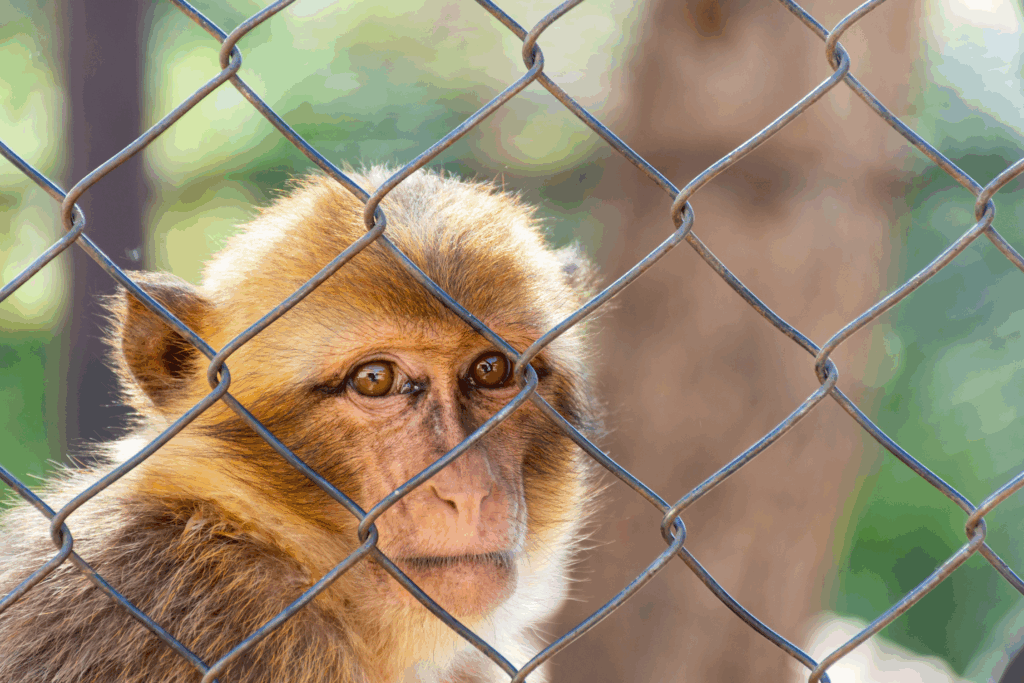
The FDA has released draft guidance outlining when six-month toxicity studies in non-human primates may be reduced or eliminated for certain monoclonal antibody programs. The update shifts how the agency evaluates nonclinical safety packages for biologics, placing greater emphasis on human-relevant data rather than default long-duration primate studies.
The FDA noted that monoclonal antibody programs often involve more than 100 non-human primates, typically macaques, at an estimated cost of about $50,000 per animal.
Many products that clear toxicity testing in animals still fail to achieve FDA approval for safety or efficacy reasons in humans, prompting the agency to revisit the value of extended primate studies.
Today’s draft guidance is the first operational step following the FDA’s April 2025 announcement outlining a roadmap to reduce certain historical animal testing requirements for monoclonal antibodies. The roadmap signaled that nonclinical evaluation would increasingly incorporate computational toxicology, organoid systems and real-world human safety data to support regulatory decisions.

The new draft guidance describes a move toward “knowledge-based risk assessments,” meaning the FDA evaluates what is already known about a monoclonal antibody’s biology, class effects and overall data package rather than relying automatically on long-term primate studies.
Depending on the product type and scientific rationale, sponsors may be able to use shorter studies, mechanistic data (biological pathway-level toxicity insights) or alternative tools such as computer-based modeling and organoid systems when appropriate.
The FDA explains that the goal of the draft guidance is to maintain safety standards while avoiding long-duration primate studies in situations where they are unlikely to provide additional insight.
The draft guidance also reflects input from the FDA’s July 2025 public workshop, where sponsors, researchers and patient advocates discussed strategies to reduce animal use without compromising scientific rigor.
When finalized, the guidance will supplement the FDA’s S6 Addendum to the Preclinical Safety Evaluation of Biotechnology-Derived Pharmaceuticals. That addendum, issued in 2012, outlines principles for assessing biologics before they enter human trials. The new draft builds on that framework by giving more specific direction for monoclonal antibodies and when long-term primate testing may not be scientifically necessary.
The FDA stressed that this updated approach reflects advances in human-relevant testing methods rather than a change in safety expectations. Sponsors will still be expected to justify their nonclinical plans and demonstrate that proposed alternatives are appropriate for evaluating patient risk.
XTALKS WEBINAR: Navigating the Animal Rule in Drug Development with Modeling & Simulation
Live and On-Demand: Wednesday, January 21, 2026, at 11am EST (5pm CET/EU-Central)
Register for this free webinar to gain insights into the requirements and restrictions of the animal rule, as well as how modeling and simulation are used to navigate the animal rule.

How Primate Testing Has Evolved Over the Years
In the US, research facilities reported 107,812 monkeys under the Animal Welfare Act in 2023, with a slight decline to 104,808 in 2024.
Globally, more than 100,000 non-human primates are used in biomedical research each year, and although they represent a small proportion of overall research animals — less than 1 in 1,000 in the European Union (EU) and roughly 3 in 1,000 in the US — their use continues to draw close scrutiny due to ethical considerations, cost and the complexity of their care.
This attention has been shaped in part by the long-running retirement of chimpanzees from federally supported research. The CHIMP Act established a sanctuary system in 2000, and in 2015, the National Institutes of Health (NIH) announced it would end invasive chimpanzee research and retire its remaining animals to Chimp Haven, later publishing a formal retirement plan in 2016.
Other regulators and scientific groups have also been advancing new approach methodologies, or NAMs, as part of this broader movement. A 2025 report from the NC3Rs, developed with the UK’s Medicines and Healthcare products Regulatory Agency and industry partners, highlights organoids, organ-on-a-chip platforms and AI-driven toxicology tools as examples of NAMs already informing elements of drug development.
The report describes these methods not as immediate replacements for animal studies but as a growing set of tools for early safety questions, particularly for well-characterized modalities like monoclonal antibodies.
The FDA draft guidance will be open for public comment before it is finalized, after which the recommendations are expected to shape future monoclonal antibody submissions.
If you want your company to be featured on Xtalks.com, please email [email protected].













Join or login to leave a comment
JOIN LOGIN