
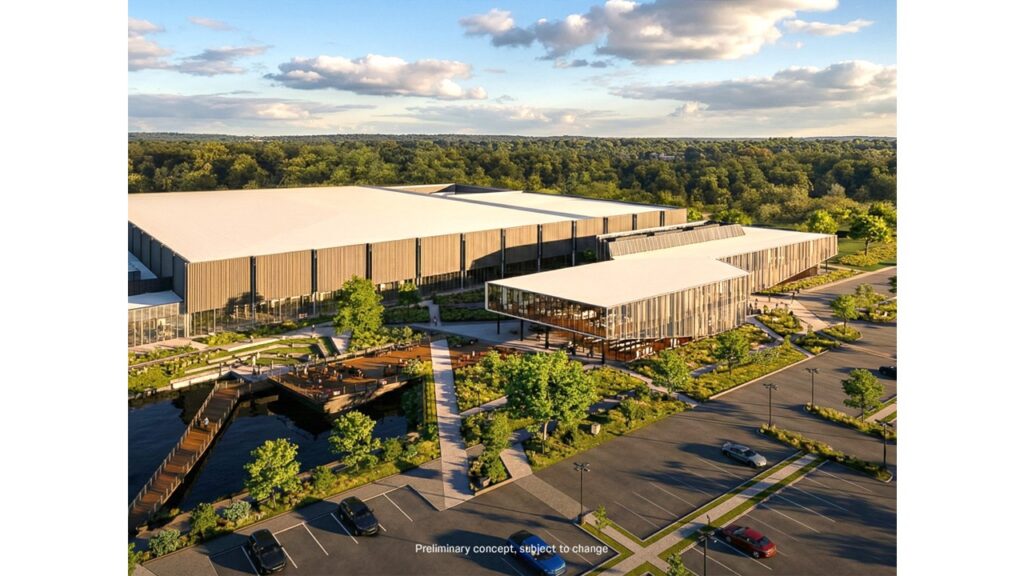
Pennsylvania continues to solidify its position as a growing hotspot for drugmakers looking to expand their manufacturing operations.
Following Eli Lilly’s recent announcement of a major $3.5 billion expansion of its manufacturing footprint in Pennsylvania, Johnson & Johnson (J&J) has unveiled plans to commit more than $1 billion to build a state-of-the-art cell and gene therapy (CGT) production facility in Montgomery County, Pennsylvania.

J&J said the project, expected to begin construction in the second half of 2026, will further expand the company’s US manufacturing capacity to advance its pipeline of drugs for cancer, immune-mediated and neurological diseases.
The new facility, to be located on a 154-acre site in Lower Gwynedd’s Spring House area, will leverage advanced manufacturing technologies designed specifically for cell therapies.
Related: Eli Lilly Invests $3.5B in Pennsylvania to Scale Next‑Gen Obesity Drug Manufacturing
The project is expected to deliver a significant economic boost to the region. During the construction phase, over 4,000 jobs are projected through local and contractor hiring. Once operational, the facility is anticipated to employ around 500 permanent skilled biomanufacturing workers.
The recent Pennsylvania investment is part of a broader plan under which J&J has pledged $55 billion in US investment through early 2029, encompassing manufacturing, research and development, along with cutting-edge technology deployments across the country.
The plan includes the construction of three new domestic manufacturing facilities, along with expansions across the company’s existing pharmaceutical and medtech network.
The pharma giant had previewed elements of this strategy last month while finalizing a drug pricing agreement with the White House. At the time, J&J indicated that a portion of the investment would support a new cell therapy manufacturing site in Pennsylvania as well as a separate drug product manufacturing facility in North Carolina.
Pennsylvania, which already hosts 10 J&J facilities with more than 2 million square feet of operations dedicated to research, production and distribution, has emerged as a key hub in the company’s domestic strategy.

Beyond the newly announced North Carolina facility, J&J is also constructing a $2 billion, 500,000-square-foot biologics manufacturing plant in the state.
In a separate move to bolster domestic capacity last year, the company signed a $2 billion agreement securing long-term manufacturing capacity at CDMO Fujifilm Biotechnologies’ expansive biomanufacturing campus in Holly Springs, further deepening its footprint in the Tar Heel State.
J&J currently markets the multiple myeloma CAR-T therapy Carvykti, developed in partnership with Legend Biotech. First approved in early 2022, the personalized immunotherapy reached a major commercial milestone last year, surpassing blockbuster status and nearly doubling year-over-year sales to approximately $1.9 billion.
Like other CAR-T therapies, Carvykti has faced supply constraints since its launch, prompting J&J and Legend to steadily expand manufacturing capacity. In 2022, the partners doubled their investment in their Raritan, New Jersey, cell therapy production facility and later brought in rival drugmaker Novartis as a commercial manufacturing partner to help meet growing demand.
At the JP Morgan healthcare conference in January, Legend shared that the physical expansion of the Raritan facility had been completed, marking the largest cell therapy manufacturing facility in the US, with capacity to support the treatment of up to 10,000 patients annually.
Last year, the partners announced plans to invest approximately $150 million to expand capacity at a newer cell therapy facility in Ghent, Belgium. Construction on the expansion is expected to begin in the second half of 2025, with completion targeted for 2028.
In recent months, several major pharmaceutical companies have announced significant investments in US manufacturing, reflecting an industry-wide push to expand domestic production amid the current administration’s push to bolster the country’s pharmaceutical supply chain.
AbbVie recently committed $380 million to build two new active pharmaceutical ingredient production (API) facilities at its North Chicago campus, which will create hundreds of jobs and boost API capacity.
Moderna has expanded its US footprint by bringing full drug product manufacturing in-house at its Massachusetts campus, completing a domestic mRNA production network with an additional $140 million investment.
Last fall, Amgen announced a $650 million US manufacturing expansion aimed at strengthening biologics production and creating hundreds of jobs.











Join or login to leave a comment
JOIN LOGIN