
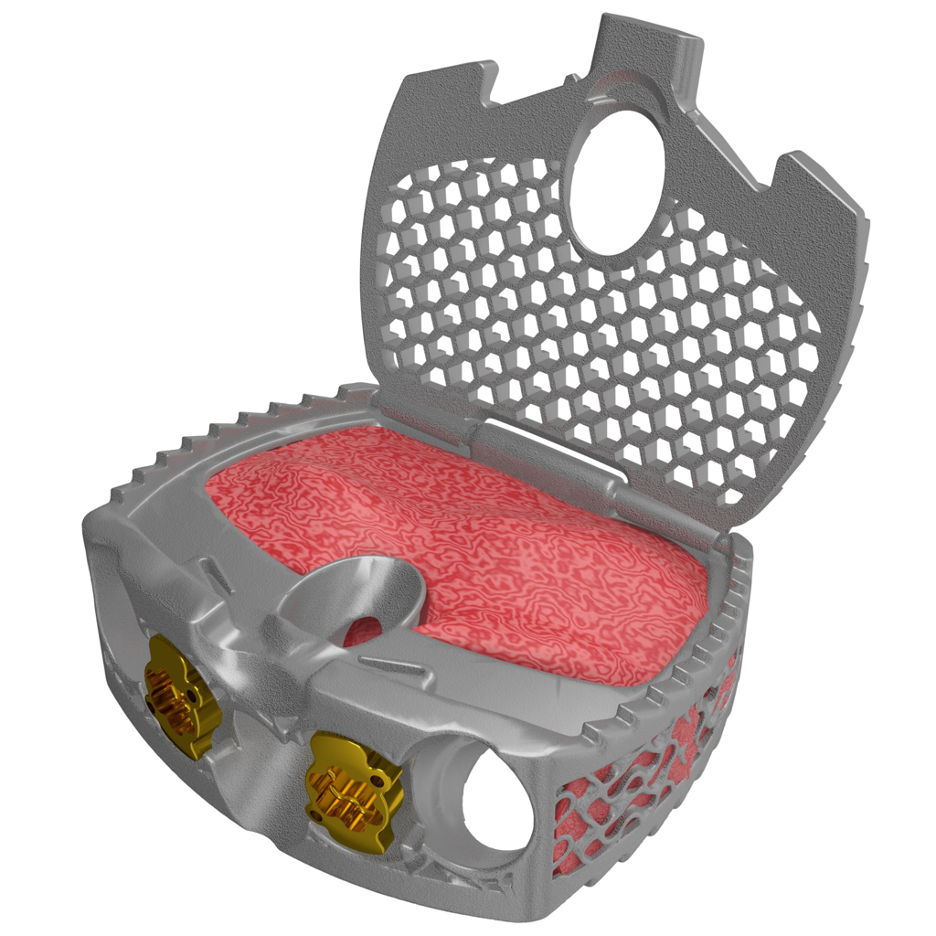
Spinal Elements has received 510(k) clearance from the FDA for its Ventana A Anterior Lumbar Interbody Fusion (ALIF) system, marking the latest expansion of its 3D-printed spinal implant platform.
The company also reported that the first clinical cases using the system have already been completed in the US.

Related: Spine Innovation’s LOGIC Titanium Device Cleared for Use in Spinal Fusion
The Ventana A system builds on Spinal Elements’ existing Ventana family of 3D-printed titanium interbody devices designed for lumbar and cervical fusion procedures.
The new ALIF-specific implant is being introduced through a limited market release and is intended to broaden the company’s reach across spine surgery techniques and surgeon preferences.
Anterior lumbar interbody fusion is a widely used surgical approach that allows direct access to the lumbar spine to restore disc height, alignment and stability. Ventana A is engineered to enhance the effectiveness of this procedure through a combination of structural and material innovations.
Spinal Elements explains that the implant features a unique hinged architecture designed to maximize bone graft volume while maintaining graft containment during insertion, a key factor in promoting successful fusion.
Manufactured using a specialized 3D printing process, the system incorporates reduced titanium density to optimize load sharing across the implant, which may help mitigate the risk of subsidence. It is also designed to improve intraoperative visualization and support restoration of segmental alignment and spinal stability.

According to company leadership, the system reflects a continued push toward improving both clinical performance and operating room efficiency.
CEO Ron Lloyd noted that ALIF remains a “workhorse” procedure for spine surgeons and said the company aimed to deliver a system that maximizes its clinical benefits while expanding its procedural applications.
“Building on the proven Ventana platform, this contemporary system increases Spinal Elements’ portfolio offering and procedural reach to a greater number of surgeon and distribution partners. Combined with intuitive instrumentation and efficient packaging, Ventana A is designed to enhance clinical performance and operating room efficiency, demonstrating our commitment to continued innovation — working with surgeon partners to develop systems that are meaningfully differentiated and deliver improved outcomes,” Lloyd said in a press release.
Early physician feedback from initial cases has highlighted the system’s large graft window and implant design, which support bone graft delivery and fusion assessment while distributing load more evenly across the implant surface.
Spinal Elements’ Ventana A enters a highly competitive spinal fusion market dominated by large orthopedic players such as Medtronic, Stryker, Globus Medical and NuVasive (now part of Globus Medical), all of which offer extensive interbody fusion portfolios spanning ALIF, TLIF (transforaminal lumbar interbody fusion) and PLIF (posterior lumbar interbody fusion) procedures. These companies have been investing heavily in 3D-printed titanium implants, porous lattice structures and expandable cage designs, mirroring the core features seen in Ventana A, such as load sharing, bone graft containment and fusion optimization.
Spineology, Xenco Medical and emerging players like NanoHive Medical are also advancing differentiated materials and surface technologies aimed at improving osseointegration and reducing subsidence risk.
And early this year, Spine Innovation received FDA 510(k) clearance for its LOGIC Titanium Interbody system. The device is similar in class and intent to Ventana A, as both are interbody fusion implants designed to stabilize the spine and promote bone growth. However, while Ventana A emphasizes a hinged 3D-printed titanium architecture to maximize graft containment and load distribution, the LOGIC system features an expandable cage design and porous titanium lattice (OsteoSync Ti) that enables insertion at a smaller profile followed by in situ expansion to restore disc height and alignment.













Join or login to leave a comment
JOIN LOGIN