

Scaling Cell Line Development:
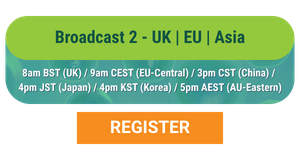
Enabling IND-Ready, GMP-Compatible Workflows (Broadcast 2)
 AI Webinar Explorer now available for enhanced on-demand viewing
About this webinar
Generating clonal, edited cell lines with high-precision, audit-ready evidence of clonality – without compromising downstream efficiency – remains a critical challenge in IND-enabling cell line development.
This is especially relevant for stem cell-derived, primary and epithelial cell lines, where optimized single-cell cloning workflows are often lacking. As a result, workflows frequently rely on manual handling, offer limited early visibility and produce fragmented documentation – leading to ambiguous clonality records, repeated subcloning and delays in downstream characterization and tech transfer.
In this webinar, scientists from CCRM/OmniaBio will share their experience applying lessons from hPSC workflows to establish a robust, GMP-compliant epithelial cell line development strategy. By combining gentle single-cell seeding with whole-well, time-stamped imaging from day 0 through colony maturity, the team generated clear evidence of clonality while reducing manual intervention and workflow variability. Media and seeding conditions were optimized to support single-cell survival and outgrowth across challenging cell types.
Importantly, efficient use of clonality data enabled improved identification of edited clones, overcoming limitations of traditional high-throughput screening approaches and extending its value beyond clonality confirmation.
Register for this webinar to learn how early confirmation of clonality can strengthen cell line development, reduce rework and support GMP-aligned workflows.
Who should attend
- Cell Line Development Scientists working with hPSC/epithelial cells or gene-edited workflows
- Process Development and CMC teams supporting GMP-compliant pipelines
- CDMO and CRO Scientists responsible for clonal documentation and tech transfer
- Bioprocess and Analytical Leaders focused on reducing CLD timelines and rework
- Quality and regulatory professionals involved in clonality assurance strategies
What you will learn
- Achieving early, unambiguous proof of clonality from day 0
- Strategies to reduce manual handling, subcloning and workflow variability
- How CCRM/OmniaBio standardized clonality documentation to support GMP-compliant workflow
- The impact of early clonal confidence on cell line development and throughput
- Practical considerations for integrating early clonality confirmation strategies into GMP-minded CLD workflows
Featured Speakers

Adam Causer
Adam Causer is a Global Product Manager for the Solentim Portfolio at Nova Biomedical, which includes an ecosystem of instruments that digitalize and automate CLD workflows. Prior to starting this role, he worked in Application Sciences at both Scienion and Advanced Instruments, specializing in precision dispensing and single-cell isolation for diagnostic test development and CLD, respectively.
Adam’s early career included being a Postdoctoral Researcher that oversaw the day-to-day management of Cancer Research UK (CRUK), National Institute for Health Research (NIHR) and university-funded research projects. For these projects, he used a combination of basic science and physiological techniques to investigate the benefits of exercise on health, disease and pharmaceutical treatments. These techniques included cell culture, live cell imaging, flow cytometry, cell killing assays and multiplex protein quantification.

Sakthi Moorthy
Sakthi Moorthy is a Lead Scientist III at CCRM, Toronto, and a Subject Matter Expert in gene editing and analytical development. She leads cross-functional teams focused on genome-engineered cell lines and advancing allogeneic cell therapies for clinical use. She has established scalable, IND-enabling workflows using multiple gene editing technologies, translating innovative approaches into GMP-aligned, industry-ready processes.
With over 12 years of experience in gene editing, Sakthi brings deep expertise in process development, analytical strategy and building robust, reproducible manufacturing platforms. She completed her postdoctoral training at the University of Toronto, specializing in gene editing and pluripotent stem cell differentiation toward lineage commitment.
Her work focuses on bridging early innovation with commercialization to support the development of safe, scalable and clinically viable cell therapies.
Partner for this event
Nova Biomedical
Advanced Instruments and Nova Biomedical are now doing business under the same brand, bringing together decades of expertise in analytical instrumentation, R&D, and global customer support. The Solentim® ecosystem is now part of Nova Biomedical’s portfolio, providing best-in-class imaging and single-cell deposition technologies for cell line development workflows and assurance of clonality for regulatory bodies.
Related webinars
More from Nova Biomedical.
Improve Cell Line Stability From Cloning to GMP Manufacturing
Improve Regulatory Compliance for Pipetting and Liquid Handling Workflows
De-Risk Automated Liquid Handling with Low Volume Verification (Broadcast 2)
Accelerate Cell Culture Media Development with Automated Cell Analysis
De-Risk Automated Liquid Handling with Low Volume Verification
Scaling Cell Line Development: Enabling IND-Ready, GMP-Compatible Workflows (Broadcast 1)
Accelerating CHO Process Optimization for Faster Scale-Up Readiness
Evaluating the Impact of Cell Culture Supplements on CHO Clonal Outgrowth Efficiency
Enhancing Monoclonality Assurance in Cell Line Development: Seeing More at Day-0 (Broadcast 1)
Enhancing Monoclonality Assurance in Cell Line Development: Seeing More at Day-0 (Broadcast 2)