
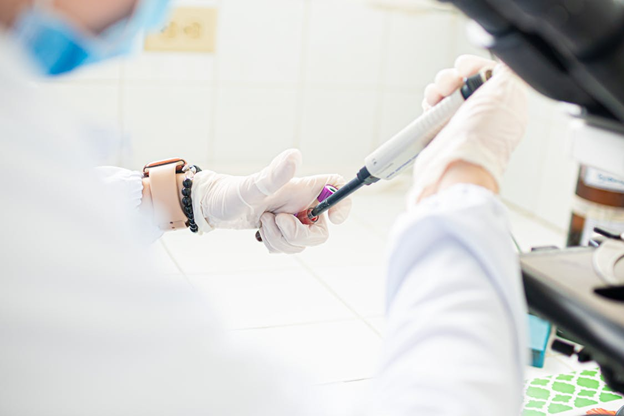
Alamar Biosciences’ platform measures hard-to-detect protein signals in blood and other biological samples.
Alamar’s research-use assays focus on neurology and immunology, including Alzheimer’s-related biomarkers.
Blood can carry small biological signals that are difficult to detect but useful for studying disease. Alamar Biosciences is building its business around measuring those signals more precisely.
Based in California, Alamar is a proteomics company that has closed a $219.9 million upsized IPO, pricing 12,937,500 shares at $17 each. The shares began trading on the Nasdaq Global Select Market on April 17 under the ticker symbol ALMR, and the offering closed on April 20.
Alamar develops instruments, assays and software for precision proteomics, the large-scale study of proteins that can help researchers understand disease biology, treatment response and changes in health over time.
Get industry leading pharma and biotech news, events and expert insights delivered to your inbox.

The company’s core technology is NULISA, short for Nucleic Acid Linked Immuno-Sandwich Assay. It is designed to detect low-level protein biomarkers in blood and other biological samples, where background noise can make small signals hard to read.
Biomarkers are measurable biological signs that can provide information about health or disease. In protein research, they can help identify patterns tied to neurodegeneration, inflammation and other disease processes.
NULISA uses antibody-based detection and DNA-based readouts to identify proteins in a sample. The technology uses sequential purification steps to remove interfering signals before the protein signal is measured.
The company’s current instrument, the ARGO HT system, launched commercially in January 2024 and is available for research use only, meaning it is for lab research and not for diagnosing patients.
ARGO HT automates high-sensitivity and high-plex proteomic analysis. “High-plex” means the system can measure many protein targets from the same sample instead of looking at one marker at a time. The system requires less than 30 minutes of hands-on time and can complete a full run in under eight hours.
Alamar is also developing ARGO HT/DX, a second instrument planned as part of an in vitro diagnostic platform. The company intends to submit ARGO HT/DX to the FDA for marketing authorization in 2027.
Related: Fujirebio’s Lumipulse G Wins FDA Clearance as First Blood Test for Diagnosis of Alzheimer’s Disease
Alamar’s current assay menu focuses on neurology and immunology. Its CNS Disease Panel 120 profiles proteins associated with neurodegenerative disease pathways.
The company also offers a single-plex BD-pTau217 assay, which measures brain-derived pTau 217, a blood-based biomarker used in Alzheimer’s disease research. Researchers are studying blood-based biomarkers as less invasive alternatives to cerebrospinal fluid tests or PET scans.
Alamar also launched the NULISAseq Neuro 220 Panel and NULISAqpcr Alzheimer’s Disease 5plex in March 2026. The Alzheimer’s panel measures five blood-based markers linked to Alzheimer’s biology, including BD-pTau217, in a single automated assay for clinical research.
Beyond neurology, Alamar offers or is developing sets of tests for research in inflammation, cardiovascular disease, metabolic disease, oncology and health monitoring.
Blood-based Alzheimer’s testing is beginning to move from research into regulated diagnostic use. In May 2025, the FDA cleared Fujirebio Diagnostics’ Lumipulse G pTau217/β-Amyloid 1-42 Plasma Ratio, a blood test used to help diagnose Alzheimer’s disease in adults 55 and older with signs or symptoms of the disease. The FDA said the test is not meant for general screening or to diagnose Alzheimer’s on its own, and results should be reviewed alongside other clinical information.
Blood-based biomarker research is also gaining traction in brain health. In March 2026, Siemens Healthineers launched two research-use blood assays for brain-derived pTau217 and brain-derived tau. The assays run on Siemens’ Atellica analyzers, use a light-based signal to measure specific proteins in blood and are not cleared or authorized to diagnose patients.
FAQs
What is proteomics?
Proteomics is the study of proteins. Proteins carry out many of the body’s functions and can show what may be happening in health or disease.
Why are blood biomarkers important?
Blood biomarkers can give researchers a less invasive way to study disease. In Alzheimer’s research, they may help scientists look for disease-related changes without relying only on spinal fluid tests or brain scans.
Can Alamar’s current system diagnose disease?
No. Alamar’s ARGO HT system is for research use only. “Research use only” means a tool is meant for scientific research, not patient diagnosis. A test needs regulatory clearance or approval before it can be marketed for clinical diagnosis.
If you want your company to be featured on Xtalks.com, please email [email protected].











Join or login to leave a comment
JOIN LOGIN