
As gene therapies expand beyond rare diseases and into larger patient populations, the industry faces a critical manufacturing question: can adeno-associated virus (AAV) production scale fast enough, affordably enough and reliably enough to support broader patient access?

SVP Site Head
FUJIFILM Biotechnologies
For developers working to bring gene therapies to market, this is no small challenge. Manufacturing scale affects not only supply, but also cost per dose, process robustness, product quality, and regulatory readiness.
In this Xtalks Spotlight, Samuel Hernandez, PhD, SVP Site Head at FUJIFILM Biotechnologies’ Texas facility, discusses how scaling AAV production to 2,000 L single-use bioreactors can help address those barriers and support a more commercially viable path for gene therapy innovators.
With more than 20 years of biotechnology and pharmaceutical leadership experience, Dr. Hernandez shared how FUJIFILM Biotechnologies supports the viral gene therapy industry through integrated capabilities spanning early process and analytical development, GMP clinical and commercial drug substance manufacturing, drug product filling and final product release. He also explained why successful scale-up requires far more than just larger equipment.
Why Commercial-Scale AAV Manufacturing Demands a Different Approach
According to Dr. Hernandez, FUJIFILM Biotechnologies’ viral vector CDMO model is designed to give gene therapy innovators an integrated path from early-phase feasibility to commercial supply. The company’s Texas and UK facilities support end-to-end programs, helping sponsors move through development without repeatedly redesigning core process elements as they progress.
That continuity becomes especially important as programs move toward commercial scale.
“It’s not just a matter of saying, ‘Oh, we’re just going to increase volumes. We’re going to just make things bigger and buy bigger equipment,’” Dr. Hernandez said.
Instead, he emphasized that scale-up requires deep technical understanding of how process behavior changes across both upstream and downstream operations.
“As you scale up to the 2,000-liter level, even minor subtle variations in things like plasmid quality or even mixing time can have really big impacts in terms of performance and productivity.”
— Dr. Samuel Hernandez
In upstream AAV production, one of the major challenges is maintaining efficient transient transfection at large volume. At small scales, mixing kinetics, plasmid complex formation and other process variables may be more manageable. At 2,000 L, however, even slight variation in factors such as plasmid quality or mixing time can have an outsized impact on productivity.
Downstream scale-up presents a different set of constraints. Harvesting and purifying material from a 2,000 L single-use bioreactor cannot be handled by simply enlarging equipment, because that can quickly become uneconomical. Dr. Hernandez pointed to the need for high-capacity clarification systems and scalable purification strategies, particularly around resin selection and dynamic binding capacity. Since chromatography resins can be expensive, understanding the optimal conditions is essential to keeping large-scale AAV purification commercially viable.
What Really Drives Cost per Dose in AAV Manufacturing?
Cost per dose remains one of the biggest barriers to broader patient access in gene therapy, and Dr. Hernandez identified three main levers that shape the economics of AAV production at scale: yield per batch, material utilization efficiency and facility and workforce utilization.
“Upstream titer is likely the single most powerful driver to optimize cost,” he said, noting that as processes scale to 2,000 L, productivity gains become critical to reducing the number of batches needed to meet demand, directly improving the economics of supply. To get there, manufacturers must optimize key upstream variables such as cell line engineering, plasmid engineering, and transfection performance.
Dr. Hernandez noted that improving transfection efficiency in AAV manufacturing helps support higher cell density at transfection and a better overall productivity profile. He also pointed to perfusion strategies as an additional way to further maximize yield.
In the downstream process, affinity chromatography resins are among the largest material cost drivers on a per-batch basis. Selecting high-capacity resins and validating extended reuse across multiple batches can significantly reduce the cost per gram of purified vector. Improvements in clarification and tangential flow filtration recovery steps can also reduce product loss and improve overall yield.
At the facility level, single-use systems offer a further cost advantage. Single-use bioreactors and disposable containers reduce turnaround time, eliminate cleaning validation requirements and support higher-throughput manufacturing. When higher yields, faster cycle times and better facility utilization are combined, Dr. Hernandez said the cost per dose can decrease substantially.
Protecting Supply Through Process Robustness
At commercial scale, batch failure is more than a financial setback, as it can directly threaten supply.
Dr. Hernandez pointed out that by the time an AAV program reaches the 2,000 L stage, typically millions of dollars have already been invested in process design, raw materials, analytics, patient studies, and broader lifecycle development. Losing a batch at that point can therefore have major financial implications.
But just as importantly, a single batch in this space may represent a meaningful portion of annual supply. A failed run can delay patient dosing, disrupt launch timelines and trigger regulatory scrutiny.
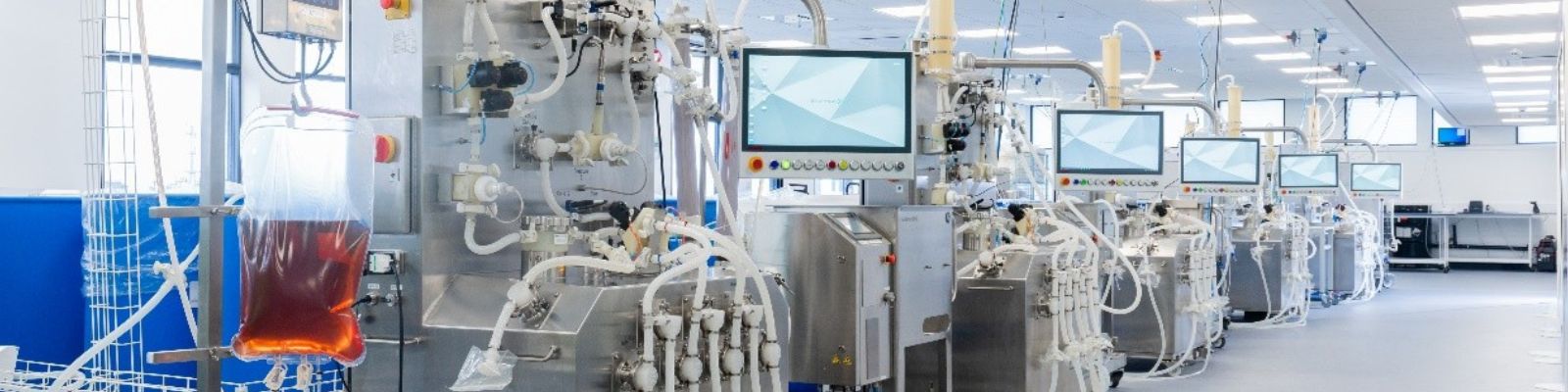
To reduce that risk, FUJIFILM Biotechnologies has invested in process robustness, analytics, and digitalization. Dr. Hernandez highlighted automated, real-time process monitoring across multiple unit operations, including bioreactor control technologies that track critical variables such as nutrients, metabolites and cell health indicators in real time.
These tools are intended to lower variability and strengthen process control across large-scale manufacturing. In Dr. Hernandez’s view, risk mitigation is itself a major contributor to cost optimization because it helps protect supply continuity, patient access and business margins.
Scaling Quality Alongside Volume in AAV Manufacturing
One of the biggest concerns in large-scale AAV production is whether scaling up could compromise key quality attributes, especially full-to-empty capsid ratio and potency.
Dr. Hernandez said that while this concern is understandable, FUJIFILM Biotechnologies’ experience has shown that intentional scale-up with strong controls can actually enhance quality rather than weaken it.
“Our AAV platform approach was engineered from end to end, so that process control, product quality, and regulatory readiness scale seamlessly with volume, enabling commercial confidence from the start.”
— Dr. Samuel Hernandez
The company’s approach starts by building quality into the process from the earliest development stages. Dr. Hernandez linked this to the broader pharmaceutical concept of quality by design, while also describing FUJIFILM Biotechnologies’ kojoX™ scalable framework, which is designed around global regulatory expectations and supports transitions from development through clinical manufacturing, commercial supply and tech transfer without extensive process re-engineering.
In AAV manufacturing, that means optimizing for more than total yield. For example, Dr. Hernandez explained that process optimization should support genome packaging efficiency, not just total yield. Tightly controlling transfection parameters, including plasmid ratios, cell densities and harvest timing, can improve the percentage of full capsids upstream. Starting with a higher full-capsid ratio then reduces the burden on downstream separation and helps protect potency and lot-to-lot consistency.
Downstream processing is also engineered for reproducibility at scale. Dr. Hernandez said the company uses scalable affinity capture approaches and polishing steps specifically optimized to manage empty and partial capsids while maintaining high recovery. Across multiple GMP runs and programs, FUJIFILM Biotechnologies has demonstrated consistency in full capsid percentage and potency, according to Dr. Hernandez.
He also emphasized the importance of robust analytical methods. Advanced capsid and genome titer quantification techniques help ensure that variability is detected accurately, and that batch-to-batch consistency is maintained.
Commercial Confidence Starts with Scalable Process Design
As gene therapies move toward larger indications and broader patient populations, manufacturing strategy is becoming inseparable from access strategy.
Dr. Hernandez’s message was that successful AAV scale-up is not just about making more material. It requires an end-to-end approach that aligns process control, analytical rigor, digital infrastructure, product quality, and regulatory readiness from the start.
For FUJIFILM Biotechnologies, that means designing AAV manufacturing systems, so they scale seamlessly with volume while preserving consistency and commercial confidence. And as more gene therapies push toward wider adoption, solving those cost and scale challenges may be one of the most important steps toward reaching more patients.
This article was created in collaboration with the sponsoring company and the Xtalks Editorial team.




Join or login to leave a comment
JOIN LOGIN