
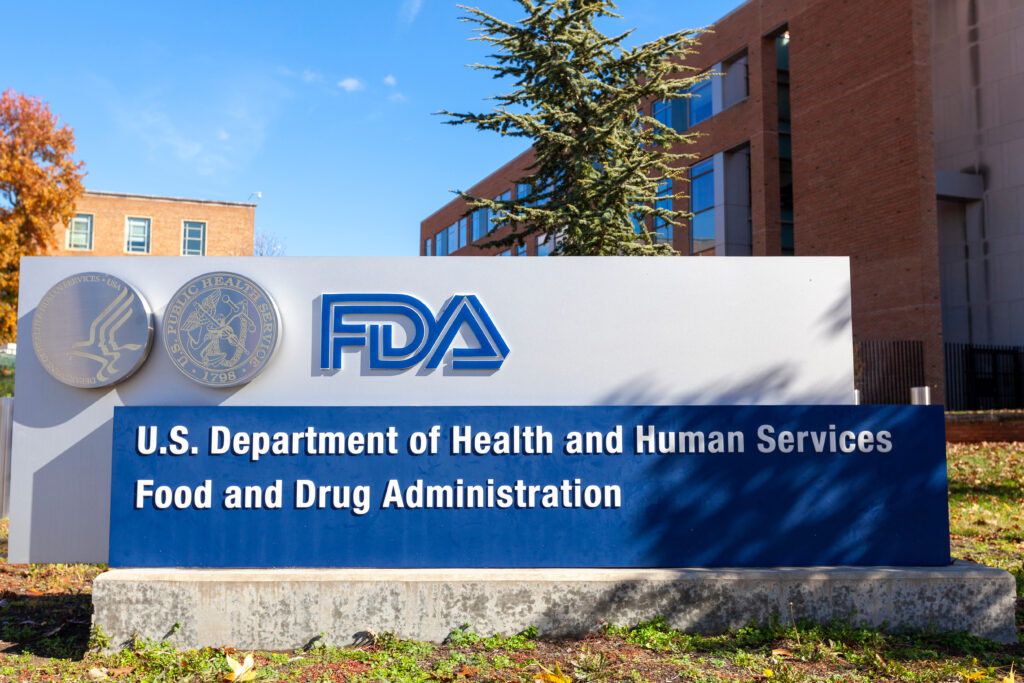
Last month, the FDA approved AstraZeneca and Daiichi Sankyo’s Enhertu (fam-trastuzumab deruxtecan-nxki) plus Roche’s Perjeta (pertuzumab) as a first-line treatment for adults with unresectable or metastatic HER2-positive breast cancer.

The approval allows the use of Enhertu in combination with Perjeta for patients whose tumors test HER2-positive by an FDA-approved test.
The companion diagnostics PATHWAY anti-HER-2/neu (4B5) Rabbit Monoclonal Primary Antibody and HER2 Dual ISH DNA Probe Cocktail were approved alongside the combo treatment to help identify suitable patients.
The FDA first approved the antibody-drug conjugate (ADC) Enhertu in 2019 as a third-line therapy for this indication, later expanding its use to the second-line setting in 2022.
The agency approved Perjeta, a targeted monoclonal antibody, in 2012 in combination with Roche’s Herceptin (trastuzumab) and chemotherapy as a first-line treatment for HER2-positive metastatic breast cancer. That combination, commonly known as THP, has since served as the standard of care in this setting.
HER2-positive breast cancer accounts for approximately 15% to 20% of breast cancer cases and is known to be an aggressive subset. Existing first-line options historically combined HER2-targeted antibodies with chemotherapy.
The combination of Enhertu with Perjeta offers a targeted treatment that delivers a cytotoxic payload directly into cancer cells while also blocking HER2 signaling.
Experts involved in the study highlighted that the regimen is the first new first-line treatment option in over 10 years.
In a press release from AstraZeneca, Sara Tolaney, MD, MPH, chief of the Division of Breast Oncology, Dana-Farber Cancer Institute and principal investigator for the trial, said: “Trastuzumab deruxtecan plus pertuzumab is the only 1st-line treatment approved in more than a decade to demonstrate a statistically significant improvement in progression-free survival over the current standard regimen for patients with HER2-positive metastatic breast cancer.”
“With a median progression-free survival exceeding three years, versus approximately two years with THP, trastuzumab deruxtecan combined with pertuzumab should become a new 1st-line standard of care in this setting.”
|
|
How Does Community-Based Research Deliver Faster Results and Greater Access?
Thursday, January 22, 2026 | 12pm EST (9am PST)
Join this session to learn how community-based research enhances access, representation and trial efficiency while supporting approaches that strengthen patient experience.
|

The approval of the new combination was supported by data showing that the combination offers meaningful improvements in disease control compared with existing first-line regimens.
The FDA’s decision was based on results from the Phase III Destiny-Breast09 trial involving 1,157 adults with newly diagnosed unresectable or metastatic HER2-positive breast cancer.
Patients were assigned to either Enhertu + Perjeta, standard regimen of THP or an investigational therapy arm.
Median progression-free survival (PFS) was 40.7 months with Enhertu + pertuzumab versus 26.9 months with the THP regimen, a 44% reduction in the risk of disease progression or death.
The objective response rate (ORR) was 87% in the Enhertu combination arm compared to 81% in the THP arm.
The regimen’s safety profile aligns with known risks of HER2-targeted therapies, including neutropenia and potential cardiac effects, mandating careful monitoring.
Enhertu was associated with a higher incidence of interstitial lung disease (ILD), a known class effect of ADCs built on Daiichi Sankyo’s DXd platform.
Adjudicated drug-related ILD or pneumonitis occurred in 12% of patients treated with Enhertu plus Perjeta, compared with 1% of those receiving the THP regimen. Most cases in the Enhertu-Perjeta arm were grade 1 or 2, but the events included two deaths (0.5%). By contrast, all ILD cases in the THP arm were grade 1 or 2.
According to reporting by Fierce Pharma, Tolaney said clinicians have become “quite used to managing” the side effect when the companies presented the data at the American Society of Clinical Oncology (ASCO) meeting in Chicago in June last year.
Overall survival data were not yet mature at the time of this analysis, and follow-up is ongoing.
Enhertu has emerged as one of oncology’s most commercially and clinically promising therapies. After being the first approved therapy in the HER2-low category in breast cancer, the ADC secured FDA approval in January 2025 as a second-line treatment for breast cancer with HER2-low or HER2-ultralow expression.
In 2024, AstraZeneca and Daiichi Sankyo scored $3.75 billion in global sales for Enhertu, up from $2.57 billion the previous year. Roche’s 2024 sales of Perjeta totalled $3.6 billion.
The FDA granted the Enhertu-Perjeta combo treatment Priority Review and Breakthrough Therapy designation, and reviewed it under Project Orbis.













Join or login to leave a comment
JOIN LOGIN