
Radiopharmaceuticals — targeted radioactive compounds developed in nuclear medicine to visualize or treat diseases from inside the body — are gaining traction as one such approach. By pairing imaging and therapy into a single platform — a concept known as theranostics — these agents offer new pathways for both detecting and treating difficult cancers.
Growth in the global radioligand therapy market is fueled by an aging population, rising cancer incidence — especially in prostate and neuroendocrine tumors — and rapid advances in molecular imaging and targeted therapy.
Recent forecasts placed the combined global radiotherapy and radiopharmaceutical market at roughly $17.5 billion in 2024, rising to $31 billion by 2029. Radiopharmaceuticals alone are projected to exceed $21 billion in that timeframe, with theranostic formats growing at approximately a 15% compound annual growth rate (CAGR).
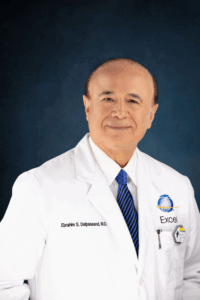
Founder, Chairman and CEO
RadioMedix
In this Xtalks Clinical Edge interview, Dr. Ebrahim S. Delpassand, nuclear medicine physician and founder, chairman and CEO of RadioMedix, discusses how patient needs drove his entry into radiopharmaceutical development, the science behind these therapies and the practical and regulatory challenges of bringing them into clinical trials.
From the Clinic to the Bench: Why RadioMedix Was Founded
Dr. Delpassand shared that the founding of RadioMedix stemmed from a constant desire to improve how patients are treated. As a clinician, he often encountered cases where existing options fell short.
These real-world challenges became the starting point for scientific inquiries, passed directly from the clinic to RadioMedix’s scientists. Their mission was clear: identify unmet needs and explore whether radiopharmaceuticals could address them in meaningful ways.
Xtalks Clinical Edge™: Issue 5 — From Isotope to Impact: How Radiopharmaceuticals Are Changing Cancer Care
Xtalks Clinical Edge™ is a magazine for clinical research professionals and all who want to be informed about the latest trends and happenings in clinical trials. This magazine immerses you in a world where industry leaders, patient advocates and top researchers converge to provide the most insightful perspectives on clinical trials.

The Radioligand Approach
In describing how radioligands work, Dr. Delpassand likened them to molecular keys designed to locate and bind to specific receptors — or “locks” — on cancer cells.
“I always give an example of the lock and the key. Essentially, the lock is what we have on the surface of the cancer cells, and the key is the molecule that, in a targeted fashion, can be injected intravenously,” he illustrated.
Once bound, these agents are internalized and deliver a small, localized dose of radiation capable of destroying the cell from within.
Earlier generations of these therapies relied on beta emitters, but the field has moved toward alpha emitters, which have higher linear energy transfer. These alpha particles can cause double-strand DNA damage, thereby increasing the likelihood of effective tumor cell death and potentially reducing the risk of recurrence.
This principle has its roots in a long-standing history. Radioiodine (I-131) was first used to treat thyroid cancer over 80 years ago and remains a gold standard for differentiated thyroid cancer. Radiopharmaceuticals have evolved significantly since then, both in targeting mechanisms and energy delivery.
– Ebrahim S. Delpassand, Founder, Chairman and CEO, RadioMedix
Theranostics: A Test Drive for Treatment
One of the defining features of radiopharmaceuticals is their use in theranostics — a strategy where the same molecular target is used for both imaging and therapy.
“You have a diagnostic agent that acts as a test drive for the therapeutic version of the drug. This is a very unique characteristic of nuclear medicine,” said Dr. Delpassand.
Dr. Delpassand explained that diagnostic tests help determine whether the therapeutic agent will reach the tumor. If the tumor shows uptake on the scan, clinicians can proceed with greater certainty that treatment will be effective.
This also allows teams to estimate how much of the therapeutic agent will likely reach the tumor, giving a more informed understanding of potential efficacy before administering a full therapeutic dose.
Innovation Through Differentiation
RadioMedix has remained focused on developing differentiated therapies rather than pursuing existing or incremental strategies.
Dr. Delpassand noted, “We were trying to understand the difficult-to-treat cancers, which ideas come from the clinic and trying to use our knowledge in radiopharmaceuticals to essentially have an answer, have a drug that can actually help with the situation.”
Rather than duplicating approved drugs or using similar mechanisms as other candidates in the clinic, the company deliberately avoided what Dr. Delpassand called a “me-too development” and sought to create something clinically meaningful and creative.
Clinical Development: From Discovery to Launch
Radiopharmaceutical development requires aligning both the science and the logistics. According to Dr. Delpassand, the success of a radioligand depends on matching the half-life of the radioisotope with the circulation time of the ligand — a decision that demands deep understanding of both pharmacokinetics and molecular design.
He also emphasized that innovation must be paired with discipline. While researchers may be tempted to chase multiple promising leads, spreading focus too thin can lead to inefficiency. Staying committed to a single, high-quality project — and having the courage to halt one that isn’t progressing — can save valuable time and resources.
“I think that’s the best thing you can do when you understand the sort of deficiencies or shortcomings of a drug that you are trying to develop,” he added.
On the regulatory side, Dr. Delpassand encourages companies to engage early with the FDA. By clearly outlining the goal of the trial and the endpoints being pursued, developers can gain useful feedback and alignment from the agency. This helps avoid working in isolation and ensures that trial designs meet both scientific and regulatory standards.
He also pointed out that strategic decisions around commercialization and reimbursement need to be considered early in the process. As a drug matures, understanding how it will be manufactured, launched and covered within healthcare systems becomes essential to ensuring long-term impact.
– Ebrahim S. Delpassand, Founder, Chairman and CEO, RadioMedix
Patient Participation and Recruitment
Recruiting patients into early-stage trials, especially for diagnostic or Phase I studies, presents its own challenge, particularly when patients may not experience direct benefit. Dr. Delpassand pointed out that in trials for serious diseases like glioblastoma, patients may understandably hesitate to participate in tests that offer no immediate clinical gain.
To address this, he recommended training principal investigators to explain the broader value of participation.
“Tell them about the value of their work and the effect that they’re going to have for future patients in terms of having a better treatment for the disease that they are suffering right now,” he asserted.
Helping patients understand that their involvement contributes to research at a critical stage may help encourage enrollment.
He also noted that patient advocacy groups could play a vital role in this process, particularly for cancers with poor prognoses. These groups can help raise awareness, build trust and communicate the long-term impact of clinical trial participation in a way that resonates with patients and families.
He underlined that these trials are carefully regulated. Protocols are reviewed by the FDA and Institutional Review Boards (IRBs), which ensure that patient safety and rights are prioritized at every stage of the process.
The Radiopharmaceuticals Field Is Evolving
Dr. Delpassand noted that recent developments in prostate-specific membrane antigen (PSMA)-targeted imaging have had a major impact on how prostate cancer is staged and monitored. These ligands, which bind specifically to prostate cancer cells, enable high-sensitivity, high-specificity imaging, allowing clinicians to detect disease early and evaluate its spread with much greater clarity than before.
In contrast to earlier eras — where imaging often involved interpreting ambiguous signals — these new ligands offer a far more definitive diagnostic view, helping reduce uncertainty in staging and planning.
He added that this evolution has helped transform prostate cancer staging and demonstrated the growing importance of diagnostic radiopharmaceuticals.
He also pointed to the broader expansion of the field. Clinics and research sites offering radiopharmaceutical services are growing in number, and the field is rapidly developing. In his view, this is no longer an emerging space — it’s already gaining momentum.
Advice for the Next Generation of Innovators
Dr. Delpassand emphasized the importance of education, structure and mentorship for those looking to innovate in radiopharmaceuticals or broader drug development.
“For our younger generation, my advice is from day one, try to educate yourself about the things you want to do. Try to be the best in the field and consult the key opinion leader of the field as much as you can,” he implored.
He advised aspiring founders and scientists to immerse themselves in building a solid operational foundation — including legal, accounting and regulatory expertise — from the start.
Looking ahead, RadioMedix is concentrating on several cancers that remain difficult to treat. These include glioblastoma multiforme, pancreatic adenocarcinoma and castration-resistant prostate cancer.
In addition, the company is exploring radioligands for liver cancer, rare urothelial cancers and sarcomas — areas with significant unmet medical need and limited therapeutic options.











Join or login to leave a comment
JOIN LOGIN