

Even as investment in clinical research grows, keeping patients engaged through trial completion remains a challenge.
Today, clinical trial enrollment has more data, tools and vendors than ever, yet enrollment targets are missed, and timelines keep slipping. In many programs, teams can identify medically eligible patients efficiently. However, eligibility alone does not guarantee a patient is ready to enroll, stay engaged and complete the study.
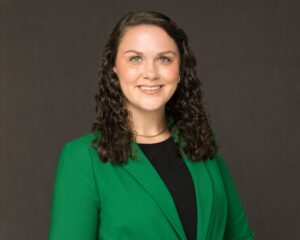
Executive Director
Site Solutions and Patient Experience
Jumo Health
In this Xtalks Spotlight, we spoke with Mackenzie McKinney, Executive Director, Site Solutions and Patient Experience at Jumo Health, about why today’s “recruitment problem” is often a patient readiness problem.
Mackenzie leads initiatives that deliver patient and caregiver education at the moment of need and simplify site training and engagement.
Mackenzie shared how a readiness-first approach can shift trial teams from chasing volume to designing for commitment. This shift can support fewer screen failures, less site strain and more predictable timelines. Read on for her perspective.
The Uncomfortable Truth: Enrollment is Optimized for Finding Patients, Not for Decision-Making
Mackenzie said that while the industry has become very good at identifying medically eligible patients, it has become less effective at ensuring that patients stay enrolled over time.
“We have gotten very good at finding medically eligible patients, but we haven’t gotten better at understanding whether those patients are ready to participate. Enrollment is optimized right now for volume but not for human decision-making.”
In her view, without confronting that gap, additional data sources and recruitment solutions may simply accelerate the same outcome.
Eligibility vs. Readiness: What Today’s Framing Misses About Dropout
Recruitment strategies still tend to emphasize identifying medically eligible patients, while drop out is often viewed as inevitable. Mackenzie argued that this thinking overlooks a key distinction: eligibility is about capability, while readiness is about commitment.
“We move patients forward who are never prepared to participate in a trial, and then we are shocked when they say no,” she said.
Mackenzie also emphasized that burden and complexity are usually known well before a trial population is chosen. Yet the industry rarely assesses whether protocols and patient education are designed around those known burdens.
In practice, trials are often designed around highly specialized criteria and operational demands without adequately assessing whether patients are prepared to take part and stay the course.
When patients discontinue, she noted, “life circumstances” can become a catch-all explanation. But McKinney argued that this framing can shift attention away from whether trials are designed to fit into real lives. In her view, medical eligibility may get patients in the door, but readiness is what builds trust and commitment over time.
Dropout Is as Inevitable as It Is Costly
“When you label patient dropouts as inevitable, you ignore the responsibility that we all have in designing trials that are anchored in human behavior,” began MacKenzie.
MacKenzie noted that when dropout is labeled as inevitable, teams may be less likely to investigate root causes and miss opportunities to design trials that people can realistically complete. She also urged sponsors and operators to ask a simple question during planning: would we participate in this trial ourselves and iterate until it becomes an “easy yes.”
Beyond timelines, when participants leave a trial, it reflects tangible consequences — such as wasted spend, increased site burden and a trial experience that did not meet expectations — rather than an abstract or inevitable outcome.
What “Trial Readiness” Means in Practice
Mackenzie defined trial readiness as a broader assessment of whether a patient is prepared. She described readiness as cognitive, emotional, logistical and situational.
“Trial readiness is the idea that enrollment success depends on more than medical fit. It’s about whether a patient is cognitively, emotionally, logistically and situationally prepared to choose participation and remain engaged throughout the trial.”
In practice, she said, this shifts enrollment from a patient identification problem to a trial design problem: moving from “How many patients can we find?” to “Which patients are most likely to enroll and finish?”
For sites, she said trial-readiness can reduce screen failures and burnout. For sponsors, it can bring more predictability to timelines and cost curves. For patients, it can restore dignity by ensuring they are fully informed and not rushed forward without a realistic understanding of the journey. This includes what it takes to comply and stay the course.
“The most ethical trials are the ones that patients can actually finish,” she stated.
Does Readiness Add Complexity or Reduce It?
Some may worry that readiness adds steps to an already complex process. Mackenzie’s response was that complexity already exists; ignoring human behavior simply pushes the cost downstream.
“I’d argue that paying attention to human behavior doesn’t add complexity, but ignoring it does.”
She described readiness as replacing chaos with clarity. MacKenzie warned that when trial complexity is ignored, it doesn’t disappear. It compounds into a “tomorrow problem” that shows up later as delays, added costs and poor patient experience.
Beyond Technology: An Industry View Correction
Mackenzie emphasized that this shift is not primarily about better technology. It is a system-level change in how the industry views patients: from “resources” to decision-makers and partners in trial success.
“This is a fundamental, philosophical, global change that moves the industry from seeing patients as resources to seeing them as decision makers and equal partners in the success of drug development.”
Without that mindset change, she argued, technology may simply accelerate broken processes rather than fix them.
Mackenzie added, “The sooner we shift together, the better we can help patients.”
A Quick Take: What Will Separate Leaders in Five Years?
When asked to summarize the core failure of today’s patient recruitment and enrollment model, Mackenzie pointed to a flawed assumption about what participation feels like in real life.
“We’ve built an enrollment system that assumes trials are easy to participate in, and then we fail when humans show up to participate, or they don’t enroll, they aren’t compliant and decide to drop out.”
Looking ahead, she said the organizations that succeed will be the ones that treat enrollment and retention as one continuous human journey.
Trial success, in her view, depends on whether patients choose to participate and remain engaged over time.
As McKinney summarized, “The future belongs to those who design trials worth staying in.”
This article was created in collaboration with the sponsoring company and the Xtalks editorial team.


Join or login to leave a comment
JOIN LOGIN