
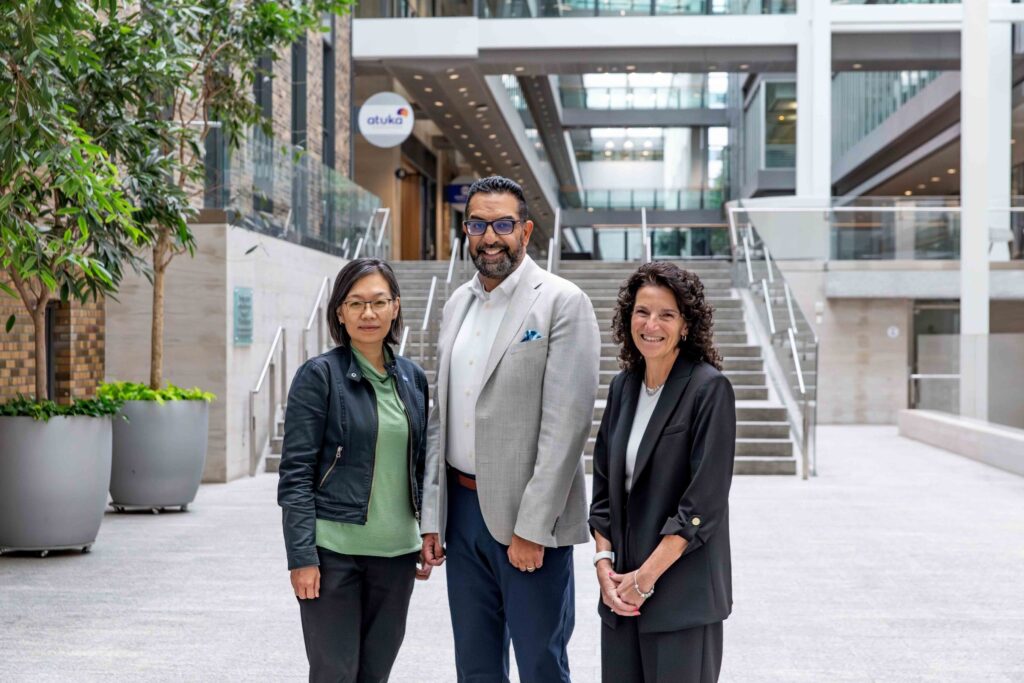
This week, Toronto-based innovation hub MaRS Discovery District announced the launch of Life Sciences Central, a collaborative platform co-led by MaRS, OBIO and Toronto Innovation Acceleration Partners (TIAP), aimed at streamlining commercialization support for health tech and life science ventures in Ontario.
The venture is touting itself to be “one powerful engine to drive life sciences growth” by scaling more efficiently, drawing greater investment and bringing transformative health innovations to global markets.
While Canada, and Ontario in particular, has world-class research and academic institutions, the transition from lab to market has been well documented as a weak link.
According to MaRS, developers of biotech, medical devices and digital health innovations still face a “fragmented and complex path to market.” And while Ontario “is home to more than half of the country’s health research output, its startups have historically lagged in scaling and commercialization compared to global peers.”
The Life Sciences Central platform intends to provide unified access to a shared pipeline of commercialization services, so ventures can “receive the right help at the right time” from Ontario’s top advisors and investor networks.
It also aims to combine open, self-serve resources (community events, digital tools, market insights) with targeted support for high-potential companies, such as capital access, IP licensing, talent matching and infrastructure services.
It will do so by leveraging the respective strengths of MaRS (venture ecosystem/infrastructure), OBIO (network and advocacy for early-stage life sciences) and TIAP (translation of academic research into commercial ventures) in a coordinated way.

“Ontario has world-class researchers, entrepreneurs and institutions. But we’ve long lacked the cohesive infrastructure to translate that excellence into scale-ready companies,” said Grace Lee Reynolds, CEO, MaRS Discovery District, in the press release announcing the launch of the venture. “Life Sciences Central addresses that gap by connecting the dots across our ecosystem, lab space, capital, talent and commercialization support, which will make it easier for high-potential ventures to grow here at home.”
Canadian health tech is at a crucial crossroads right now. The ecosystem is facing a challenging moment, with early-stage funding down, supply chain disruptions and investor caution hampering commercialization, even as global geopolitical shifts and increasing domestic interest offer a fresh window of opportunity.
One persistent challenge is that Canadian-born ventures often relocate or license abroad because of gaps in local infrastructure, capital or market pathways. A more cohesive national ecosystem means more of the value chain can stay in-country.
In effect, an initiative like Life Sciences Central is a bet on ecosystem alignment to make the commercialization path less cumbersome and more streamlined, encouraging promising ventures to remain rooted in Ontario (and Canada).
“This level of alignment and integration is a game-changer for the sector,” noted Parimal Nathwani, president and CEO, TIAP. “Together, we can eliminate inefficiencies, focus resources and accelerate the journey for startups tackling some of the most urgent health challenges of our time.”
The capital gap also remains a major constraint, as recent reports note that Ontario continues to face a shortage of seed-stage funding for life sciences ventures.
By aligning key ecosystem supports, there’s also potential for earlier-stage companies to hit commercialization readiness faster. This could also shorten the “valley of death” gap between discovery and market launch.
“This initiative is about unlocking Canada’s full economic and innovation potential,” remarked Dr. Maura Campbell, president and CEO, OBIO. “We are proud to be working with MaRS and TIAP to ensure that more companies move from promising ideas to real-world health solutions, while creating jobs and attracting investment in the process.”












Join or login to leave a comment
JOIN LOGIN