
Following a licensing deal struck with GSK in early March, Alfasigma has received FDA approval for Lynavoy (linerixibat) for the treatment of cholestatic pruritus in adult patients with primary biliary cholangitis (PBC), a rare autoimmune liver disease characterized by progressive bile duct destruction.
The approval is particularly notable as Lynavoy becomes the first therapy in the US specifically indicated for this condition, addressing a major unmet need in PBC management.

Related: J&J’s Icotyde (Icotrokinra) Receives FDA Nod as First Oral Biologic for Plaque Psoriasis
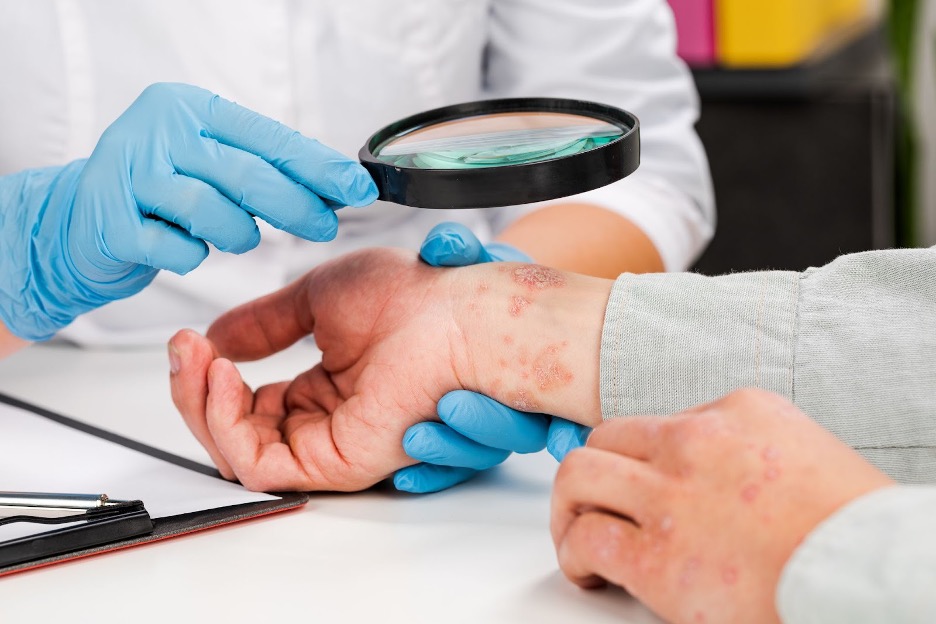
Cholestatic pruritus, often described as an intense, internal itch that is often chronic and cannot be relieved by scratching, affects up to 89% of patients with PBC and can severely impair sleep, mental health and overall quality of life.
While several therapies exist to slow the progression of PBC, such as ursodeoxycholic acid and newer agents targeting bile acid pathways, few directly address pruritus, which remains one of the most burdensome symptoms for patients.
Historically, clinicians have relied on off-label treatments, such as bile acid sequestrants, rifampin or antidepressants, with variable efficacy and tolerability. The approval of Lynavoy introduces a mechanism-specific therapy designed to directly reduce itch drivers, rather than indirectly managing symptoms.
Linerixibat is an ileal bile acid transporter (IBAT) inhibitor, a class of drugs that reduces the reabsorption of bile acids in the intestine. By blocking this transporter, the drug lowers circulating bile acid levels and other pruritogenic mediators believed to contribute to the sensation of itch.
This targeted approach aligns with growing evidence that bile acids and related signaling molecules play a central role in cholestatic itch, making IBAT inhibition a rational therapeutic strategy.

The FDA approval was supported by data from the Phase III GLISTEN trial, a randomized, placebo-controlled study evaluating linerixibat in patients with PBC and moderate-to-severe pruritus.
In the trial, the oral therapy, typically administered twice daily, demonstrated clinically meaningful benefits over a 24-week period.
Results showed that Lynavoy led to significant reductions in itch severity compared with placebo; rapid and sustained symptom improvement; and improvements in itch-related sleep disturbance.
Its safety profile was consistent with earlier studies and the IBAT inhibitor class.
Kaivan Khavandi, SVP, R&D Head Respiratory, Immunology & Inflammation, and Head of GSK Translational & Development Sciences, GSK, said in the company statement that, “The approval of Lynavoy in the US gives patients a much needed treatment option that offers rapid, significant and sustained improvement in the debilitating effects of itch caused by PBC. For many patients, cholestatic pruritus remains a persistent, poorly addressed condition. This is the first liver medicine from our pipeline to receive approval, underscoring our commitment to developing meaningful innovation across the spectrum of liver disease.”
Regulatory submissions are currently under review in the European Union, UK, Canada and China. Lynavoy had previously received Orphan Drug Designation in multiple regions.
Alfasigma’s new licensing agreement with GSK, valued at up to $690 million, grants the company worldwide rights to develop and commercialize linerixibat.
The deal hands Alfasigma responsibility for global development and commercialization, leveraging its “deep hepatology expertise and strong global footprint,” according to Alfasigma CEO Francesco Balestrieri.
The agreement includes a $300 million upfront payment, a further $100 million tied to FDA approval and additional regulatory and sales-based milestone payments, plus tiered double-digit royalties for GSK.
Alfasigma’s foothold in PBC stems from its $800 million 2023 acquisition of Intercept Pharmaceuticals, whose drug Ocaliva (obeticholic acid), a farnesoid X receptor (FXR) agonist, struggled after its 2016 accelerated approval and was ultimately voluntarily withdrawn in 2025 due to safety concerns.
Now, Alfasigma is re-entering the PBC market with Lynavoy, following Ocaliva’s exit. The space is currently led by Ipsen’s Iqirvo (elafibranor) and Gilead Sciences’ Livdelzi (seladelpar), both launched in 2024 and benefiting from increased demand after Ocaliva’s withdrawal.







Join or login to leave a comment
JOIN LOGIN