
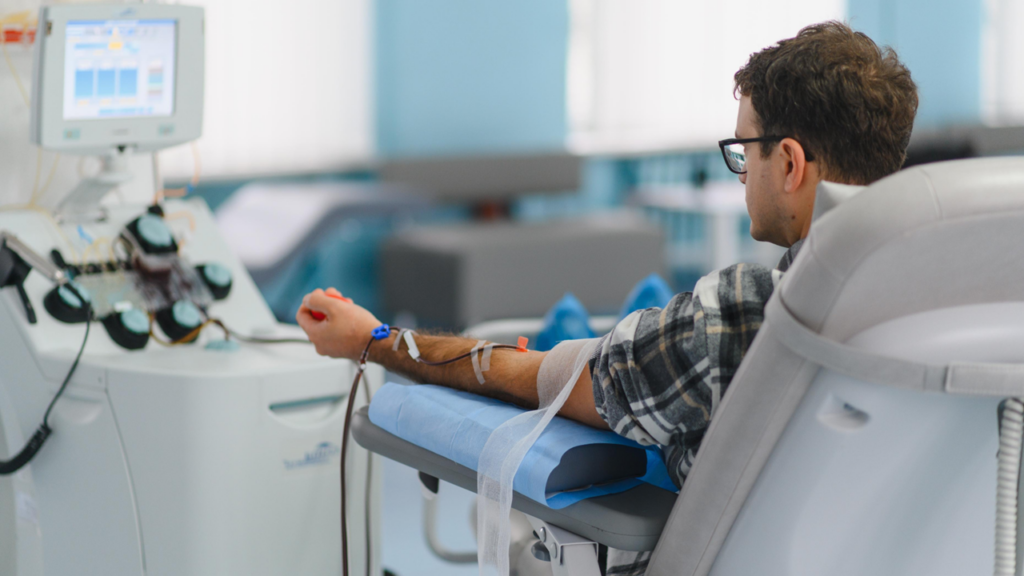
The Takeda Indonesia plasma pilot will establish donation centers, test whether collection can be expanded nationally and support training for healthcare and laboratory workers.
Takeda will invest up to $30 million in a two-year pilot program to establish plasma donation centers in Indonesia. The first center is expected to open in 2027.
The program is the initial phase of a multi-year collaboration between the biopharmaceutical company and the Indonesian government. Indonesia’s Ministry of Health has granted Takeda a plasma fractionation license, allowing the company to collect plasma in the country and arrange for it to be processed into plasma-derived medicinal products (PDMPs).
Plasma contains proteins that can be processed into medicines. This is done through fractionation, an industrial process that separates and purifies the proteins used to produce plasma-derived medicinal products (PDMPs). These treatments include immune globulins and clotting factors and are used for immune deficiencies, bleeding disorders and other rare conditions.
Get industry leading pharma and biotech news, events and expert insights delivered to your inbox.

Indonesia has been expanding its ability to manufacture medicines locally. In June 2026, construction was completed on a $150 million plasma fractionation facility in Karawang developed by South Korea’s SK Plasma and the Indonesia Investment Authority. The plant is designed to process up to 600,000 liters of plasma per year and is expected to begin full operations in 2027, subject to regulatory approvals.
Indonesia’s Ministry of Health has also cited new vaccine plants operated by Etana Biotechnologies Indonesia and Biotis Pharmaceuticals Indonesia as part of the country’s efforts to expand local manufacturing.
The new pilot will allow Takeda and the Ministry of Health to evaluate whether larger-scale plasma collection is feasible and refine the operating model before potentially expanding to a national donation network. Takeda has not disclosed how many centers will be established during the pilot or where they will be located.
The centers will become part of Takeda’s BioLife plasma collection network and will operate under international quality and regulatory standards, according to the company. The program is also expected to create skilled jobs for healthcare professionals and laboratory technicians and provide training in international-standard practices.
Plasma collected in Indonesia will initially be sent to facilities within Takeda’s existing global manufacturing network for fractionation. Indonesia would be given priority for the medicines produced, in line with local laws and regulations.
Takeda is also assessing a possible plasma-derived therapies manufacturing facility in Indonesia but has not disclosed an investment, capacity or timeline.
The broader collaboration is intended to support a more reliable supply of plasma and PDMPs in Indonesia.
Takeda also updated plans for a large plasma manufacturing investment in Japan in 2025. The company plans to invest approximately $1.03 billion (¥153 billion) in a new plasma-derived therapies facility in Osaka. Takeda said at the time that it was reevaluating the project’s scope and construction timeline because of rising costs.
If you want your company to be featured on Xtalks.com, please email [email protected].









Join or login to leave a comment
JOIN LOGIN