

Accelerate Upstream Process Development Using Hybrid Modeling
 Earn a Certificate of Live Attendance
 AI Webinar Explorer available after event
About this webinar
As biopharmaceutical programs advance under increasingly compressed timelines, upstream development teams face pressure to deliver optimized, quality-targeted processes earlier. Early decisions still rely heavily on platform knowledge and expert judgment, while historical bioreactor data is rarely leveraged quantitatively. This webinar will explore how hybrid modeling can bring predictive, model-based decision-making into upstream development earlier, helping optimize processes during clone selection.
Central to this approach is knowledge transfer: reusing data from prior programs to build a reliable hybrid model when new-program data is still scarce. The session will examine how relevant historical programs are identified using a multivariate strategy that scores candidate datasets on product-quality similarity, process-performance similarity and design-space coverage. These models can then support in-silico, clone-specific optimization. Because the model is established early, its predictions can be confirmed within experiments already planned in the workflow, reducing the need for dedicated optimization studies.
Through two case studies, the featured speakers will discuss how the same strategy adapts to different programs and quality objectives. The first, a monoclonal-antibody intermediate of an antibody-drug conjugate (ADC) developed under a compressed resupply timeline, used model-guided optimization to reduce acidic variants while maintaining titer without additional experiments. The second, another ADC intermediate at first-in-human development, applied the same approach to optimize glycan quality attributes. Together, these examples demonstrate how model-based optimization can control multiple product-quality attributes earlier in development.
Attendees will understand how integrating historical data, hybrid models and a small amount of molecule-specific experimentation can replace sequential, intuition-driven optimization with model-based decision-making. This approach reduced development timelines by up to six months and experimental runs by up to 50% relative to conventional workflows.
Register for this webinar to learn how hybrid modeling can accelerate upstream process development, reduce experimental requirements and support earlier control of product-quality attributes.
Who should attend
- Process Development Scientists
- Cell Line Development Scientists
- Process Development Leads / Directors
- Data Scientists in BioPharma R&D
What you will learn
- How historical bioreactor data can support hybrid modeling when molecule-specific data are limited
- How multivariate dataset selection can identify relevant prior programs based on product quality, process performance and design-space coverage
- How hybrid models enable in-silico, clone-specific process optimization earlier in upstream development
- How model-first optimization reduced development timelines by up to six months and experimental runs by up to 50%
Featured Speakers

Juan C. Gonzalez Rivera, PhD
Juan C. Gonzalez Rivera, PhD, is a Principal Scientist in Biologics Upstream Process Development at Bristol Myers Squibb, where he leads upstream development for mammalian cell culture programs from First-In-Human (FIH) development through commercial readiness. He has served as the upstream lead and supported several FIH and commercial process development programs, directed process characterization and control strategy development for an oncology program supporting Process Performance Qualification (PPQ).
His technical focus is the development and application of hybrid, mechanistic and data-driven models to optimize bioreactor processes, improve product quality attributes and titer, accelerate development timelines and strengthen process robustness across early- and late-stage programs. He also leads a team focused on digital approaches to accelerate CMC development, including the evaluation of emerging technologies and management of external collaborations. He has led the upstream modeling and simulation workstream at the National Institute for Innovation in Manufacturing Biopharmaceuticals (NIIMBL). He holds a PhD in Chemical Engineering from the University of Texas at Austin.
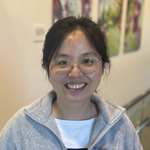
Yikun Huang, PhD
Yikun Huang, PhD, is a Senior Scientist in Upstream Process Development within Biologics at Bristol Myers Squibb. She focuses on mammalian cell culture process development for clinical-stage programs, from First-In-Human (FIH) through early clinical readiness and currently serves as the upstream lead for an FIH module. Her work centers on applying hybrid modeling techniques to support risk assessment ahead of process characterization and to troubleshoot product quality issues during process development. Within her group, she is recognized as a subject matter expert in hybrid modeling approaches. Yikun earned her PhD in Biomedical Engineering from the University of Connecticut.
Partner for this event

Bristol Myers Squibb
Bristol Myers Squibb is a global biopharmaceutical company dedicated to discovering, developing and delivering innovative medicines that help patients overcome serious diseases.