
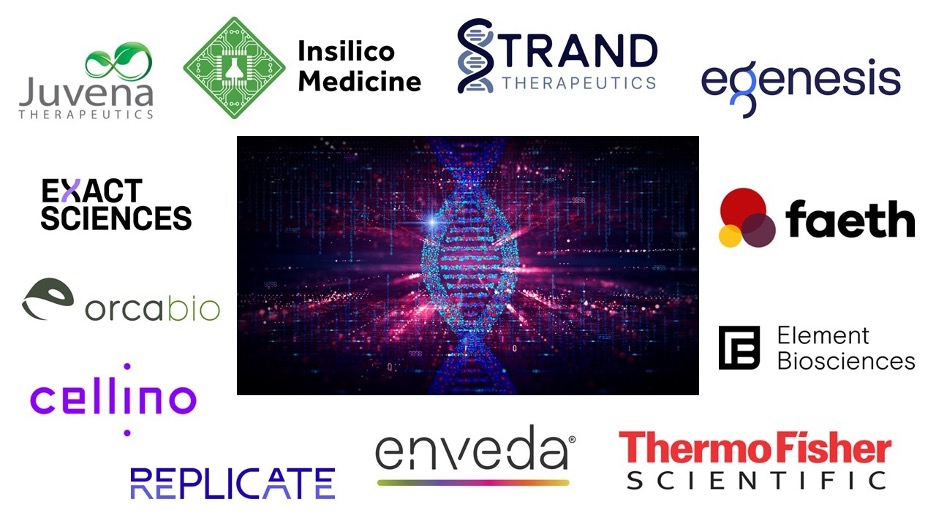
Fast Company’s 2026 list of the most innovative companies includes biotech companies at the cusp of scientific breakthroughs using innovative approaches and technologies to reshape the biotech landscape.
From multi-million dollar funding rounds and pharma partnerships to mega acquisitions and platform-driven revenue models, these companies reflect where the science and capital is flowing in the life sciences.

1. eGenesis
Founded in 2015 and based in Cambridge, Massachusetts, eGenesis is a clinical-stage biotech developing gene-edited pig organs for human transplantation. The company gained global attention after transplanting engineered pig kidneys that sustained patients for months, helping secure FDA clearance for expanded clinical trials. Financially, eGenesis remains pre-revenue, typical for xenotransplantation players, but has raised hundreds of millions from investors, including ARCH Venture Partners and Khosla Ventures. Its value proposition lies in long-term platform economics, potentially transforming organ transplantation into a scalable market.
2. Exact Sciences
Founded in 1995 and headquartered in Madison, Wisconsin, Exact Sciences is a molecular diagnostics firm that has generated multi-billion-dollar annual revenues. Its portfolio includes flagship products like its at-home colorectal test Cologuard and Oncotype DX, including the Oncotype DX Breast Recurrence Score genomic breast cancer test that can predict the likelihood of cancer recurrence. It determines if chemotherapy, in addition to hormone therapy, will benefit the patient, helping to avoid unnecessary side effects. In a major 2025 deal, Abbott Laboratories agreed to acquire Exact Sciences for approximately $21 billion for its scaled diagnostics platforms. The company’s growth strategy has combined organic expansion with acquisitions (e.g., Thrive Earlier Detection), positioning it as a leader in early cancer detection markets. Exact Sciences’ 2025 revenue registered at $3.25 billion, an increase of 18% over the previous year.
3. Insilico Medicine
Founded in 2014, Insilico Medicine operates at the intersection of AI and drug discovery, with headquarters in Hong Kong and Boston. The company has raised over $400 million in venture funding and completed a ~$293 million IPO in Hong Kong in 2025, one of the largest biotech listings in the region. It also signed a $2.75 billion R&D collaboration with Eli Lilly that includes upfront payments. Meanwhile, its lead asset, rentosertib, has shown Phase IIa promise in idiopathic pulmonary fibrosis, marking one of the first AI-designed drugs to reach mid-stage trials.
4. Juvena Therapeutics
Founded in 2018 and based in Redwood City, California, Juvena Therapeutics is a regenerative medicine company leveraging stem cell-derived proteins. Still in the early clinical/preclinical stage, Juvena recently raised venture funding led by firms like Bison Ventures ($33.5 million Series B) to advance its regenerative biologics pipeline.
5. Enveda
Founded in 2019 and headquartered in Boulder, Colorado, Enveda uses machine learning to mine natural compounds for drug discovery. The company has raised over $100 million from investors, including Lux Capital and General Catalyst. Its business model blends platform licensing and internal pipeline development, making it attractive for pharma partnerships.

6. Replicate Bioscience
A San Diego-based startup founded in 2020, Replicate Bioscience is developing self-amplifying RNA therapeutics. The company has raised early-stage venture funding and operates in a post-mRNA vaccine investment wave with big bets being placed on next-generation RNA platforms.
7. Strand Therapeutics
Founded in 2017 in Boston, Strand Therapeutics engineers programmable mRNA therapies for cancers and autoimmune diseases. Strand Therapeutics raised $153 million in a Series B round led by Kinnevik, with backing from major pharma investors like Regeneron, Amgen and Eli Lilly, to advance its programmable mRNA pipeline, particularly its lead cancer therapy STX-001, which has shown early clinical promise in solid tumors. According to the company, the funding brings the company’s total capital to over $250 million and will support further clinical development of its next-generation mRNA therapies designed to precisely activate within tumors and improve efficacy and safety.
8. Cellino Biotech
Founded in 2017, Cellino Biotech focuses on automating cell therapy manufacturing using AI and laser-based technologies. In 2022, Cellino Biotech raised $80 million in a Series A round led by Bayer’s Leaps unit, with participation from 8VC, Humboldt Fund and others, bringing its total funding to $96 million. In 2024, the company was awarded a $25 million US federal grant to advance its automated biomanufacturing platform to scale the production of personalized stem cell therapies. The funding is aimed at accelerating the development of next-generation regenerative medicines by making cell therapy manufacturing more scalable, consistent and cost-effective.
9. Faeth Therapeutics
Founded in 2019 and based in New York, Faeth Therapeutics is developing metabolism-based cancer therapies. In February 2026, Sensei Biotherapeutics acquired Faeth Therapeutics to strengthen its oncology pipeline, adding Faeth’s lead asset PIKTOR, an investigational multi-node inhibitor targeting the PI3K/AKT/mTOR pathway in cancers like endometrial and breast cancer. Alongside the deal, Sensei raised approximately $200 million through a private placement to fund clinical development of PIKTOR and other programs.
10. Orca Bio
Founded in 2016, Orca Bio develops precision cell therapies and has raised over $500 million in funding, making it one of the most well-capitalized private biotechs in this cohort. This includes $250 million in aggregate financing accrued primarily through a Series F round led by Lightspeed Venture Partners along with access to additional credit, to support commercial launch readiness for its lead cell therapy Orca-T ahead of a key FDA decision. Orca-T is currently under FDA Priority Review for the treatment of patients with hematologic malignancies after the agency accepted its biologics license application (BLA). However, in April, the agency extended the review timeline by three months, setting a new prescription drug user fee act (PDUFA) target action date of July 6, 2026. The extension came after the company submitted additional manufacturing-related (CMC) data requested by the agency. The delay is tied to standard regulatory review processes for manufacturing and product controls. If approved, it could become the first allogeneic T-cell immunotherapy for blood cancers like AML, ALL and MDS, supported by positive Phase III data showing improved survival without severe graft-versus-host disease.

11. Epicrispr Biotechnologies
Founded in 2018, Epicrispr is developing epigenetic editing therapies. In 2025, the company reported new financing momentum alongside its Series B raise, securing $68 million to advance its epigenetic editing therapy EPI-321 for facioscapulohumeral muscular dystrophy (FSHD) into clinical trials, with the round backed by Ally Bridge Group and SOLVE FSHD. The funding supports early human testing of a first-in-class gene-modulating approach that has also recently shown early clinical safety and signs of functional improvement in patients. At the beginning of 2026, Epicrispr Biotechnologies reported early clinical data from its first-in-human study of EPI-321 for facioscapulohumeral muscular dystrophy (FSHD), showing encouraging signs of functional improvement alongside a favorable safety profile with no serious or severe adverse events in treated participants. The findings suggest early biological activity in a small cohort, though the study remains ongoing and still at an early stage of clinical development.
12. Vivodyne
Vivodyne develops human tissue models for drug testing, targeting the preclinical R&D market. Though early-stage, its business model is more tools- and services-oriented, potentially allowing earlier revenue generation compared to therapeutics companies. In 2025, Vivodyne raised $40 million in Series A funding led by Khosla Ventures to scale its robotics- and AI-driven platform that replaces animal testing with lab-grown human tissues for drug discovery. The company aims to address the high ~95% failure rate of drugs in human clinical trials, which it attributes to the poor predictiveness of animal models.
13. Opus Genetics
Founded in 2017 and based in North Carolina, Opus Genetics focuses on gene therapies for rare retinal diseases. Its pipeline progress and orphan disease focus could position it for premium pricing upon approval. In February 2026, Opus Genetics announced a $25 million private placement led by institutional biotech investors, issuing Series B convertible preferred shares at $3.39 each. The capital will be used to advance its gene therapy pipeline for inherited retinal diseases and general corporate needs, extending its cash runway into the first half of 2028.
14. Gilgamesh Pharmaceuticals
Founded in 2019 and based in New York, Gilgamesh Pharma develops next-generation neuropsychiatric therapies inspired by psychedelics. In March 2026, Gilgamesh Pharma closed an oversubscribed $60 million Series A financing led by Satori Neuro, with participation from institutional investors including Prime Movers Lab, to advance its pipeline of next-generation neuropsychiatric therapies. The funding will support continued development of its lead assets, including blixeprodil (GM-1020) for major depressive disorder (MDD), now moving toward late-stage trials, and additional programs targeting depression and addiction, alongside expansion of its broader drug discovery platform. In January 2026, Gilgamesh Pharma reported positive topline Phase IIa results for blixeprodil in patients with MDD, showing a rapid and statistically significant reduction in depression symptoms within 24 hours compared to placebo. The antidepressant effect was also durable for up to 28 days after short-course dosing.
15. Element Biosciences
Founded in 2017 in San Diego, Element Biosciences develops DNA sequencing platforms. Unlike many startups on this list, Element generates commercial revenue through instrument sales, positioning itself as a challenger to incumbents like Illumina. In February 2026, the company introduced its Vitari sequencing platform, a high-throughput benchtop system designed to deliver a high-quality whole human genome for roughly $100 per genome while significantly increasing scalability for research labs. The system, set to begin shipping in late 2026, is part of the company’s broader push to make sequencing more accessible and cost-efficient while expanding capacity for applications like population genomics, oncology and multiomics research. In November 2025, SOPHiA GENETICS and Element Biosciences announced a strategic partnership to combine Element’s high-performance DNA sequencing platforms (AVITI systems) with SOPHiA’s AI-driven analytics platform to create a streamlined, end-to-end genomic workflow for precision medicine research.

16. Argo Biopharma
Argo Biopharma is an emerging gene therapy company focused on advanced delivery technologies. Still early-stage, it operates within a highly competitive space where platform differentiation drives valuation, rather than near-term revenue. In September 2025, Argo Biopharma announced a multi-asset licensing and option agreement with Novartis focused on cardiovascular disease programs, including siRNA-based drug candidates targeting lipid disorders such as severe hypertriglyceridemia and dyslipidemia. Under the deal, Argo receives an upfront payment of about $160 million, with the agreement carrying the potential for up to $5.2 billion in milestone payments plus royalties.
17. Absci
Founded in 2011 and based in Vancouver, Washington, Absci is a publicly traded company combining AI and synthetic biology. At the Needham Healthcare Conference held in April 2026, Absci highlighted progress on its AI drug-discovery platform and lead candidate ABS-201 for androgenetic alopecia, noting that the antibody is advancing through early clinical testing with upcoming data readouts expected on safety, dosing and hair-growth efficacy through 2026 to 2027. The first participants were dosed in its Phase I/II HEADLINE trial. The company also reiterated that its broader AI engine is generating new antibody therapeutics across difficult targets, while ABS-201 remains its flagship program aimed at treating hair loss by targeting prolactin receptor signaling to stimulate follicle regeneration. Absci raised about $86 million in an oversubscribed public offering.
18. Thermo Fisher Scientific
Founded in 2006 and headquartered in Waltham, Massachusetts, Thermo Fisher Scientific is the financial heavyweight on this list, generating over $40 billion in annual revenue. Its growth strategy relies heavily on acquisitions and vertical integration, particularly in bioproduction and cell/gene therapy manufacturing, making it a critical enabler of the broader biotech ecosystem. In April 2026, the company launched its Applied Biosystems PowerFlex Thermal Cycler, a next-generation PCR instrument designed to improve flexibility, speed and precision in DNA amplification workflows across research and applied lab settings. Also in April, the company launched an integrated biologics development platform, the Gibco CHOvantage GS Cell Line Development (CLD) Kit, designed to streamline end-to-end drug development, combining cell line development tools, services and manufacturing support to speed up timelines from discovery to clinic.
19. Basecamp Research
Founded in 2019 and based in London, UK, Basecamp Research is building a massive biodiversity dataset to power AI-driven drug discovery. In March 2026, Basecamp Research announced the launch of its “Trillion Gene Atlas,” a large-scale initiative to build one of the world’s most expansive biological datasets for AI drug discovery. The project aims to sequence and model genomic data from over 100 million species, expanding known genetic diversity by around 100x to train next-generation AI systems for therapeutic design. The effort, supported by partners including NVIDIA, Anthropic and major sequencing companies, is designed to overcome the “data bottleneck” in biology and accelerate AI-driven discovery of new medicines by feeding models far richer evolutionary data than currently exists in public databases. Basecamp Research had previously raised about $80 million in total funding across two main rounds, including a $20 million Series A in 2022 and a $60 million Series B in 2024 led by Singular with participation from investors such as S32, Redalpine, True Ventures and Hummingbird Ventures.
20. Manifold Bio
Founded in 2019 and based in Boston, Manifold Bio is developing high-throughput in vivo screening technologies for biologics. In November 2025, Manifold Bio announced a strategic collaboration with Roche to develop multiple next-generation blood-brain barrier (BBB) “brain shuttles” designed to improve the delivery of therapies into the central nervous system for neurological diseases. Under the deal, Manifold receives a $55 million upfront payment, with the potential for over $2 billion in milestone payments plus royalties, while Roche leads later-stage development and commercialization of any resulting therapies. In March 2026, Manifold Bio announced that it successfully demonstrated million-scale experimental validation of AI-designed protein binders, testing about 1 million designs across 127 biological targets in a single multiplexed experiment. The study, done in collaboration with NVIDIA, identified effective binders for roughly 68% of targets.














Join or login to leave a comment
JOIN LOGIN