
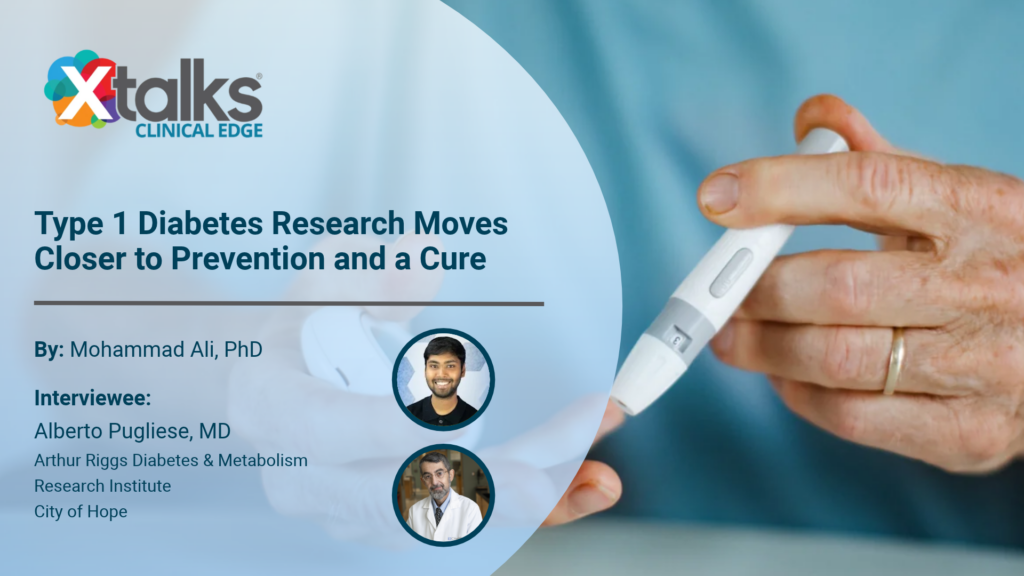
City of Hope researcher Dr. Alberto Pugliese explains how decades of advances in genetics, human tissue studies and cell therapy are reshaping type 1 diabetes care.
Type 1 diabetes develops when the immune system attacks the pancreatic beta cells that produce insulin. Although insulin treatment allows people with the condition to manage blood glucose, it does not stop the underlying autoimmune process or restore the cells that have been lost.
Understanding when that process begins, why it occurs and how it might be interrupted is central to type 1 diabetes research.
Researchers can now identify many of the molecules targeted by the autoimmune response, measure disease-associated antibodies and study immune cells involved in the attack. Genetic information and antibody testing also make it possible to identify some people at risk before they develop symptoms.
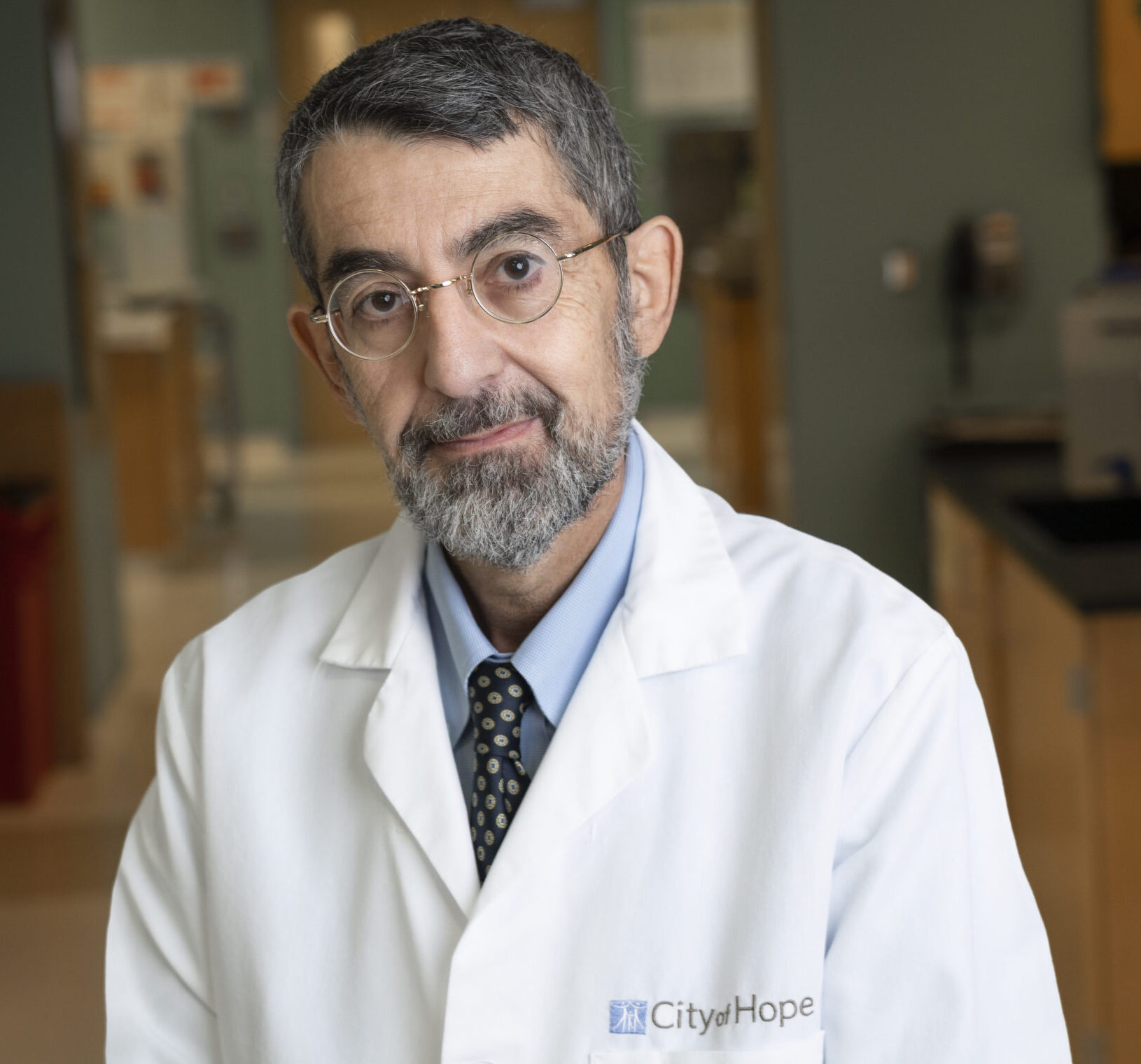
Arthur Riggs Diabetes & Metabolism Research Institute
City of Hope
In an Xtalks Clinical Edge interview, Dr. Alberto Pugliese of the Arthur Riggs Diabetes & Metabolism Research Institute at City of Hope reflected on more than 35 years of work in the field. He described a shift from identifying the disease primarily after symptoms appear to studying its earliest biological signs, testing treatments that can slow progression and investigating ways to replace insulin-producing cells.
Detecting Type 1 Diabetes Before Symptoms Begin
Type 1 diabetes usually develops in stages. Dr. Pugliese explained that some people carry genetic variants that increase their risk of developing the disease. They may later develop autoantibodies, which signal an immune response against insulin-producing cells.
During this period, immune cells may already be entering the pancreas and affecting beta cell function, even though the person feels well.
Researchers describe this progression using stages. In stage 1, a person has multiple diabetes-associated autoantibodies but does not yet show abnormal blood-glucose levels. Stage 2 involves these autoantibodies together with changes in glucose regulation, while stage 3 marks the onset of clinical diabetes. Dr. Pugliese also discussed an earlier period of genetic susceptibility before detectable autoantibodies appear.

Get industry leading pharma and biotech news, events and expert insights delivered to your inbox.
This framework matters because the timing and goals of treatment may differ across stages. A person identified before symptoms develop may be eligible for monitoring or, in certain circumstances, a therapy intended to delay clinical disease.
The FDA’s 2022 approval of teplizumab to delay the onset of stage 3 type 1 diabetes in individuals with stage 2 disease marked a major milestone. However, Dr. Pugliese noted that moving an intervention from discovery through clinical trials can take many years.
Individual trajectories can defy expectations. Some people may develop symptoms later than predicted, potentially revealing natural mechanisms that slow disease progression.
What Protective Genes Reveal About Autoimmunity
Genes can influence both susceptibility to type 1 diabetes and protection against it. Some protective variants may limit the initiation or breadth of the autoimmune response, making it less likely to develop into a sustained attack on beta cells.
Researchers have been looking into the thymus, an organ involved in educating developing immune cells to distinguish the body’s own tissues from foreign threats. During this process, immune cells that strongly recognize the body’s own proteins are normally eliminated or controlled. Genetic variation may affect how efficiently these safeguards operate.
These protective mechanisms could offer new targets for preventing type 1 diabetes by helping researchers intervene before substantial beta cell damage occurs.
How Human Pancreas Tissue Advances Type 1 Diabetes Research
Animal models have helped researchers investigate type 1 diabetes for decades. However, even useful models cannot reproduce every feature of human disease. Differences in genetics, immune recognition and environmental exposures can limit how confidently findings translate to patients.
Through the Network for Pancreatic Organ Donors with Diabetes (nPOD), researchers can examine donated human pancreas tissue and directly study the cells and immune processes involved. Dr. Pugliese said this work has uncovered features of type 1 diabetes that were not apparent from earlier models alone.
It was previously thought that most people had already lost the overwhelming majority of their beta cells by the time symptoms appeared. Human pancreas studies instead showed that some people retain insulin-producing cells, including cells that may be present but not functioning normally.
“They can still be sitting there but don’t work,” Dr. Pugliese said.
Improving Prediction and Personalizing Intervention
Genetic risk scores can integrate information across dozens of variants, while longitudinal antibody testing can reveal the emergence and persistence of autoimmunity. It is also possible to track disease progression by measuring how well insulin-producing cells are functioning.
Together, these tools help researchers distinguish people at different stages of risk and determine when an intervention may be most appropriate. They also create large, complex datasets that may support more individualized predictions as research progresses.
Dr. Pugliese suggested that AI could also eventually help integrate these sources of information into improved predictive algorithms.
The challenge is not simply to identify elevated risk, but to predict an individual’s disease course and understand why some people progress differently from others.
Replacing Insulin-Producing Cells
Pancreas transplantation or isolated pancreatic islet transplantation has shown that replacing insulin-producing tissue can restore insulin secretion in selected patients. More recently, stem cell-derived beta cells have emerged as a potentially renewable source of cells for transplantation.
Dr. Pugliese described encouraging clinical trial findings in which transplanted stem cell-derived cells produced insulin and, in some participants, enabled substantial reductions in or independence from injected insulin. Unlike donated pancreatic tissue, stem cell-derived cells could offer a more scalable source for future therapies.
“To really reverse type one diabetes, you need two things,” he said, explaining that researchers must restore insulin production and prevent the immune system from attacking the replacement cells.
A recipient may reject transplanted cells because they originate from another source, and the autoimmune process responsible for type 1 diabetes may also target insulin-producing cells. Current transplantation approaches can therefore require long-term immunosuppression, which carries its own risks.
But there might be ways around this problem. Dr. Pugliese discussed early work on engineering transplanted cells to be less visible to the immune system. There are efforts to regenerate a patient’s own beta cells, which could avoid transplant rejection but would still require control of the underlying autoimmune response.
The Path From Discovery to Patients
A promising target identified in basic research must be evaluated in preclinical studies and then in progressively larger clinical trials designed to assess safety and efficacy.
The history of immune-modifying therapy illustrates both the difficulty and the progress. The first approved treatment to delay progression of type 1 diabetes involved decades of research before approval.
Looking ahead, progress may come from combining approaches instead of relying on a single intervention. Earlier identification of autoimmune activity could create opportunities to preserve existing beta cells, while cell replacement and immune protection strategies may help people who have already lost substantial insulin production.
The field has moved beyond asking only how to manage blood glucose after diagnosis. As Dr. Pugliese’s interview illustrates, type 1 diabetes research is increasingly focused on understanding disease progression, protecting remaining beta cells and finding safe ways to restore insulin production.












Join or login to leave a comment
JOIN LOGIN