
How Advocacy Perspectives Can Improve Neurology Research
 AI Webinar Explorer now available for enhanced on-demand viewing
About this webinar
Neurology research continues to face persistent challenges in early detection, diagnosis, specialist access and long-term care continuity. For life sciences stakeholders, understanding how advocacy organizations and medical groups view these barriers can provide valuable insight into research participation, patient engagement and unmet needs across neurological conditions.
This educational webinar brings together leaders from neurology/neuroscience advocacy organizations and medical groups for a unique discussion on the real-world challenges shaping neurological research and care. By bringing together organizations that work directly with patients, caregivers and neurological communities every day, the session will offer perspectives that are often underrepresented in conversations about research and healthcare innovation.
For organizations seeking to improve patient engagement, strengthen research participation and better align innovation with real-world patient needs, this discussion provides a unique opportunity to learn directly from the advocacy and medical groups working closest to neurological communities.
Attendees will gain insight into:
- Unmet needs across neurological conditions
- Barriers to diagnosis and specialist access
- Challenges in research participation and patient engagement
- Priorities shaping future neurological research
- Gaps in patient support and care continuity
- The role of digital health and remote monitoring
- Opportunities for cross-sector collaboration
This session offers a rare opportunity to hear directly from organizations working at the intersection of patient support, advocacy, research and care delivery, and to better understand how their perspectives can help inform future research and healthcare strategies.
Register for this webinar to learn how advocacy perspectives can help shape research priorities, improve patient engagement and advance innovation across neurology.
Who should attend
- Research and scientific leadership
- Programs and patient support
- Policy, regulatory, partnerships and public health
- Education and digital health
- Patient advocacy and community engagement
What you will learn
- How advocacy and medical groups define unmet needs across neurological conditions
- Why barriers to diagnosis, specialist access and research participation persist
- How advocacy perspectives can help shape future research and patient engagement strategies
- Where collaboration opportunities exist to improve neurological research and care
Featured Speakers

Stephanie Buxhoeveden, PhD, MSN
Dr. Stephanie Buxhoeveden, PhD, MSN, FNP-BC, MSCN is Chief Scientific Officer of the Accelerated Cure Project for Multiple Sclerosis (ACP), where she leads the organization’s research portfolio, including iConquerMS, one of the largest patient-powered research networks in MS. Diagnosed with MS at age 25, she has dedicated her career to advancing research that reflects the priorities, experiences, and needs of people living with neurological disease.
Stephanie’s career spans clinical care, research, industry, and nonprofit leadership. She began as a neurosurgical ICU nurse before becoming an MS-certified nurse practitioner and co-director of a comprehensive MS care center in Virginia, where she cared for more than 1,000 people living with MS. She later served as a Medical Science Liaison at Biogen and earned a PhD from Virginia Commonwealth University, where her research focused on sex-based disparities in MS.
Today, Stephanie works at the intersection of patient engagement and scientific discovery, helping researchers, clinicians, industry partners, and advocacy organizations build more patient-centered approaches to research. She also serves as Chair of the Board of Trustees of the National MS Society’s Virginia–West Virginia Chapter, and is a longtime Nursing Consultant and podcast host for Can Do MS.
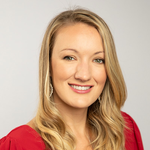
Lauren Moore, PhD
Dr. Lauren Moore received her BS in Biomedical Physics from Northeastern University and her PhD in Neuroscience from the University of Michigan, where her research focused on preclinical assessment of antisense oligonucleotides for the treatment of Spinocerebellar Ataxia type 3. After completing her PhD, Dr. Moore transitioned into a Scientist position in industry for several years, working towards the development of gene silencing therapies for Hereditary Ataxias and other neurodegenerative diseases. In 2022, she became the first Chief Scientific Officer (CSO) of NAF. In her role as CSO, Dr. Moore is responsible for leading NAF’s scientific strategy, engaging with key stakeholders in academia and industry, and expanding patient accessibility and engagement in clinical research. Dr. Moore was inspired to enter the field of Ataxia research following the diagnosis of Ataxia in her own family. She is passionate about advancing Ataxia research and the development of treatments and technologies to impact patients.
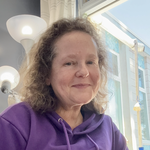
Valeria Palladino, MACT
Valeria Palladino is the Executive Director of the Epilepsy Association of Edmonton and Northern Alberta (EAENA), formerly known as the Edmonton Epilepsy Association (EEA), where she is dedicated to serving the epilepsy community across Northern Alberta and Canada. With university degrees in education and communication technologies, she brings decades of academic and corporate leadership to her work in advocacy and community engagement.
Valeria is passionate about helping people feel confident in their own skin by increasing understanding of medical conditions, building practical coping strategies, and fostering strong, supportive communities—often where answers have been overlooked or dismissed.
She is passionate about social support and the power of communities. In her spare time, she is an avid reader, a dog lover and a passionate traveller.
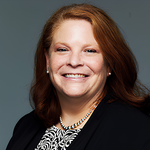
Leah Schust Myers
Leah Schust Myers has spent her entire career working in health care administration and never imagined she would find a use for her skills in an entirely different way.
From medical secretary to hospital manager and everywhere in between, Leah learned how to manage the needs of large populations within a medical setting. When her son, Ben, was diagnosed with an SCN2A Disorder in 2012, it became abundantly clear how to leverage her 20+ years of experience to help not only her family, but hundreds of others.
In July of 2019, Leah transitioned from her volunteer position as President of the Foundation Board, to a full time Executive Director role. The experience she brings with her, especially from her most recent position as Executive Project Manager for a fortune 500 Healthcare company, is giving the foundation the professional edge to meet the growing needs of the community.
Communication and collaboration being her area of expertise, Leah has been instrumental in forming relationships with clinicians and scientists to advance progress in studying SCN2A and novel treatments. These alliances with researchers and industry leaders have been influential in catapulting SCN2A onto the map of exciting targets to study.
Partners for this event
Xtalks Life Sciences United
Xtalks Life Sciences United (XLSU) is a free, global alliance developed to connect life science organizations in a virtual and collaborative environment. Through XLSU, member associations, societies, advocacy groups and research networks come together to share success stories, tackle common challenges and build meaningful relationships.
The Accelerated Cure Project for Multiple Sclerosis (ACP)
The Accelerated Cure Project for Multiple Sclerosis (ACP) is a nonprofit organization dedicated to accelerating research to improve diagnosis, optimize treatment, and ultimately cure multiple sclerosis (MS). Founded in 2001 by a person living with MS, ACP was built on the belief that research advances fastest when scientists have access to the data, biospecimens, and patient insights needed to answer the most important questions in the field.
National Ataxia Foundation
The National Ataxia Foundation (NAF) was established in 1957 to help persons with Ataxia and their families. Our mission is to accelerate the development of treatments and a cure while working to improve the lives of those living with Ataxia.
The Epilepsy Association of Edmonton and Northern Alberta
The Epilepsy Association of Edmonton and Northern Alberta, formerly known as the Edmonton Epilepsy Association, EEA, is a registered charity in operations and serving the community since 1960. With a vision of “Empowering People Who Live with Epilepsy” we have been serving the northern Alberta region for over 6 and a half decades, as a grassroot agency, led by passionate volunteers and staff, to improve quality of life for everyone impacted by epileptic seizures. EAENA is proud to run important programs such as our Epilepsy Books Series and the live puppet show Kids on the Block, which teaches kids in elementary grade school about epilepsy and how to be a good friend.
FamilieSCN2A Foundation
The FamilieSCN2A Foundation is a global nonprofit organization dedicated to improving the lives of individuals and families affected by SCN2A-related disorders. Through its mission to accelerate research, build community, and advocate for better treatments and, ultimately, a cure, the foundation works to support families today while driving progress for the future.