
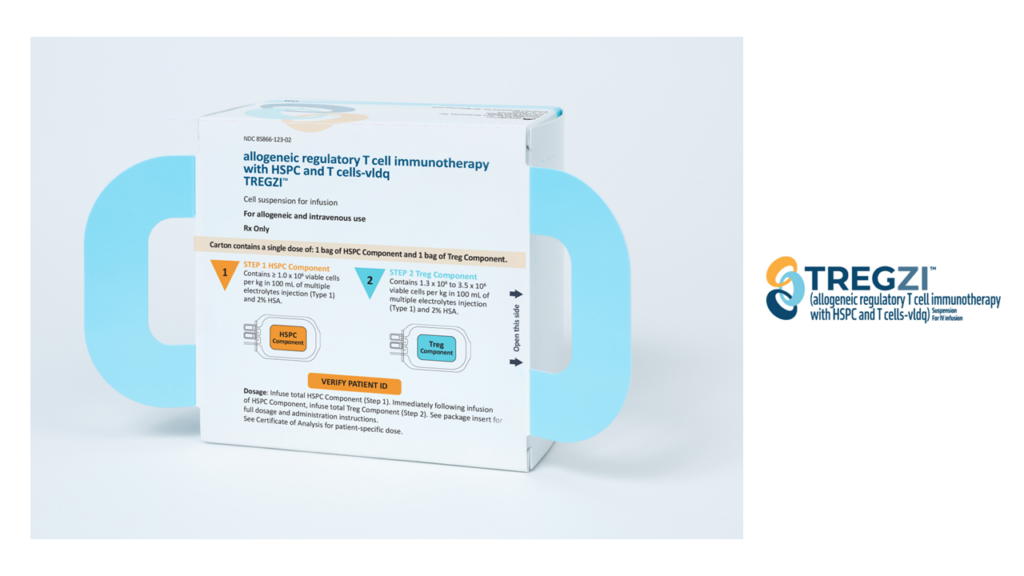
In the Phase III Precision-T trial, 78% of Tregzi-treated patients were alive without moderate or severe chronic GVHD at one year, compared with 38.4% after standard transplant.
For adults facing high-risk blood cancers, a stem cell transplant can be a key treatment option with the potential for long-term disease control. However, these transplants carry a major risk called graft-versus-host disease (GVHD).
This serious complication occurs when donor immune cells mistake the patient’s body for a threat and attack healthy tissues, sometimes creating a long-term health burden after transplant.
Even with preventive measures, up to half of recipients develop GVHD. Chronic GVHD affects about 40% to 50% of allogeneic transplant recipients and can last for years or even a lifetime.
The FDA has approved Tregzi, a first-of-its-kind regulatory T cell-based immunotherapy designed to help adult patients survive their transplants without moderate or severe chronic GVHD.
Tregzi, also known clinically as Orca-T, is approved for adults with hematological malignancies, or blood cancers. It is used as part of a matched-donor transplant after high-intensity chemotherapy helps clear diseased cells and make room for donor cells. This is the first therapy to receive FDA approval from Orca Bio, a biotechnology company based in Menlo Park, California.
Blood cancers such as leukemia and myelodysplastic syndrome (MDS) often begin in the bone marrow, the factory where blood cells are produced. In a standard transplant, doctors replace a patient’s diseased blood-forming system with healthy cells from a donor. The challenge is that the same donor cells needed to attack remaining cancer can also trigger the immune response that leads to GVHD.

Get industry leading pharma and biotech news, events and expert insights delivered to your inbox.
Tregzi takes a different approach by carefully controlling the types of cells a patient receives. It contains specialized stem cells to rebuild the blood system, regulatory T cells (Tregs) to help regulate immune activity and reduce GVHD risk, and conventional T cells to support immune recovery and help fight remaining cancer cells.
It is important to clarify that Tregzi is not a medicine added after a traditional transplant, but a precision-engineered donor-cell product used as part of the transplant itself. Tregzi is personalized for each patient.
The approval is based on the Phase III Precision-T trial, a study involving 187 adults with various blood cancers. The study included adults with acute myeloid leukemia, acute lymphoblastic leukemia, myelodysplastic syndrome and mixed-phenotype acute leukemia.
Researchers compared patients who received Orca-T with those who underwent a traditional allogeneic stem cell transplant.
After one year, 78% of patients treated with Orca-T were alive and free of moderate or severe chronic GVHD, compared with 38.4% of patients who received a standard transplant. Serious chronic GVHD occurred in 12.6% of the Orca-T group, compared with 44% of the standard transplant group.
Additional data reported by Orca Bio showed that overall survival was 94% with Orca-T, compared with 83% for standard transplant. The rate of deaths not related to the cancer returning was also lower with Orca-T, at 3% compared with 13% for standard transplant.
This approval provides medical teams with a new way to rebuild a patient’s immune system while reducing the risk of one of the most serious long-term complications of transplantation. For patients, it offers the possibility of a smoother recovery while keeping the cancer-fighting benefits of a donor transplant intact.
Tregzi’s approval highlights growing clinical interest in Treg therapies. In January 2026, Cellenkos’ off-the-shelf Treg candidate, CK0804, received FDA Orphan Drug designation for myelofibrosis, with Phase II trials planned. Meanwhile, Quell Therapeutics has initiated a Phase I/II trial of QEL-005, a CAR-Treg candidate being studied in autoimmune diseases including rheumatoid arthritis and systemic sclerosis.
FAQs
Is Tregzi a gene therapy?
No. Tregzi is a cell therapy, not a gene therapy. Gene therapy usually works by adding, changing or replacing genes, while Tregzi uses living immune and stem cells from a matched donor.
How is Tregzi different from a standard stem cell transplant?
Tregzi controls the mix of donor cells a patient receives, including blood-forming stem cells, regulatory T cells and conventional T cells.
What did the Precision-T trial show?
After one year, 78% of Tregzi-treated patients were alive without moderate or severe chronic GVHD, compared with 38.4% of patients who received a standard transplant.
If you want your company to be featured on Xtalks.com, please email [email protected].















Join or login to leave a comment
JOIN LOGIN