
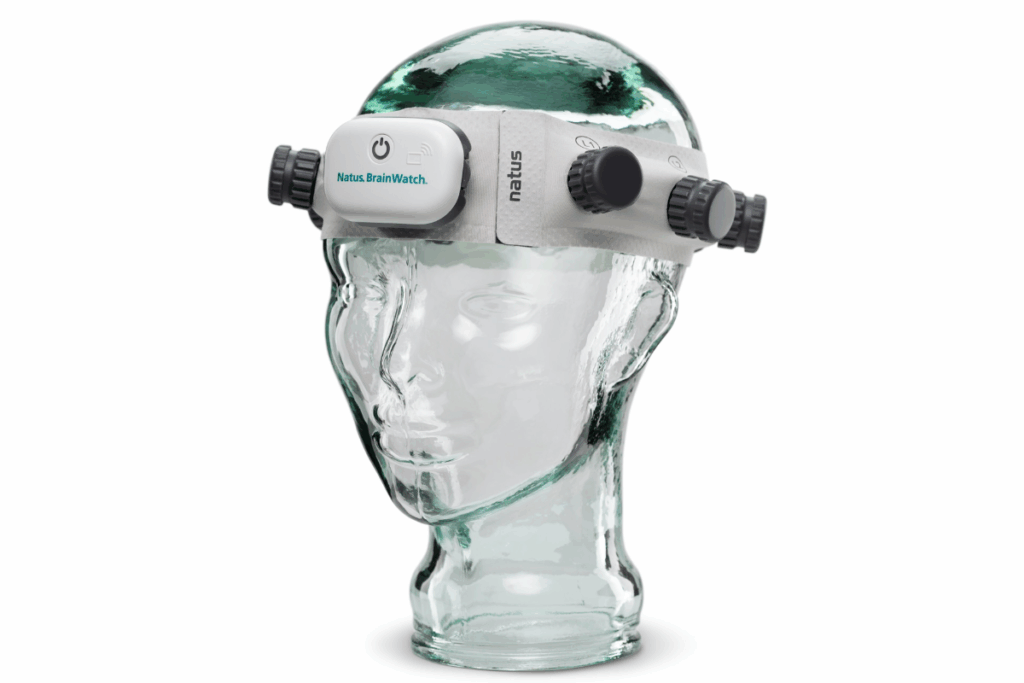
The FDA has granted 510(k) clearance for BrainWatch, a point-of-care EEG solution developed by Natus Medical, for the electrographic status epilepticus diagnostic indication.
BrainWatch is a portable, bedside EEG system used in emergency and critical care settings to evaluate patients when seizures are suspected.
The clearance allows BrainWatch, which integrates FDA-cleared Persyst analysis software, to be used to detect and diagnose electrographic status epilepticus in hospital environments where rapid neurological assessment is required.
Status epilepticus is a neurological emergency in which seizures persist long enough to risk lasting brain injury. Electrographic status epilepticus refers to seizure activity that appears on EEG without obvious physical symptoms, making bedside monitoring important for timely diagnosis in both convulsive and nonconvulsive presentations.
Access to EEG can be limited in many hospitals, particularly community facilities or during off-hours, which can delay recognition and treatment.

BrainWatch is designed for bedside use in emergency and critical care settings, where point-of-care EEG can allow teams to begin monitoring within minutes rather than transferring patients to a dedicated unit. The system incorporates on-device Persyst 15 algorithms to support seizure detection, seizure burden assessment and automated identification of electrographic status epilepticus.
These algorithms analyze brainwave patterns in real time and highlight activity that may require clinical review, providing additional support in settings without continuous neurology coverage.
According to Natus, the system can be set up in under five minutes, which may help streamline neurological evaluations. Clinicians can review studies through the company’s NeuroWorks platform, enabling remote neurologist collaboration through any web browser.
Evidence supporting the indication included performance validation of the integrated Persyst algorithms.
In early routine-use settings, hospitals reported fewer transfers from rural facilities due to expanded bedside diagnostic capabilities, along with greater confidence in ruling out seizures when EEG readings did not support treatment. These reports were described as operational observations rather than results from a formal clinical outcomes study.
As with other EEG systems, accuracy depends on adequate signal quality and proper electrode placement, and clinical staff must confirm automated findings through standard interpretation.
Natus noted that the clearance addresses a need for rapid-access EEG tools in hospitals with limited neurodiagnostic resources. Company representatives highlighted the potential of the technology to support timely assessment of neurological emergencies and to expand access to EEG interpretation during off-hours or in lower-resourced settings.
The electrographic status epilepticus capability may qualify for the New Technology Add-on Payment for monitoring of brain electrical activity using computer-aided detection and notification. Hospitals treating eligible Medicare patients may receive up to $913.90 in incremental reimbursement per case.
Natus did not specify launch timelines beyond noting that BrainWatch will be displayed at the American Epilepsy Society annual meeting in December.
XTALKS WEBINAR: Process AI in Medical Device: What Works and What’s Next
Live and On-Demand: Thursday, December 11, 2025, at 11am EST (5pm CET/EU-Central)
Register for this free webinar to learn how Process AI enables scalable, compliant automation for medical device manufacturers.

Originally introduced in May 2025, the BrainWatch system integrates with the company’s NeuroWorks EEG platform to support comprehensive review and remote neurologist collaboration.
Point-of-care EEG systems are used to support rapid seizure assessment in emergency and critical care settings.
One established player in this space is Ceribell, a medical technology company focused on AI-enabled point-of-care EEG for critically ill patients. Its platform combines a bedside headband and pocket recorder with FDA-cleared software, originally cleared in 2021, that analyzes EEG waveforms to diagnose electrographic status epilepticus in adults at risk for seizures in acute-care environments. The company also recently received 510(k) clearances for an EEG-based delirium monitoring algorithm and a neonatal seizure-detection algorithm.
Another company in EEG monitoring is Zeto. Its ONE headset, cleared in 2024, uses a 21-electrode dry-electrode design and AI-based triage tools to support seizure-focused EEG monitoring in critical and emergency care settings, particularly in hospitals with limited access to conventional EEG services.
Natus has also expanded its broader neurodiagnostic AI portfolio through its 2025 acquisition of Holberg EEG, whose FDA-cleared autoSCORE model for routine, long-term and ambulatory EEG interpretation is integrated with the company’s NeuroWorks software.
If you want your company to be featured on Xtalks.com, please email [email protected].













Join or login to leave a comment
JOIN LOGIN