
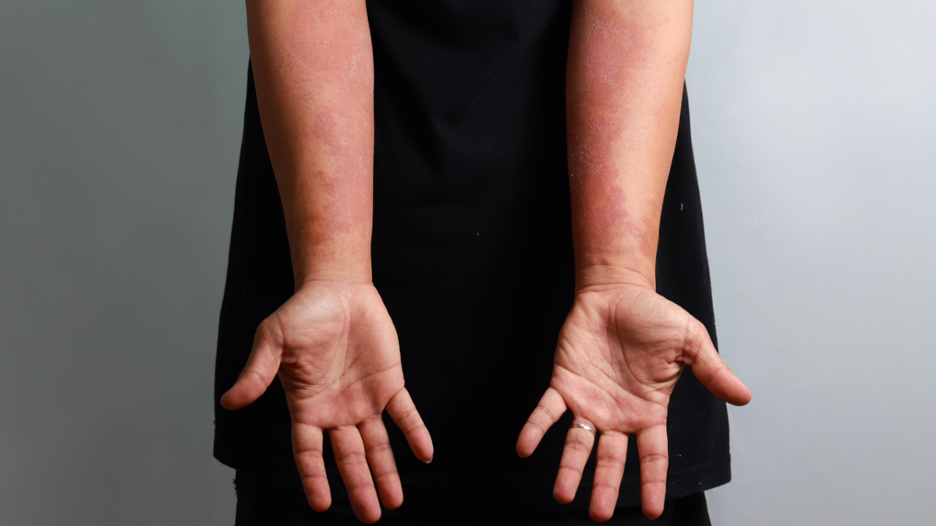
Mirum Pharmaceuticals plans to meet with the FDA this summer after its Phase IIb study showed reduced primary sclerosing cholangitis-related itching with volixibat.
Mirum Pharmaceuticals said its investigational oral drug volixibat met the primary endpoint, or main goal, in the Phase IIb VISTAS study in patients with primary sclerosing cholangitis (PSC).
PSC is a rare, chronic liver disease in which bile ducts become inflamed, scarred and narrowed over time. This can cause bile to build up in the liver, leading to liver injury and symptoms such as cholestatic pruritus, or itching linked to impaired bile flow.
Mirum estimates that PSC affects about 30,000 people in the US. There are currently no approved therapies for the disease.
What Is Volixibat?
Volixibat is an investigational ileal bile acid transporter (IBAT) inhibitor.
It is designed to block the recycling of bile acids in the gut. By doing this, the drug may help reduce bile acids in the blood and liver.
Volixibat is also being studied in primary biliary cholangitis (PBC), another cholestatic liver disease.
Get industry leading pharma and biotech news, events and expert insights delivered to your inbox.

What Did the VISTAS Study Show?
The VISTAS Phase IIb study enrolled 158 patients with PSC.
Patients were grouped by itch severity using the Adult Itch Reported Outcome scale, which runs from 0 for no itch to 10 for the worst itch imaginable. The primary analysis focused on 111 patients with moderate to severe itching.
Patients received either volixibat or placebo.
In the primary analysis group, volixibat led to a 2.72-point reduction from baseline in itch score. Compared with placebo, the treatment showed a 1.64-point improvement.
Mirum said the result was statistically significant, with improvements observed within two weeks of treatment. Improvements were also observed in patients who had mild itching at the start of the study.
More than half of patients receiving volixibat had at least a two-point reduction in itch score, compared with about one-quarter of patients receiving placebo.
The study also showed a reduction in serum bile acids, a blood-based measure tied to the drug’s bile acid-blocking mechanism. Serum bile acids fell with volixibat and rose slightly with placebo, giving the treatment a placebo-adjusted difference of 35.8.
Mirum said volixibat’s safety profile was generally consistent with known effects of IBAT inhibition, mainly gastrointestinal events and changes in liver lab markers.
Next Steps for Mirium Pharmaceuticals
Mirum has a pre-New Drug Application (NDA) meeting scheduled with the FDA in the summer of 2026. The company plans to submit an NDA for volixibat in PSC in the second half of 2026.
Full VISTAS results are expected to be presented at the European Association for the Study of the Liver International Liver Congress on May 30, 2026.
PSC Drug Development Targets Itch, Inflammation and Bile Duct Injury
The PSC and cholestatic liver disease drug development space is testing several treatment angles.
One approach is to reduce cholestatic pruritus, or itching linked to impaired bile flow. In March 2026, the FDA approved GSK’s Lynavoy (linerixibat) for cholestatic pruritus in adults with PBC.
Linerixibat is also an IBAT inhibitor. GSK has also announced a worldwide rights deal with Alfasigma for linerixibat.
Other PSC programs are looking at inflammation, fibrosis and bile duct damage.
Based in Israel, Chemomab is developing nebokitug, a monoclonal antibody designed to block CCL24, a protein involved in inflammatory and fibrotic pathways. Its planned Phase III PSC study would track whether treatment can delay serious disease-related events, such as bile duct infection, liver transplantation or bile duct cancer.
DelveInsight’s 2026 PSC market report also mentions French company Ipsen and South Korea-based LISCure BioSciences among companies developing PSC candidates.
LISCure BioSciences is studying LB-P8, an investigational therapy designed to act on the gut-liver axis and suppress inflammation and fibrosis. The company began dosing patients in a global Phase II PSC trial in November 2025.
Ipsen is studying elafibranor in PSC. The oral PPAR agonist is designed to act on pathways tied to bile acid handling, bile flow problems and inflammation. In April 2025, Ipsen reported Phase II ELMWOOD data showing improvements in liver enzyme markers and itch at the 120 mg dose.
FAQs
What does a placebo-adjusted improvement mean?
It means researchers looked at how much better the treatment group did compared with the placebo group. This helps separate the drug’s effect from changes that may happen during the study for other reasons.
Why do liver disease studies measure itch?
In cholestatic liver diseases, itch can be one of the main symptoms patients experience. Measuring itch helps researchers evaluate whether a drug is improving a symptom that affects daily life.
What is the difference between PSC and PBC?
PSC and PBC are both cholestatic liver diseases, meaning they involve problems with bile flow. PSC mainly affects the bile ducts inside and outside the liver, while PBC is an autoimmune disease that damages the small bile ducts in the liver.
If you want your company to be featured on Xtalks.com, please email [email protected].











Join or login to leave a comment
JOIN LOGIN