
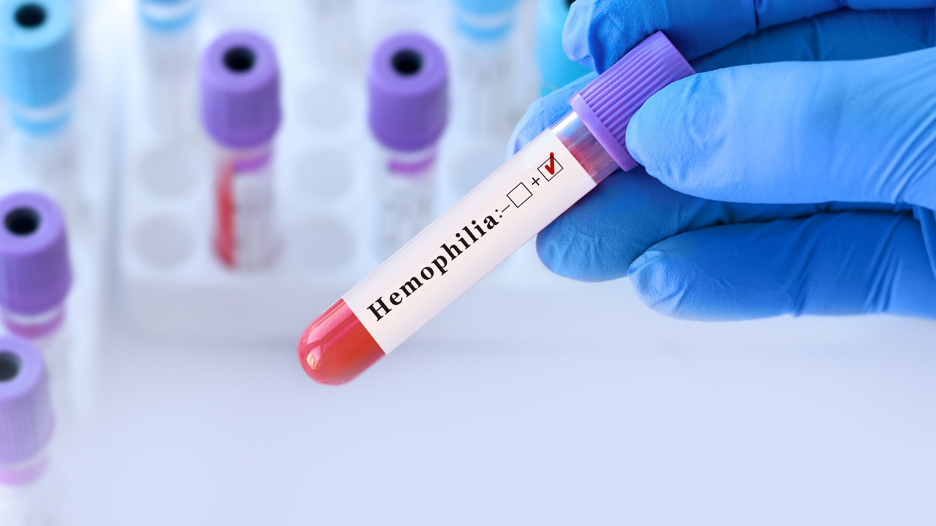
The treatment landscape for haemophilia and other rare bleeding disorders has evolved dramatically over recent decades, driven by scientific innovation, policy reform and stronger patient advocacy.
Haemophilia A and B together are estimated to affect more than 400,000 people globally.
In Europe alone, tens of thousands of individuals live with inherited bleeding disorders, including haemophilia, von Willebrand disease (the most common inherited bleeding disorder, affecting up to 1% of the population in milder forms) and a range of ultra-rare factor deficiencies and platelet disorders. Yet alongside therapeutic advances, significant disparities in access, diagnosis and long-term care continue to shape the lived experience of patients across the region.
In an interview with Xtalks, Olivia Romero Lux, Chief Executive Officer of the European Haemophilia Consortium (EHC), outlined how the patient-led umbrella organization is working to bridge these gaps through advocacy, education and collaboration across a diverse and complex healthcare environment.
Representing national patient organizations from 49 countries defined by the Council of Europe — spanning regions from Iceland to Kazakhstan and Portugal — the EHC’s mission centers on promoting optimal care, equitable access to treatment and improved quality of life for people living with bleeding disorders and their caregivers.
At its core, the organization aims to ensure that patient perspectives are meaningfully integrated into policy discussions, regulatory processes and the development of therapeutic innovation. As Lux explained, the EHC represents “a big, big, big perimeter and lots of disparities and very different people.”
Get industry leading pharma and biotech news, events and expert insights delivered to your inbox.

A Legacy Rooted in Safety and Advocacy
Founded in 1989, the EHC emerged at a time when the haemophilia community was still confronting the profound consequences of contaminated blood products during the HIV and hepatitis C crisis. The need for a coordinated European patient voice, one capable of advocating for safer treatments, regulatory transparency and improved oversight, became increasingly evident.
While the World Federation of Hemophilia provided global leadership, regional legislative frameworks within the European Union required targeted advocacy. Over time, the organization’s mission has expanded in parallel with the rapid evolution of treatment modalities. Romero Lux said the EHC was created because “we needed to make sure that we advocated at the right level.”
Historically, management of bleeding disorders relied primarily on plasma-derived therapies. Today, patients and clinicians can navigate a growing array of options, including recombinant clotting factors, extended and ultra-long half-life products, non-factor therapies and gene therapy approaches. This diversification has introduced new opportunities but also new complexities.
According to Romero Lux, innovation has reshaped expectations around treatment outcomes, but it has also heightened the importance of sustainability, equitable access and informed decision-making. With multiple therapeutic choices available for some conditions — and limited or no options for others — education has become a central pillar of the EHC’s strategy. “It’s not about safety only, but it’s also about sustainability,” she said.
The organization increasingly focuses on underserved populations, including women and girls with bleeding disorders, people living with von Willebrand disease (VWD), individuals with ultra-rare factor deficiencies such as factor I or factor V disorders and patients with platelet dysfunctions.
Data collection and long-term monitoring are also growing priorities, particularly as newer therapies require ongoing evaluation of outcomes and safety. Ensuring patient data protection under frameworks such as the EU’s General Data Protection Regulation (GDPR) adds further complexity to this evolving ecosystem.
Expanding Programs to Address Emerging Needs
Today, the EHC’s initiatives span several interconnected domains. A major priority is improving access to innovative therapies across European healthcare systems, while also advocating for patients who still lack access to even basic prophylactic treatment. As Romero Lux put it, the goal is to ensure access to “innovative therapies, but also for those who don’t have access to anything, to get access to something, something safe and efficacious.”
Strengthening patient involvement in health technology assessment (HTA) processes represents another key focus area. In Europe, HTA plays a critical role in determining reimbursement decisions for new treatments. Through education and training programs, the EHC works to ensure that patient representatives are prepared to contribute meaningfully when new technologies are evaluated. Romero Lux said the organization tries to educate patient representatives so that “when the time comes to assess a technology, they are at the table if possible and they know what they’re talking about.”
Capacity building for national member organizations is equally important. By supporting local advocacy efforts and knowledge exchange, the EHC helps address disparities between countries with varying levels of healthcare infrastructure and resources.
Education initiatives extend to both clinical and lifestyle considerations. Patients must often weigh treatment factors such as administration route, dosing frequency and risk-benefit profiles. Additionally, the organization highlights broader health concerns linked to bleeding disorders, including oral health challenges caused by recurrent bleeding episodes and the emerging needs of ageing patient populations managing comorbid conditions. On oral health, Romero Lux described “a vicious circle” in which patients bleed, avoid dental care and then “bleed more.”
Recent advocacy successes demonstrate the tangible impact of these efforts. Through country-level engagement, including targeted visits to national member organizations, the EHC has helped strengthen local advocacy efforts and build capacity within national member organizations to better advocate for patients in the future.
These initiatives illustrate how coordinated advocacy can translate into measurable improvements in patient outcomes.
Persistent Challenges in Innovation and Access
Despite significant therapeutic progress, Romero Lux identified inequality in access to care as one of the most pressing issues facing the bleeding disorder community. While some European countries offer advanced therapies, others continue to struggle with consistent availability of even foundational treatments.
Innovation itself introduces additional challenges. Complex reimbursement negotiations, evolving pricing models and the need for long-term outcome data can delay access to novel therapies such as gene therapy. Even in countries with strong healthcare systems, reimbursement decisions may take years, reflecting the broader financial pressures facing national health services. “We are reaching the limits of the healthcare systems, at least in Europe,” Romero Lux said.
European-level policy reforms, including the implementation of joint HTA regulations, may help streamline clinical assessments and facilitate more coordinated pricing negotiations across member states. However, successful implementation will depend on balancing affordability with recognition of the value provided by transformative therapies.
Diagnosis also remains a significant concern, particularly for conditions such as von Willebrand disease and bleeding disorders of unknown cause. Underdiagnosis continues to affect timely treatment initiation and quality of life. Romero Lux stressed that “for women who are bleeding and having heavy menstrual bleeds, we need to do more and do better.”
From a research perspective, the limited availability of long-term data for newer therapies presents ongoing uncertainty. Although gene therapy trials have shown promising results, the number of treated patients remains relatively small, underscoring the need for sustained data collection and infrastructure development. Smaller countries may face additional barriers related to negotiating power and capacity to secure access to emerging treatments.
Romero Lux also noted broader structural challenges affecting research activity within Europe. Concerns that biomedical innovation may increasingly shift toward regions such as the United States or China have prompted discussions around incentives to retain research investment within the European Union.
Education, Awareness and Patient Empowerment
For the EHC, raising awareness is closely tied to education. The organization employs a multi-channel approach that includes conferences, digital campaigns, patient storytelling and partnerships with healthcare professionals and policymakers.
Upcoming initiatives include awareness campaigns focused on women and girls with bleeding disorders, an area historically overlooked but now gaining recognition as a priority. Through local engagement and culturally tailored outreach, national member organizations play a critical role in extending these efforts at the community level.
Country visits remain a distinctive component of the EHC’s strategy. By working directly with local stakeholders, the organization can deliver targeted education and advocacy programs that reflect the specific needs of each national healthcare context.
Collaboration Across the Rare Disease Ecosystem
Collaboration is fundamental to the EHC’s operating model. The organization maintains partnerships with numerous stakeholders, including healthcare professionals, policymakers, academic researchers and industry partners. “Collaboration is really key to what we do,” Romero Lux said.
Formal memoranda of understanding with groups such as the World Federation of Hemophilia and the European Association for Haemophilia and Allied Disorders help coordinate activities and avoid duplication of efforts. Membership in broader rare disease alliances, including EURORDIS, the European Patient Forum and the European Patients’ Academy on Therapeutic Innovation, enables knowledge sharing across disease areas.
These relationships facilitate collective advocacy on issues such as data governance, sustainable funding and patient engagement. At the same time, maintaining independence and ethical transparency remains critical to preserving patient trust, particularly when collaborating with industry. Romero Lux emphasized the importance of “a very transparent relationship” with all stakeholders, noting that without transparency, “it can’t work with patients.”
Funding pressures have also intensified in recent years. Reductions in European operating grants for patient organizations, alongside shifting patterns of industry support, have created additional uncertainty for advocacy groups across the rare disease landscape.
Priorities for 2026 and Beyond
Looking toward the future, the EHC is prioritizing shared decision-making as a central principle in patient care. Ensuring that individuals are well-informed about available treatment options, clinical trials enrolling patients, especially for underserved communities, or advocating for the development of options where none exist is essential to empowering patients and improving outcomes. Romero Lux said the organization is focused on “ensuring that patients are well-informed and have options.”
The organization is also expanding initiatives focused on women’s health, including dedicated summits designed to amplify patient voices and address persistent diagnostic and care gaps.
Another strategic focus involves identifying and supporting individuals with extremely rare factor deficiencies and platelet disorders. Through initiatives such as the Extremely Rare Inhibitor Network (ERIN) summit, the EHC provides opportunities for families to connect with peers facing similar challenges, helping reduce isolation and strengthen community resilience. Romero Lux described these gatherings as “the only event where we gather families,” adding that meeting peers with the same condition “is a life changer.”
A holistic approach to care remains central to these efforts. Romero Lux emphasized the importance of multidisciplinary management encompassing mental health, physiotherapy, cardiovascular care, obstetrics and gynecology, oral health and the needs of aging patients. “We need to think in a holistic way, like a multidisciplinary approach,” she said.
The Role of the Life Sciences Community
Romero Lux underscored that collaboration with the broader life sciences sector will be essential to achieving equitable progress. Transparent partnerships, long-term data commitments and pricing strategies that account for disparities across countries are key elements of sustainable innovation.
Early patient engagement in clinical research design and regulatory discussions can also help ensure that new therapies address real-world needs. Expanding clinical trial inclusion to underrepresented populations and less commercially attractive markets represents another important step toward closing equity gaps. She said the EHC encourages industry and researchers to “consider disparities also” and, where possible, “include minorities in clinical trials or other countries in clinical trials.”
Ultimately, the EHC’s vision is grounded in a simple but ambitious goal: enabling every person living with a bleeding disorder in Europe to access early diagnosis, safe and effective treatment and comprehensive care, regardless of geographic or economic circumstances.
As scientific breakthroughs continue to reshape the field, the organization’s work highlights a critical reality for healthcare systems worldwide: innovation alone is not enough. Ensuring that progress reaches patients equitably will require sustained advocacy, collaboration and a continued commitment to placing the patient voice at the center of decision-making.
As Romero Lux put it in her closing remarks, “Innovation is transforming our field, but equity must transform alongside it.”










Join or login to leave a comment
JOIN LOGIN