

From Data to Evidence:
A Framework for RWD Study Design & Causal Inference
 AI Webinar Explorer now available for enhanced on-demand viewing
About this webinar
Real-world data (RWD) is increasingly used for causal inference in healthcare research, but generating credible, decision-ready insights requires more than access to data. It demands intentional alignment between the causal question, the study design and the data source. Too often, organizations treat data acquisition as the finish line, when in reality even large, well-curated datasets can produce misleading results if the methods are poorly chosen or the data is mismatched to the question being asked.
This webinar presents a practical framework for designing rigorous RWD studies for causal inference. A foundational premise is that study design and the selection of analytical methods cannot be predetermined in the absence of information about the data source. But starting with the data and working backward to the question is also a common error that even experienced teams make under time and resource pressure.
Attendees will learn how to transparently manage the interplay between question and data using the target trial framework: beginning with a clearly framed research question based on a Target Trial and iteratively adapting it until either finding a viable study design that maps to the available data, or concluding that the data is not fit-for-purpose.
The seminar will focus on two critical aspects of conducting an RWD study: 1) starting with a strong and structured framework to ask a clear question and study design, and 2) a structured approach for assessing fitness-for-purpose within the context of the study question and study design. Attendees will leave with practical knowledge and a set of decision points they can apply immediately to their own work.
Register for this webinar to learn how RWD study design can strengthen causal inference and support fit-for-purpose data decisions.
Resources:
Methods of Public Health Research – Strengthening Causal Inference from Observational Data
https://pubmed.ncbi.nlm.nih.gov/34596980/
Read more...
The Target Trial Framework for Causal Inference From Observational Data: Why and When Is It Helpful?
https://pubmed.ncbi.nlm.nih.gov/39961105/
Where Do Target Trials Come From? Specifying the Protocol of a Target Trial When Repurposing Data for Causal Inference
https://pubmed.ncbi.nlm.nih.gov/41921517/
Target Trial Emulation for Regulatory and Clinical Decision Making in Cancer
https://pubmed.ncbi.nlm.nih.gov/41643147/
Transparent Reporting of Observational Studies Emulating a Target Trial-The TARGET Statement
https://pubmed.ncbi.nlm.nih.gov/40899949/
Good practices for real-world data studies of treatment and/or comparative effectiveness: Recommendations from the joint ISPOR-ISPE Special Task Force on real-world evidence in health care decision making
https://pubmed.ncbi.nlm.nih.gov/28913966/
Reporting to Improve Reproducibility and Facilitate Validity Assessment for Healthcare Database Studies V1.0
https://pubmed.ncbi.nlm.nih.gov/28964431/
Graphical Depiction of Longitudinal Study Designs in Health Care Databases
https://pubmed.ncbi.nlm.nih.gov/30856654/
Dear Pharmacoepidemiology and Outcomes Researcher: It’s Time We Had the Transparency Talk
https://pubmed.ncbi.nlm.nih.gov/41074882/
Transparency, reproducibility, and replicability of pharmacoepidemiology studies in a distributed network environment
https://pubmed.ncbi.nlm.nih.gov/38783407/
Read Less...
Who should attend
- Designing or overseeing RWD/RWE studies for regulatory, payer or HTA submissions
- Grappling with how to match a causal question to the right data source and study design
- Working under time and resource pressure that can push teams toward data-first (rather than question-first) approaches
- Evaluating whether a dataset is truly fit-for-purpose before committing to a full study
- Responsible for ensuring methodological rigor and transparency in observational research
- Health Economists and HEOR Researchers
- Epidemiologists and RWE Scientists
- Outcomes Researchers and Data Scientists in life sciences
- Medical Affairs and Evidence Generation Leads
- Researchers in academia, CROs or Consulting who advise on RWD study design
What you will learn
- A framework for sequencing research question, study design and data source selection
- A structured approach for evaluating whether a dataset is fit for purpose
- Concrete decision points to apply immediately to RWD studies
Featured Speakers
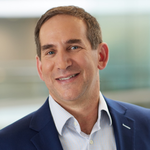
Jeffrey S. Brown, PhD
Jeffrey Brown, PhD, is an internationally recognized expert in the use of RWD to support the evidentiary needs of regulatory agencies and medical product sponsors and an expert in the assessment of data quality and fitness-for-purpose in the use of RWD resources. Dr. Brown has ~30 years of experience in research using RWD , most recently as an Associate Professor in the Department of Population Medicine at Harvard Medical School. He is a trusted Consultant to numerous research groups and pharma companies and has supported sponsors in numerous FDA RWD submission meetings and strategy sessions. At HMS, Dr. Brown led the development and implementation of the FDA Sentinel System and PCORnet and served as the Principal Investigator for several multi-site pharmacoepidemiologic safety studies to support FDA and EMA regulatory requirements.

Miguel Hernán, MD, PhD, ScD
Miguel Hernán is the Director of CAUSALab, the Kolokotrones Professor of Biostatistics and Epidemiology at the Harvard T.H. Chan School of Public Health, and faculty at the Harvard-MIT Division of Health Sciences and Technology. He and his collaborators repurpose real world data into evidence for the prevention and treatment of infectious diseases, cancer, cardiovascular disease, and mental illness. This work has contributed to shape health research methodology worldwide.
Miguel has received several awards, including the Rousseeuw Prize for Statistics, the Rothman Epidemiology Prize, and a MERIT award from the U.S. National Institutes of Health. He is elected Fellow of the American Association for the Advancement of Science and the American Statistical Association, member of the Advisory Board of ADIA Lab, and Associate Editor of Annals of Internal Medicine. He was Special Government Employee of the U.S. Food and Drug Administration, Editor of Epidemiology, and Associate Editor of Biometrics, American Journal of Epidemiology, and Journal of the American Statistical Association. Miguel is a Co-Founder of Adigens Health.
Partner for this event

TriNetX
TriNetX is The Global Truth Engine for Better Human Health™, helping organizations understand what’s really happening in patient care. We connect health systems, researchers, and companies around the globe to real-world patient data so they can make better-informed decisions—based on reality, not assumptions.
Data is sourced directly from 11,000+ healthcare provider sites across more than 20 countries and kept within those institutions to protect accuracy, privacy, and trust. TriNetX combines this data with scientific expertise and technology to help customers ask better questions, interpret results, and move forward with confidence.
Related webinars
More from TriNetX.
Feasibility Without Guesswork: Unlocking Genomic and Real-World Data for Faster Study Execution

Smarter Trial Decisions Through Clinical Data Integration

Building Breakthroughs: How Research-Ready Data Transforms Clinical Development

Overcoming Challenges in Clinical Trial Completion
Navigating the FDA’s New Clinical Trial Diversity Guidance: Unlocking the Future of Inclusive Research
RWD to the Rescue: Solving R&D Challenges for Pharma Companies