
Latvia’s life sciences sector is gaining more visibility as pharma, biotech and medtech companies reassess where to build, partner and expand within Europe.
Latvia’s life sciences sector has developed steadily over time, supported by investments in research infrastructure, university training and industry partnerships.

Senior Investment Project Manager
Biomedicine
Investment and Development Agency of Latvia
Annija Veinšteina, Senior Investment Project Manager — Biomedicine at the Investment and Development Agency of Latvia, said the ecosystem has been building the scientific, clinical and business foundations needed to support long-term growth.
For Latvia, that growth is being shaped by several intersecting strengths: a long-standing pharmaceutical and biopharmaceutical base, established capabilities in organic synthesis and active pharmaceutical ingredients (APIs), a growing digital health sector and emerging momentum in precision medicine, genomics and biomedical data.
“Well, I think for a long time, Latvia was doing serious work quietly, building our R&D infrastructure, growing a strong university pipeline, attracting global companies without necessarily being part of the loudest conversation within the industry,” Veinšteina told Xtalks Pharmaville. “And that is changing, and I think it is changing because the results speak for themselves.”
She said companies that have entered the Latvian market have often stayed and expanded.
“The ecosystem has reached a level of maturity where it is no longer about the potential. It is rather about the proof,” she said.
Related Webinar: Rethinking European Expansion: What Life Science Leaders Can Learn from Latvia
A Small but Technically Capable European Life Sciences Market
Latvia’s value proposition in life sciences is partly tied to its scale. Veinšteina described the country as “small enough to move fast” while still having the scientific and regulatory foundations needed to support serious biomedical work.
As an EU member state, Latvia offers companies access to the European regulatory and business environment. Veinšteina also pointed to the country’s stable credit ratings, competitive tax environment and government engagement as factors that can matter for companies considering European expansion.
But the more relevant differentiator for pharma, biotech and medtech companies may be the depth and connectivity of Latvia’s scientific ecosystem. The Latvian Biomedical Research and Study Centre is active in areas such as molecular biology, genomics and vaccine research, while the Latvian Institute of Organic Synthesis has long-standing expertise in drug discovery and organic chemistry. Together, these institutions are now part of the National Innovation and Research Institute, which Veinšteina described as the largest research institute in the Baltics.
Get industry leading pharma and biotech news, events and expert insights delivered to your inbox.

Latvia’s university hospitals also play an important role in the country’s translational research environment. Pauls Stradiņš Clinical University Hospital and Riga East Clinical University Hospital are not only major clinical facilities, but also research partners involved in areas such as cancer research, biomarker development and translational medicine. Latvia is also home to BioPhoT, a national deep-tech platform designed to help turn scientific research into commercially viable solutions, with biomedicine among its core focus areas.
Taken together, these assets point to an ecosystem that extends beyond a traditional cluster model, connecting discovery research, clinical expertise and commercialization support. The country is also advancing a national NMR initiative that is being developed into what Veinšteina describes as the leading NMR center in the Baltics.
The country’s workforce is another part of that picture. Veinšteina said that Latvia’s biomedicine and biotech sector employs more than 43,000 people and that 81% of those in the sector speak English.
“You have a country that is fully EU aligned with stable credit ratings, one of the most competitive tax environments,” she said. “But beyond that, the business environment, what I find people are genuinely more interested in, we have a surprisingly strong in-depth ecosystem: world-class research institutions, over 400 scientists, BSL-3 facilities, the largest NMR in the Baltics and also a workforce that is highly educated, multilingual and motivated to grow and build something that is lasting.”
For life sciences companies, those attributes can be especially relevant when scientific infrastructure, trained personnel and operational flexibility need to come together. That includes areas such as drug discovery, biomanufacturing support, digital health implementation and clinical research partnerships.
Pharmaceuticals and Biopharmaceuticals Remain Core Strengths
Among Latvia’s life sciences subsectors, pharmaceuticals and biopharmaceuticals remain central. Veinšteina said the country has a decades-long foundation in areas such as organic synthesis, drug discovery and APIs. That includes the Latvian Institute of Organic Synthesis, which was founded in 1957 and has long-standing expertise in organic chemistry, medicinal chemistry, NMR, drug discovery and pharmaceutical development.
That technical base is important because it gives Latvia a foundation that is not solely dependent on emerging areas such as digital health or AI-enabled healthcare. Instead, newer areas of growth are developing alongside established expertise in chemistry, pharmaceutical development and biomedical research.
“I think right now the clearest momentum is definitely pharmaceuticals and biopharmaceuticals,” Veinšteina said. “Latvia has deep competencies in the area, a strong heritage of almost 80 years, competencies in organic synthesis, drug discovery and active pharmaceutical ingredients. That foundation has been built over decades.”
This is particularly relevant as pharma and biotech companies reassess where to build and partner in Europe. For smaller European markets, the opportunity is not necessarily to compete on size, but to offer focused technical expertise and faster coordination across research, industry and government.
Digital Health, AI and eHealth Platforms Are Expanding
Beyond its pharmaceutical base, Latvia is seeing growth in medical technologies and digital health. Veinšteina described digital health as a fast-growing area across the region, with particular momentum around AI-powered healthcare applications and eHealth platforms.
This shift reflects a broader European trend: life sciences innovation is increasingly tied not only to new therapeutics or devices, but also to the digital systems and data infrastructure that support patient care and evidence generation.
Latvia’s momentum in digital health may be especially relevant as more companies look for environments where biomedical research, bioinformatics, real-world data and genomics can be connected more effectively.
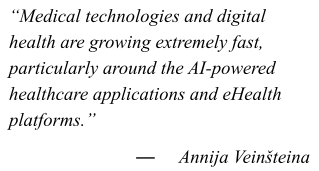
“If I had to point out what’s next, early precision medicine and biotechnology are areas where Latvia’s genomics capabilities, combined with its strong bioinformatics community and clinical research infrastructure, position it really well for where the industry is heading,” Veinšteina said.
Precision Medicine and Genomics Offer the Next Layer of Growth
Precision medicine is becoming an important growth area for Latvia, supported by its expanding capabilities in genomics and biomedical data. But these fields depend on more than scientific expertise alone. They also require strong bioinformatics capacity and the ability to connect research institutions with healthcare providers and industry partners.
Veinšteina pointed to Latvia’s genomics capabilities and bioinformatics community as assets that could support the next phase of growth. While pharmaceuticals and biopharmaceuticals remain Latvia’s most established areas, precision medicine could help connect its biomedical research strengths with digital health and data-driven clinical development.
That positioning could become more relevant as drug development becomes increasingly biomarker-driven and as healthcare systems continue to adopt more personalized approaches to diagnosis, treatment selection and patient monitoring.
For companies working in oncology, rare disease, advanced diagnostics, clinical decision support or AI-enabled healthcare, the strength of local bioinformatics and clinical research infrastructure can be as important as lab capacity or manufacturing space.
Universities Support Talent Across Medicine and Biomedical Research
Latvia’s university system is another important part of the ecosystem.
Riga Stradiņš University is a major medical university in the Baltics. The University of Latvia has strengths in biomedical research and digital health, while Riga Technical University contributes expertise in biomaterials and bioengineering. Together, Veinšteina said, Latvia’s universities serve approximately 45,000 students across more than 200 programs.
Each year, Latvian universities produce graduates in life sciences and adjacent disciplines, supporting a workforce that can contribute across pharma, biotech, medtech, digital health and biomedical research.
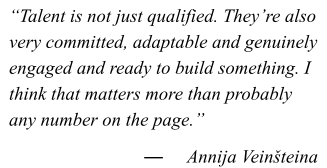
That combination of scientific, medical and engineering education is especially relevant for companies working across converging fields.
Medtech development, for example, often requires engineering expertise, clinical insight, regulatory awareness and manufacturing know-how. Similarly, digital health and precision medicine depend on teams that can work across biology, software, data science and clinical implementation.
Partnership Model Matters for Companies Entering Latvia
Veinšteina said the companies that are often best suited for Latvia are those looking for a partnership rather than a transactional relationship.
She mentioned that companies are often surprised by the level of collaboration between ministries, municipalities, universities, industry associations and the Investment and Development Agency of Latvia.
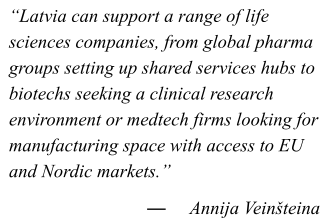
For international life sciences companies, this type of coordination can be important when evaluating a new market. Site selection, research partnerships, clinical operations, talent recruitment, regulatory pathways and manufacturing support often involve multiple stakeholders. A market’s ability to coordinate across those stakeholders can affect timelines and execution.
She described the Investment and Development Agency of Latvia as a guide that supports companies throughout the process, from early engagement to longer-term relationship building.
Growth Outlook: Digital Health, Precision Medicine and Biotechnology
Looking ahead, Veinšteina sees some of Latvia’s biggest growth opportunities in digital health, precision medicine and biotechnology. These areas build on the country’s existing strengths while aligning with broader shifts in the life sciences industry.
Digital health is becoming increasingly important as healthcare systems and life sciences companies seek better ways to manage data, support clinical decision-making and improve care delivery. Precision medicine and genomics are also becoming more central to drug development and clinical research, particularly as more therapies are developed for molecularly defined patient populations.
For Latvia, the opportunity is to connect these growth areas with its long-standing pharmaceutical expertise, biomedical research base and university pipeline.
“Companies already based in Latvia, as well as startups founded here or entering the market, have built strong foundational partnerships that are now expanding globally,” she said. “I think they are poised to grow even further and build something that lasts.”
Where Latvia Fits in Europe’s Life Sciences Market
As life sciences companies rethink their European footprint, smaller markets such as Latvia may become more relevant for specific types of investment and partnership.
The country’s appeal lies not in scale alone, but in its combination of EU alignment, technical expertise, talent, digital health momentum and coordinated ecosystem support. For pharma, biotech, medtech and digital health organizations, Latvia’s life sciences ecosystem may be particularly relevant where technical specialization and operational agility are priorities.
“The decision to look at Latvia rarely needs to be justified twice,” she said. “The companies that have come here, global names in pharma, genomics, diagnostics, digital health, they did not come here by accident. They did their due diligence. They compared alternatives, and they still chose Latvia.”
As precision medicine, biomedical data and digital health continue to shape the future of the industry, Latvia is positioning itself as a smaller European market with growing relevance across several high-value areas of biomedicine.








Join or login to leave a comment
JOIN LOGIN