
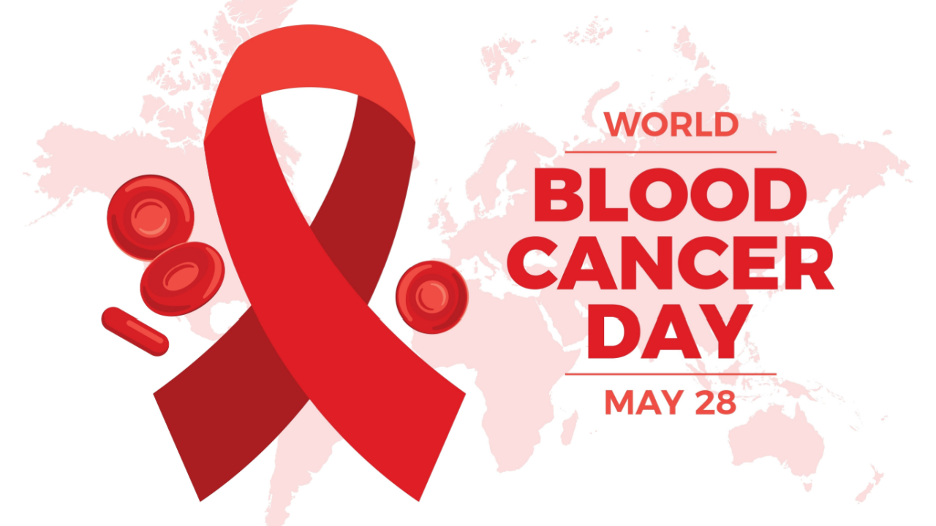
For World Blood Cancer Day 2026, here is a look at recent progress in AML, lymphoma and multiple myeloma treatment, diagnostics and clinical research.
The global community observes World Blood Cancer Day every May 28 to raise awareness of blood cancers and champion stem cell donor registration. DKMS, an international nonprofit stem cell donor registry, says the day recognizes the more than 10 million people registered as potential donors while encouraging more people to register, donate or spread awareness using #WBCD.
Blood Cancer Burden: Over 180,000 Projected US Cases in 2026
Blood cancers are cancers in which different types of blood cells grow out of control. They can start in the bone marrow, where new blood cells are made, or in the lymphatic system, which helps the body fight infection. The main categories include leukemia, lymphoma and multiple myeloma, along with related conditions such as myelodysplastic syndromes (MDS) and myeloproliferative neoplasms (MPNs).
The 2026 US estimates show how common some blood cancers remain, with 67,790 new leukemia cases, 79,320 new non-Hodgkin lymphoma cases and about 36,000 new myeloma cases projected for the year.
Blood cancers can progress quickly or slowly, and treatment varies by diagnosis and patient needs. Options may include chemotherapy, targeted therapy, immunotherapy, radiation, stem cell transplant or a combination of approaches. Many patients also face relapse, treatment resistance, infection risk and long-term follow-up.
While these challenges are daunting, research is aiming to deliver innovative therapies designed to overcome resistance and improve patient outcomes.
Get industry leading pharma and biotech news, events and expert insights delivered to your inbox.

New FDA Approvals and Phase III Developments in 2026
In acute myeloid leukemia (AML), the FDA approved an all-oral regimen of decitabine and cedazuridine tablets with venetoclax for newly diagnosed adults aged 75 years or older, or those unable to receive intensive chemotherapy. The approval gives some older or medically fragile AML patients a non-injectable treatment option.
The FDA also granted accelerated approval to Beqalzi (sonrotoclax) for adults with relapsed or refractory mantle cell lymphoma after at least two prior treatments, including a BTK inhibitor. Sonrotoclax targets BCL-2, a protein that can help cancer cells survive. In the supporting trial, 52% of patients responded to treatment, with a median response duration of 15.8 months.
In multiple myeloma, the FDA approved Janssen Biotech’s Tecvayli (teclistamab) with daratumumab hyaluronidase for adults with relapsed or refractory disease after at least one prior line of therapy. In the MajesTEC-3 trial, median progression-free survival (the time patients lived without their disease worsening) was not reached in the teclistamab combination arm, compared with 18.1 months in the control arm.
In classical Hodgkin lymphoma, the FDA approved BMS’s Opdivo (nivolumab) with AVD chemotherapy for adults and children aged 12 years and older with previously untreated Stage III or IV disease. The supporting study showed improved progression-free survival with nivolumab plus chemotherapy compared with brentuximab vedotin plus chemotherapy.
Last year, OGT received FDA De Novo premarket authorization for the CytoCell KMT2A Breakapart FISH Probe Kit PDx. The test helps identify patients whose acute leukemia has a KMT2A gene rearrangement, a genetic change that can guide treatment with Revuforj (revumenib).
Genmab reported Phase III results for epcoritamab, an investigational subcutaneous CD3xCD20 bispecific antibody, in relapsed or refractory diffuse large B-cell lymphoma. The treatment improved progression-free survival, although overall survival did not reach statistical significance.
BMS reported positive interim Phase III results for oral mezigdomide with carfilzomib and dexamethasone in relapsed or refractory multiple myeloma. Mezigdomide is an oral CELMoD, a type of protein degrader designed to break down proteins that cancer cells depend on.
Allogene Therapeutics reported early interim Phase II ALPHA3 data for cema-cel, an off-the-shelf CAR-T candidate made from donor cells. The therapy cleared minimal residual disease in 58.3% of patients versus 16.7% in the observation arm. The primary event-free survival endpoint remains blinded, with the main analysis expected later.
These updates show how blood cancer care is evolving, from new FDA approvals to diagnostics and trial data that may help refine treatment for different patient groups.
If you want your company to be featured on Xtalks.com, please email [email protected].












Join or login to leave a comment
JOIN LOGIN