
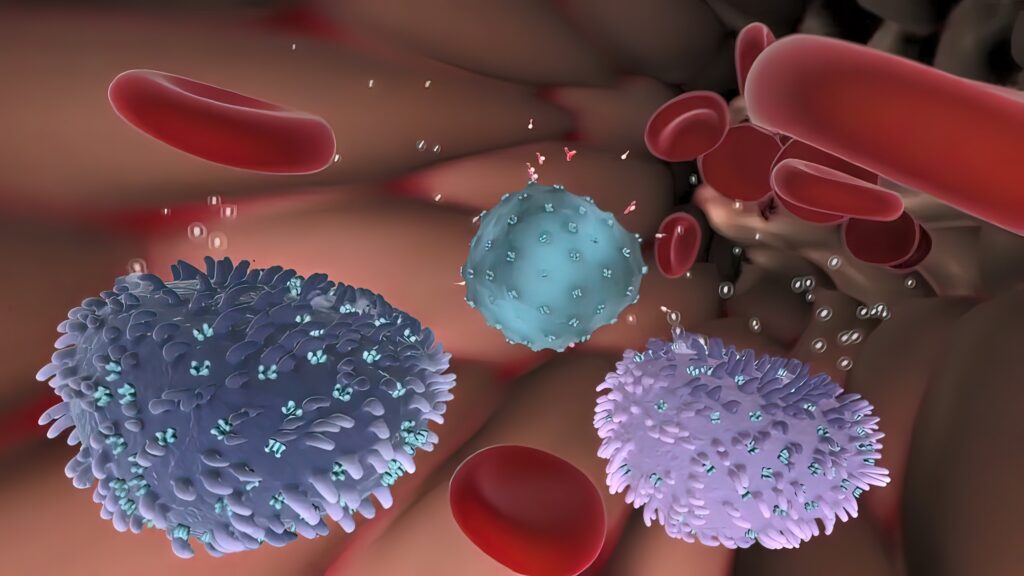
Complement biology was once considered a risky therapeutic frontier, but today, that perception has shifted dramatically.

Founder and CEO
InflaRx
Advances over the past two decades have transformed the complement system into one of the most promising areas in immunology, with expanding implications for both rare and common inflammatory diseases.
In a recent Xtalks Clinical Edge interview, Prof. Niels Riedemann, MD, PhD, Founder and CEO of InflaRx, shared insights from his uniquely interdisciplinary career spanning academic research, frontline intensive care medicine and biotech leadership. As a physician-scientist with over 20 years of experience in complement immunology and more than 15 years in drug development, Dr. Riedemann brings a rare, end-to-end perspective on how complex biology can be translated into real-world therapies.
InflaRx is focused on developing novel anti-inflammatory therapies by targeting the complement system, specifically the complement activation factor C5a and its receptor C5aR, which play key roles in driving inflammatory disease processes.
A Field Comes of Age
For years, complement biology was viewed with caution by clinicians. As Dr. Riedemann explained, it was long considered the “backbone” of innate immunity, too fundamental to manipulate safely.
That mindset has changed. “What was once seen as ‘don’t touch it, it’s dangerous’ has now become an area of great promise. It’s not dangerous, you just need to know what you’re doing.”
Early clinical successes, particularly in rare and life-threatening diseases, helped validate the safety and therapeutic potential of complement inhibition. These breakthroughs paved the way for broader exploration across disease areas and specialties.
Dr. Riedemann expects the field to move beyond rare disorders into more prevalent conditions with persistent unmet need, including rheumatologic, pulmonary, renal, dermatologic and vasculitic diseases.
A key reason for this expansion lies in complement’s distinct mechanism of action. Unlike many approved immunotherapies that target T-cell-derived cytokines such as TNF-α or IL-17, complement pathways operate primarily within the innate immune microenvironment.
“Neutrophils, macrophages and other innate immune cells are orchestrated by complement,” Dr. Riedemann noted. “These cells are often the drivers of tissue damage, and they are not adequately addressed by many existing therapies.”
Unmet Needs Across Acute and Chronic Inflammatory Diseases
From a clinician’s perspective, Dr. Riedemann sees unmet needs in both acute, life-threatening conditions and chronic inflammatory diseases.
In the acute setting, such as severe infections, complement modulation could play a critical role in preventing immune-mediated damage that leads to organ failure or death, even in vaccinated patients.
In chronic disease, progress has been accelerated by improvements in drug convenience, including oral therapies and less frequent subcutaneous or intravenous dosing. These advances make complement-targeted treatments more feasible for long-term use and broaden their applicability to larger patient populations.
“Once therapies become more convenient for patients, entirely new disease areas open up,” he said.
Read Xtalks Clinical Edge™ Issue 7
Xtalks Clinical Edge is a magazine for clinical research professionals and all who want to be informed about the latest trends and happenings in clinical trials. This magazine immerses you in a world where industry leaders, patient advocates and top researchers converge to provide the most insightful perspectives on clinical trials.

Mechanism-Driven Strategy
InflaRx’s development strategy is deeply rooted in a long-standing focus on the C5a-C5a receptor (C5aR) pathway, a terminal component of the complement cascade known to drive excessive inflammation.
The company’s founders, including Dr. Riedemann and Renfeng Guo, MD, began studying this pathway during their academic careers and continued refining that understanding within InflaRx. This mechanistic depth has guided the company’s pipeline decisions and clinical strategy.
A major milestone came with the development of an oral C5a receptor antagonist, which Dr. Riedemann believes is well-suited to controlling this pathway in human disease. That advance enabled the Jena, Germany-headquartered company to expand into immune-dermatology, particularly hidradenitis suppurativa (HS), a severe, chronic inflammatory skin disease marked by abscesses, draining tunnels and profound quality-of-life impairment.
“Neutrophils and macrophages play a central role in HS progression, and that biology is currently not well addressed by available therapies,” he said. “We believe our approach has the potential to be disease-modifying.”
Beyond dermatology, InflaRx is applying the same mechanistic lens to renal diseases, pulmonary conditions and forms of vasculitis where C5a receptor signaling may be a critical but underappreciated driver of pathology.
Clinical Insight Shapes Trial Design
Riedemann’s experience leading a 50-bed academic intensive care unit in Germany continues to influence how he approaches drug development, particularly trial design and endpoint selection.
“Running clinical trials as a drug developer gives you a much deeper appreciation for how complex human disease really is,” he said. Patient heterogeneity, disease stage, inclusion criteria and small missteps can derail an otherwise promising program.
He emphasized that endpoint selection is often the most critical factor in determining trial success, not only scientifically but also from a regulatory and commercial standpoint.
The focus is not just on proving biology, but defining what meaningful benefit looks like for patients, regulators and ultimately the label, Riedemann explained.
Navigating Biomarker Limitations
One of the persistent challenges in inflammatory and immunologic diseases is the lack of robust, mechanism-specific biomarkers. In conditions like HS, validated biomarkers are essentially nonexistent.
In these cases, InflaRx relies heavily on clinical manifestations and patient phenotyping to guide development. For HS, this includes enrolling patients with advanced disease features, such as draining tunnels, where the company believes C5a receptor inhibition is most likely to deliver benefit.
General inflammatory markers may help contextualize disease severity, but Dr. Riedemann cautioned that they are often indirect and not tightly linked to a drug’s mechanism of action.
“When biomarkers are lacking, patient selection becomes even more important,” he said.
The Clinical Future of Complement Therapeutics
Dr. Riedemann is optimistic about the next phase of complement drug development. As clinical experience grows, he expects more successes and broader adoption across therapeutic areas.
One particularly exciting opportunity lies in combination strategies. Pairing complement inhibitors that modulate innate immunity with therapies targeting adaptive immune pathways could offer more complete disease control.
“Patients don’t want to be a little bit better,” Dr. Riedemann said. “They want to live normal lives. That’s where I think this field is heading.”
At the Intersection of Science, Medicine and Leadership
Reflecting on his career, Dr. Riedemann described humility as the defining lesson from working across science, clinical care and biotech leadership.
Having done great science doesn’t guarantee clinical success, and clinical success doesn’t guarantee a viable product, he explained. “Every step is complex, and none of this is ever a one-person effort.”
For Dr. Riedemann, the reward lies in the full bench-to-bedside journey, transforming a mechanistic insight into a therapy that helps patients survive, recover and reclaim their lives.
“It’s the most exciting thing I can imagine doing, to research a mechanism, fund the company, bring the mechanism to a therapeutic drug candidate, develop the candidate, see humans survive or benefit and bring a new therapy to market for patients.”
“At the same time, this is never a one-person show, ever. This is always a team effort.”










Join or login to leave a comment
JOIN LOGIN