
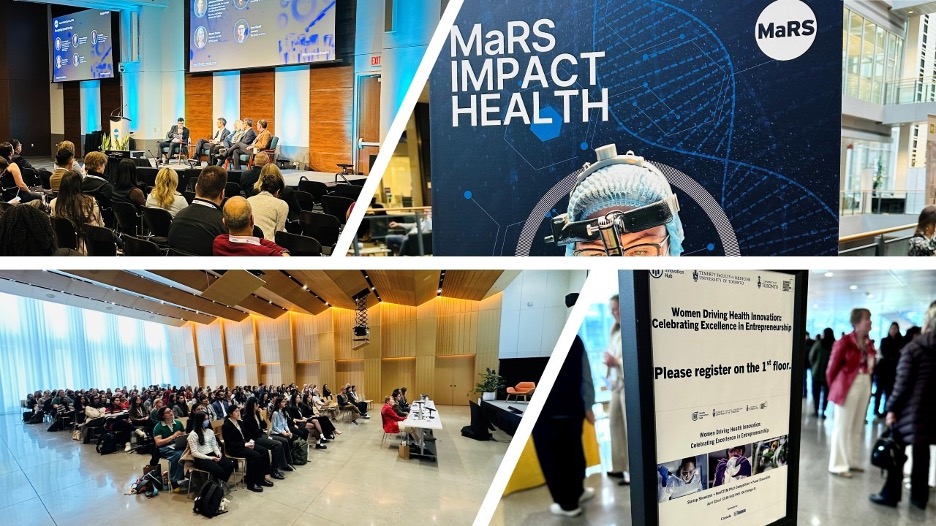
Canada’s life sciences sector is rapidly expanding, driven by increased investment, infrastructure expansions and growing global interest and collaboration.
Toronto, Ontario, is a major life sciences hub for innovation and discovery within the Canadian life sciences ecosystem.
To highlight the city’s central role in the country’s life sciences sector, Toronto Health Innovation Week, held April 20-24, 2026, brought together more than 1,000 entrepreneurs, investors, researchers and healthcare leaders for a series of coordinated events in the city, positioning Toronto as a focal point for global health innovation and dealmaking.
Spanning multiple summits, including events highlighting women’s health, the week showcased Canada’s growing strength in biotech, medtech and digital health while facilitating partnerships between local innovators and international capital.

Xtalks was proud to serve as a media partner for two key events at Toronto Health Innovation Week: the Women Driving Health Innovation: Celebrating Excellence in Entrepreneurship conference at the University of Toronto’s Health Innovation Hub (H2i) at the Temerty Faculty of Medicine and the Schwartz Reisman Innovation Campus Ecosystem, and MaRS Impact Health hosted by MaRS Discovery District.
The events featured stakeholders across academia, industry and venture to examine how emerging innovations are being translated into scalable healthcare solutions. The five-day lineup also included the BioLabs University of Toronto grand opening, the Bloom Burton & Co. Health Investment Conference and cross-border commercialization sessions.
Women Driving Health Innovation: Elevating Female Leadership for Women’s Health and Beyond
The Women Driving Health Innovation conference on April 22, 2026, brought together founders, researchers, clinicians, investors and policymakers to celebrate women entrepreneurs advancing healthcare solutions, particularly in women’s health. The event focused on addressing longstanding gaps in funding, representation and commercialization pathways for women’s health conditions.
Xtalks’ Senior Life Science Journalist Ayesha Rashid moderated a panel discussion that explored how female founders are scaling innovation and navigating capital constraints to translate research into real-world impact. The conversation highlighted both persistent structural barriers and the momentum building across Canada’s innovation ecosystem to support women’s health research in the life sciences sector.
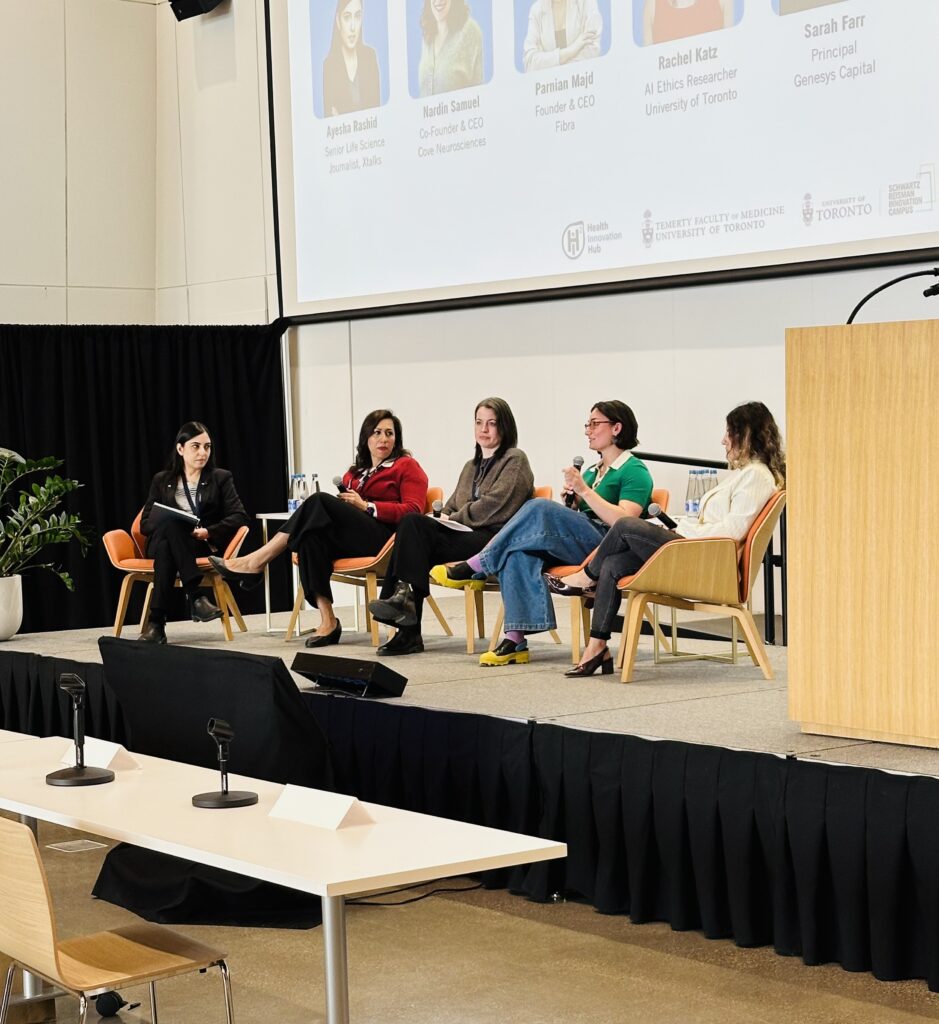
The focus on women’s health innovation reflects efforts to address longstanding gaps in research, care and equity. Women were not routinely included in clinical trials until the passage of the NIH Revitalization Act of 1993, leaving critical gaps in sex-specific data that continue to influence clinical outcomes today.
As a result, disparities persist: women spend roughly 25% more of their lives in poor health or disability compared to men, according to a report from the World Economic Forum (WEF) and McKinsey Health Institute. These gaps are further compounded by socioeconomic and racial inequities, with underserved populations often facing reduced access to care, delayed diagnoses and poorer health outcomes.
Advancing women’s health innovation, therefore, requires not only scientific progress, but also a concerted focus on women’s health-focused research, equitable access and solutions that reflect the diverse needs of women across populations.
The panel discussion included topics from emerging femtech solutions, such as a smart-textile platform designed to passively capture physiological data and address longstanding gaps in women’s health datasets, to the growing role of AI in biomarker discovery and care delivery. Panelists also discussed critical issues around trust, bias and consent, particularly as AI and continuous data collection become more integrated into healthcare.
The conversation underscored that advancing women’s health will require not only technological innovation, but also careful consideration of data equity, representation and ethical design principles.
The FemSTEM pitch competition featured early-stage startups advancing healthcare innovation, with founders presenting solutions across therapeutics, wearables, med tech and data-driven platforms. The competition featured a diverse array of innovations from women-led and women-partnered ventures.
MaRS Impact Health: Innovation at Scale
MaRS Impact Health, held on April 23, 2026, featured global stakeholders across pharma, biotech, healthcare and venture capital. The event showcased cutting-edge research and emphasized collaboration across sectors to accelerate commercialization and adoption.
The summit’s pitch competition showcased high-growth startups tackling some of healthcare’s most pressing challenges through cutting-edge technologies, from AI-enabled diagnostics to novel therapeutic platforms.
Panel discussions included solidifying Canada’s reputation as a launchpad for globally competitive health innovation companies, highlighting the country’s growing strength in translating research, entrepreneurship and cross-sector collaboration into scalable healthcare solutions with international reach.
At the conference, people were all praise for Toronto’s robust life sciences research network that is driving innovations across the life sciences.

The city is home to one of North America’s largest academic health science networks. The Toronto Academic Health Science Network (TAHSN), which includes the University of Toronto and affiliated hospitals such as University Health Network (UHN), SickKids, Unity Health Toronto and Sunnybrook. In addition to 70% of the MaRS Centre dedicated to health and life sciences, alongside specialized wet lab infrastructure from BioLabs for early-stage biotech companies, Toronto offers a strong foundation for translating research into commercial health innovation.
Additionally, the growing presence of major pharmaceutical and biotech companies in the region, including Sanofi, Roche, AstraZeneca and Johnson & Johnson, is a testament to Toronto’s position as one of North America’s leading life sciences and health innovation hubs.
Toronto, Canada: A Rising Global Life Sciences Hub
Recent investments and ecosystem-building efforts are further strengthening Toronto’s position as a global life sciences hub that is gaining momentum across research, commercialization and biomanufacturing. This includes AstraZeneca’s $570 million Canadian expansion, Sanofi’s $294 million investment to expand its Artificial Intelligence Centre of Excellence (AI CoE) in Toronto, OmniaBio’s advanced cell and gene therapy manufacturing capabilities, along with provincial initiatives such as Ontario’s $40 million commitment to strengthen the sector.
At the same time, institutions like UHN, Clinical Trials Ontario (CTO) and MaRS are helping connect scientific discovery, clinical research, entrepreneurship and global capital.
From women’s health innovation to startup scaling and cross-border collaboration, Toronto Health Innovation Week 2026 captured the breadth of innovation unfolding across Canada’s life sciences sector.
As Toronto continues to attract investment, talent and global attention, its role as a leading life sciences hub is powering the next era of innovation to not only be globally competitive, but more inclusive, collaborative and impactful than ever before.















Join or login to leave a comment
JOIN LOGIN