

Explore Spatial Biology, Experimental Design and Spatial Proteomics
 Earn a Certificate of Live Attendance
 AI Webinar Explorer available after event
About this webinar
Spatial biology provides a window into not only what is happening within tissue, but where it is happening. By visualizing and quantifying biomarker expression within intact tissue, researchers can explore cellular organization, interactions and functional states while preserving the spatial context that can be lost with traditional methods. However, navigating the terminology, technologies, experimental considerations and data analysis associated with spatial biology can be challenging. This webinar explores frequently asked questions about spatial biology and spatial proteomics to help researchers better understand these approaches and make informed experimental decisions.
The session will examine what these approaches measure and how they compare with traditional methods, along with key considerations for experimental design, including multiplexing, tissue type, workflow selection and data analysis.
This webinar will also address commonly asked questions about spatial proteomics technologies and their applications, helping researchers evaluate different platforms and determine which workflows best align with their scientific objectives.
Register for this webinar to learn how spatial biology and spatial proteomics can inform experimental design, technology selection and tissue-based research.
Who should attend
- Clinical Development leaders
- Translational Medicine Scientists
- Biomarker Strategy teams
- Clinical Operations professionals
- Precision Medicine and Companion Diagnostic teams
- Medical Directors
- Clinical Laboratory Scientists
- Neuroscience Drug Development teams
- Oncology Translational Research teams
- Pharmaceutical and Biotechnology Program leaders
- CRO Scientific leadership
- Clinical Biomarker Directors
What you will learn
- How spatial biology and spatial proteomics work and what information they can provide
- Key considerations for designing a spatial proteomics experiment
- Factors to consider when evaluating spatial proteomics technologies and workflows
- How spatial proteomics solutions can support different research needs
Featured Speakers
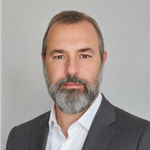
Alessio Colombo, PhD
Alessio Colombo brings a unique combination of academic research experience and industry expertise to his role as Senior Field Applications Scientist at Quanterix, where he supports the adoption of advanced spatial biology solutions across EMEA, with a focus on the Spatial portfolio.
His scientific career began in neuroscience, with a PhD in Pharmacology from the Mario Negri Institute in Milan. He subsequently spent several years at the German Center for Neurodegenerative Diseases (DZNE) in Munich, investigating mechanisms underlying neurodegeneration and Alzheimer’s disease. During this time, he also helped coordinate ex vivo research and neuronal core facilities, gaining extensive experience in experimental workflows, tissue-based assays and advanced imaging technologies.
After transitioning into the life sciences industry, Alessio joined Akoya Biosciences, now Quanterix Spatial, as a Field Applications Scientist, working closely with research groups and institutions across multiple European markets. His expertise spans immunohistochemistry, multiplex immunofluorescence, spatial proteomics and digital image analysis.
Driven by a strong interest in scientific innovation and technology development, Alessio enjoys working at the intersection of research and technology, helping scientists overcome experimental challenges and unlock the full potential of advanced analytical platforms.

Clemens Duerrschmid, PhD
Dr. Clemens Duerrschmid is a biotechnology professional with expertise in imaging, single-cell biology and spatial proteomics. He currently leads the Field Applications Scientist team at Quanterix, where he focuses on technical strategy, customer education and adoption of spatial biology and immunoassay platforms.
With more than a decade of experience spanning academia, biotech and pharma, Clemens has supported scientific discovery through technology and collaboration. Prior to Quanterix, he held leadership and customer-facing roles at Akoya Biosciences, where he worked with key opinion leaders, represented spatial biology at seminars and conference presentations and supported researchers across multiple fields. His earlier research career included developing immunoassays and studying metabolic disease therapeutics as a postdoctoral fellow at Baylor College of Medicine and Case Western Reserve University.
Clemens holds a PhD in Biotechnology from BOKU University in Vienna, Austria. He is committed to helping researchers advance discovery in spatial biology and liquid biomarker research.

Ladan Gheiratmand, PhD
Ladan’s scientific journey spans cell and molecular biology, proteomics, microscopy and assay development, bringing a broad technical perspective to her position as Senior Field Application Scientist at Quanterix. She earned her PhD from the National University of Singapore and continued her research career through several years of postdoctoral work at LTRI in Toronto, where she studied centrosomes and cell-cycle using advanced imaging approaches. She subsequently joined Standard BioTools (formerly Fluidigm) as a Research Scientist, contributing to reagent innovation and assay development for multiplexing.
In 2022, Ladan transitioned to Akoya Biosciences as a Field Application Scientist, where she has partnered with academic and pharmaceutical research teams to deliver training, technical guidance and application support for spatial biology platforms. Today, she draws on her experience across research and industry to help scientists navigate complex workflows, make the most of spatial technologies and achieve robust, reproducible results.

Caleb Green, PhD
Caleb Green is a Field Application Scientist for Quanterix Spatial, supporting customers across Europe in the adoption and application of spatial biology technologies. Caleb completed his PhD at the University of Leicester, where he investigated preclinical and translational models of colorectal cancer and leveraged the Akoya PhenoImager®-HT platform to study spatial biology in both mouse and human tissues.
Following his doctoral research, he worked as a Clinical Trial Research Technician focused on developing spatial biology and blood-based immunoassays for clinical trial endpoints, gaining valuable experience in translational biomarker research. In his current role, Caleb partners with academic, translational and biopharma researchers to implement advanced spatial biology solutions and generate meaningful insights from complex tissue datasets.
Partner for this event

Quanterix
Quanterix is a global leader in ultra-sensitive biomarker detection, enabling breakthroughs in disease research, diagnostics, and drug development. Its proprietary Simoa® technology delivers industry-leading sensitivity, allowing researchers to detect and quantify biomarkers in blood and other fluids at concentrations far below traditional limits. With more than 3,400 peer-reviewed publications, Quanterix has been a trusted partner to the scientific community for nearly two decades. In 2025, Quanterix acquired Akoya Biosciences, The Spatial Biology Company®, adding multiplexed tissue imaging with single-cell resolution to its portfolio and 1,396 installed instruments. Together, the combined company offers a uniquely integrated platform that connects biology across blood and tissue—advancing precision medicine from discovery to diagnostics. Learn more at www.quanterix.com.