
For those with a lysosomal storage disorder, what starts at the cellular level quickly becomes part of everyday life, including movement, communication, development, hospital visits and the constant logistics of care.
These rare inherited diseases are often caused by enzyme deficiencies that allow materials to build up inside cells. The damage can be especially serious in neurons, affecting learning, development and movement, and some lysosomal storage disorders can be fatal.
Polaryx Therapeutics is preparing to study PLX-200, its lead oral drug candidate, in children with four rare lysosomal storage disorders, namely, CLN2 disease, CLN3 disease, Krabbe disease and Sandhoff disease. The FDA has granted PLX-200 Fast Track designation for all four conditions, a step that could support closer agency interaction as the company prepares for the SOTERIA Phase II trial.
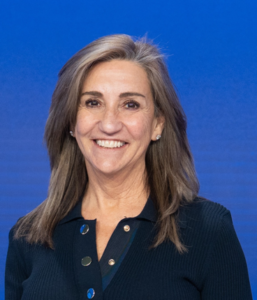
Chief Medical Officer
Polaryx Therapeutics

Chief Medical Officer
Polaryx Therapeutics
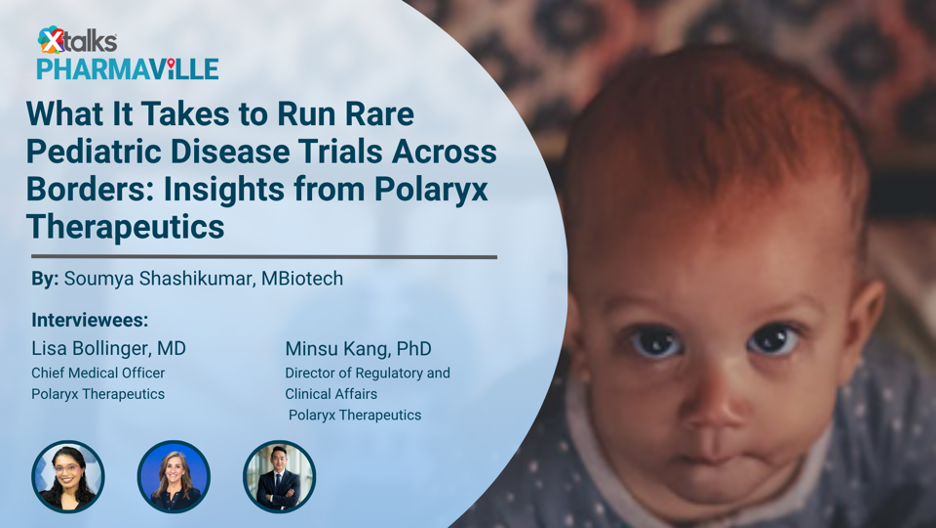
In a conversation with Xtalks, two experts from Polaryx Therapeutics, Lisa Bollinger, MD, Chief Medical Officer and Minsu Kang, PhD, Director of Regulatory and Clinical Affairs, opened up about what it takes to encourage rare disease programs into global clinical trials.
Dr. Bollinger grounded the discussion in what treatment means for children and caregivers. Dr. Kang brought the operational lens of someone building rare disease trials across regions, where diagnosis, regulatory expectations and site readiness can determine whether a study is feasible.
In this blog, we share their perspective on why clinical trials need to find the right patients, measure meaningful outcomes and keep families in view at every step.
Building Treatment Options Around Daily Life
Polaryx Therapeutics is a clinical-stage biotech company focused on pediatric rare diseases, specifically lysosomal storage disorders. Its pipeline includes three oral medications and one gene therapy, with PLX-200 expected to move into clinical testing through the SOTERIA trial. Polaryx Therapeutics is identifying candidates based on animal models and developing patient-friendly formulations.
For Dr. Bollinger, the company’s work is tied to both how a therapy works, and how it would fit into a child’s life.
“So not only are we trying to treat rare and grievous diseases in pediatric patients, but we’re trying to do it using formulations that are easier to administer,” she said.
Treatment options remain limited for many lysosomal storage disorders. Lysosomal disorders are also extremely rare, affecting around 1 in 7,700 births. Dr. Bollinger noted that there are more than 70 lysosomal storage diseases.
While approved therapies exist, they place a heavy care burden on patients. BioMarin’s Brineura (cerliponase alfa) is an approved enzyme replacement therapy for CLN2 disease. Children receiving Brineura need a port placed in the head and hospital-based infusions into the brain every other week.
“You can imagine if you have a child who has mobility issues, having to pack them up every other week and take them into the hospital,” she said.
Polaryx’s small molecule work is focused on formulations that are palatable, flexible in dosing and feasible for caregivers to administer reliably at home. Dr. Bollinger emphasized that the goal is not to replace existing safe and effective options, but to give clinicians and families more ways to approach care.
Choosing Trial Regions Means Looking Beyond Regulation
Trial geography is an important factor in rare disease drug development. A region may have strong regulatory experience, but sponsors also need to understand whether patients are being diagnosed, treated and connected to specialists early enough to support enrollment.
Dr. Kang said the US has significant experience with gene therapy, while the EU is also advancing its approach to reviewing both small molecules and gene therapies for rare diseases.
“The tricky part is the clinical care, whereas their standard of care can also vary from country to country or region to region,” he said.
Some countries may have stronger systems for screening or diagnosing genetic disorders early. Others may have different standards of care once a patient is identified. These differences affect how patients are found, how they are treated and whether they can realistically participate in a study.
For rare disease sponsors, that makes global trial planning essential but complicated.
“These trials do have to be global, otherwise we wouldn’t be able to enroll enough patients because the patient populations are small enough,” said Dr. Bollinger.
Sponsors may need to work across different regulatory expectations, clinical standards and site capabilities while still preserving a study design that can generate useful data.
Centers of Excellence Connect Patients, Clinicians and Trial Design
In rare disease, centers of excellence and disease-specific networks often sit at the center of care. They bring together clinicians who regularly see these patients, families looking for options and sponsors trying to design studies that are both rigorous and realistic.
“You essentially can’t do drug development without collaborating with the Center of Excellence because that’s where the patients are,” said Dr. Kang.
Centers of excellence can help sponsors understand which endpoints are significant, which clinical scales are appropriate and what treatments should or should not be allowed during a trial.
But not every center of excellence is equipped to run an industry-sponsored clinical study. Even then, Dr. Kang noted that these centers can still refer patients to sites that have the capacity to conduct the trial.
Dr. Bollinger connected that point to Polaryx’s recent participation in the National Tay-Sachs & Allied Diseases Association Annual Family Conference. The meeting gave the company an opportunity to discuss SOTERIA with families, patient advocacy groups, clinicians and rare disease experts.
“If we could help their kids walk a little better or maintain their communicative abilities, they’re able to tell us what’s really important to them as patients and to them as clinicians that see these kids every day,” she said.
According to Dr. Bollinger, Polaryx is looking at two potential new indications to add to SOTERIA, pending additional animal data. For the company, input from families and specialists helps guide the science behind treatment.
In March 2026, both Dr. Kang and Dr. Bollinger were among the Polaryx leaders attending the Krabbe Translational Research Network meeting, which focused on Krabbe disease biology and models, newborn screening and therapeutic development.
How Drug Modality Shapes Early- and Later-Stage Trials
Clinical trial planning changes depending on the type of therapy being studied.
For small molecules, Dr. Kang explained, sponsors may follow a more conventional Phase I path in healthy adult volunteers to assess safety. With modeling, that data can then help estimate appropriate dosing for pediatric or other target patient populations.
Gene therapy follows a different path because it is not usually tested first in healthy volunteers.
“Typically, gene therapy is done in patient populations, and so oftentimes it becomes a Phase Ib situation where it’s a patient population, and you end up also looking at efficacy in addition to safety,” said Dr. Kang.
Later-stage planning depends on regulatory requirements, clinical practice and disease biology. For inherited rare diseases, epidemiology may point sponsors toward regions where the condition is more common.
Dr. Bollinger then pivoted to the question of enrollment. Rare disease developers have to focus on the places where eligible patients are most likely to be found.
“If there’s a particular region that has more patients with any of the diseases that we’re studying, we would obviously need to focus there,” she said.
Trial location is not just about regulatory ease, but also about where the patients actually are.
Regulatory Flexibility and Cross-Border Access
In the US and Europe, mature regulatory systems can offer programs, incentives and access to regulators that are especially important for small companies working with small patient populations.
“Having a supportive regulatory environment is very helpful because under a lot of the orphan drug frameworks in Europe and the US, you have increased access to regulators,” said Dr. Bollinger.
Dr. Kang added that orphan drug designations can support development through financial incentives and exclusivity may help companies and investors. These frameworks, however, can also signal that regulators understand the limits of ultra-rare disease trials. A study with 10 patients cannot be judged the same way as a large trial in a common disease, even though scientific integrity still matters.
At the FDA, offices with expertise in orphan drugs, pediatric development and rare disease can help create a more informed review environment. Patient listening sessions may also help agencies understand which endpoints families see as meaningful, making trial assessments more relevant and less burdensome.
Still, global development can become difficult when different regulators request different endpoints or study requirements. A sponsor may need to align expectations across the US, EU, Japan and other regions without splitting a small patient population into separate studies.
“You have to have alignment across international regulators and that’s been a fairly big challenge, but I think it’s getting better,” said Dr. Bollinger.
Dr. Kang noted that even in the EU, where the European Union Clinical Trial Regulation (EUCTR) was designed to centralize clinical trial submissions, sponsors may still need to respond to country-level ethics and regulatory expectations.
Both speakers pointed to stronger collaboration among industry, regulators, patient groups and clinical networks as important for rare disease drug development.
However, as Dr. Kang highlighted, there is also the issue of cross-border enrollment.
If a patient cannot participate in a trial in their home country, mechanisms such as visa support, travel assistance or other trial-related support could help them access a study elsewhere. For families in ultra-rare disease, those logistics can shape whether participation is possible.
For Polaryx, these operational questions influence whether a study can enroll, whether endpoints reflect patient priorities and whether investigational therapies can move through development in a way that fits the rare disease world.
If you want your company to be featured on Xtalks.com, please email [email protected].















Join or login to leave a comment
JOIN LOGIN