
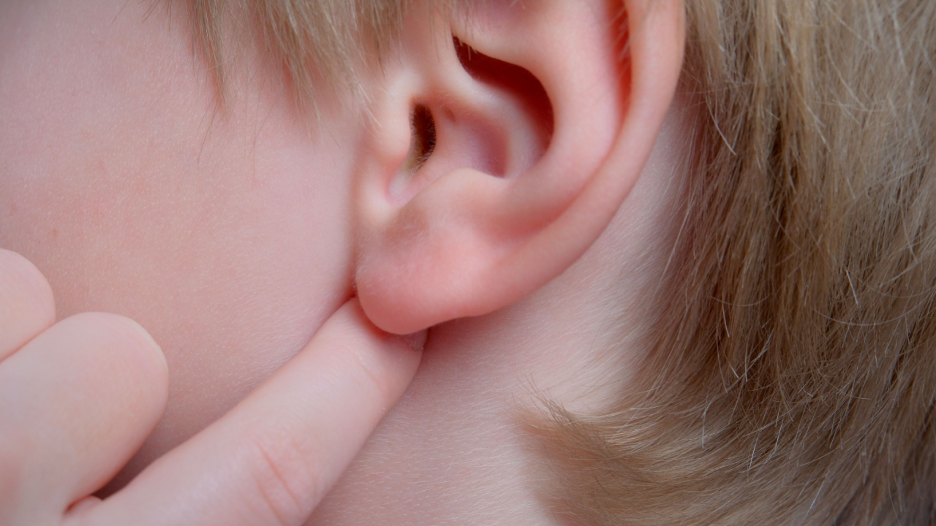
Dr. Peter Santa Maria discusses how Earflo’s technology may give some children with middle ear pressure another step before ear tube surgery is considered.
Middle ear fluid is one of the most frequent reasons children are referred to specialists, yet the terminology used to describe it can be a significant source of confusion for families. Whether it is called negative middle ear pressure, glue ear or a lingering chronic ear infection, these labels generally refer to the same underlying issue of fluid and pressure changes.
Clinically known as otitis media with effusion (OME), the condition essentially means that fluid has become trapped behind the eardrum. This often happens after the acute phase of an infection has passed or when the eustachian tube fails to equalize pressure properly.
While the names vary, the result is a persistent buildup that can affect a child’s hearing and development.
Ear tube surgery is one of the most common procedures in pediatric care. US estimates have cited about 667,000 tympanostomy tube procedures each year among US children under 15. Mayo Clinic has more recently estimated that about 1 million US children each year have pressure equalizing tubes placed.
In an exclusive interview with Xtalks, ear surgeon Dr. Peter Santa Maria, MD, PhD, Professor and Division Chief of Otology and Neurotology at the University of Pittsburgh, discussed the basics of OME to the limits of watchful waiting, antibiotic use and ear tube surgery. The interview also explored why Dr. Santa Maria sees Earflo’s FDA-cleared at-home technology for negative middle ear pressure as a potential option in that care pathway.
Earflo’s “Sippy Cup” Technology and the Search for a Step Before Surgery
Being one of the leading causes of children requiring ear surgery, middle ear fluid can be difficult for families and clinicians to manage, especially when children are asked to wait months to see whether the condition resolves on its own.
This is the gap Earflo is trying to address.
Earflo is a medtech developing non-invasive pediatric ear care for negative middle ear pressure. In April 2026, the company announced the US availability of its FDA-cleared device for children as young as two.
The child-friendly cup system, which combines with a companion app, delivers a controlled puff of air through the nose during swallowing to help open the eustachian tube, equalize pressure and reduce fluid associated with OME.
Get industry leading pharma and biotech news, events and expert insights delivered to your inbox.

The Clinical Evidence Behind Earflo’s Device
The FDA cleared Earflo’s device via the FDA 510(k) pathway. “It’s a way of saying that the device has a mechanism that’s already recognized by the FDA,” said Dr. Santa Maria.
The company had to complete testing to show equivalence, durability and safety in children. Clinical studies were not required for FDA clearance, he said, but the team conducted them to give pediatricians, ear, nose and throat (ENT) specialists and parents more confidence in how the device performs.
The studies enrolled children who had already failed watchful waiting. “So, typically when you present to the doctor with ear fluid, a lot of these will get better, some of them won’t. And so the first recommendation is, well, let’s just see if it gets better, and kids are told to wait months and months for that,” explained Dr. Santa Maria. But after fluid has persisted for about three months, the likelihood it will still be present at 12 months is about 70%.
That is when guidelines often shift toward discussing ear tube surgery.
In the first study, children were treated for two weeks. In the second, they were treated for two weeks and then followed through a four-week washout period to see whether the problem returned.
“In both groups, about 90% of kids avoided ear tube surgery after use.”
He added that hearing outcomes in the studies were equivalent to having ear tube surgery. That finding helped support the idea that some children could try an at-home approach before anesthesia and surgery.
Why Earflo’s Technology Turns Treatment Into a Game
Adherence is a major hurdle in pediatric at-home care. Earflo developed its technology with that challenge in mind.
“Let’s not try and get them to use a medical device. Let’s try and make them play a game,” said Dr. Santa Maria.
The device uses a game-like interface to guide children through treatment. A rocket launches when the child creates the right seal and completes the swallow correctly. If the child does not perform the action properly, the rocket misses its target.
That immediate feedback helps children learn how to use the device. It also allows parents to track treatment and report back to a clinician if needed.
“In our clinical studies, the kids were actually upset when we took the game away.”
In the study, compliance was 99%, defined as using the device five times a day, every day, for two weeks. Dr. Santa Maria said the game helped children focus less on the medical action and more on completing the task in front of them.
Timing Treatment With the Body’s Swallow Reflex
The device is also built around a physiological insight. Methods that try to open the eustachian tube with air are not new, Dr. Santa Maria explained, but many approaches attempt to open the tube while it is at rest.
Swallowing changes that. When a person swallows, muscles pull on the eustachian tube and help it open naturally.
“The key mechanism within our device is timing the eustachian tube opening a puff of air with the swallow.”
By timing the air puff to the swallow, the device applies pressure when the eustachian tube is already trying to open. That allows the device to use less pressure, he said, and can make the process more comfortable for children.
Patients without fluid may simply feel like they are drinking from a cup. Children with negative pressure or fluid may feel their ears open and notice that sounds become louder.
“So kids, if you’ve got no fluid in your ear, you just feel like you’re drinking from a cup.”
That usability is central to the device’s at-home design. The mechanism needs to work, but children also need to tolerate it and repeat it consistently.
Filling the Gap Between Waiting, Antibiotics and Surgery
Watchful waiting is common because many cases of middle ear fluid improve without intervention. The challenge is that clinicians cannot easily predict which child will improve quickly and which child may continue to have symptoms for months.
Children may be brought to a pediatrician because they are struggling to hear, having behavioral issues, facing difficulties at school or failing a hearing screening. When fluid persists, speech development and learning can also become part of the clinical conversation.
By that point, parents often want an active step.
The lack of an early option can also influence prescribing patterns.
“Pediatricians prescribe antibiotics for this condition 40% of the time, even though the guidelines say they do nothing for it.”
Dr. Santa Maria said pediatric ENT surgeons are generally careful about deciding when a child should have surgery. The harder question is what to offer when fluid continues, hearing concerns remain and families are weighing continued waiting against ear tube surgery.
“The issue is that there’s no other choice.”
Any safe at-home option that can reduce the need for surgery could have clinical and family-level value.
Additional studies could help define the device’s role more clearly. Dr. Santa Maria said protocols are under review at the University of Pittsburgh, including a randomized controlled trial comparing Earflo’s device with a sham device. Another planned study will evaluate the device in adults, who may experience eustachian tube dysfunction as pressure changes, difficulty equalizing on planes or fluctuating hearing.
The team is also looking at designs for younger children, including those under age two, and possible use in children with recurrent acute otitis media. These children experience repeated infections that improve and then return, and some eventually become candidates for ear tubes.
Near the end of the interview, he recalled one child who used an early prototype in-clinic after struggling for a couple of months.
“Immediately when she used it, you see her eyes just pop open and just go, ‘Whoa.’”
The child was able to repeat words from a video at the lowest volume setting, a moment that left her parents visibly moved.
“One of the most rewarding things is seeing an immediate response in kids,” mused Dr. Santa Maria. It is also part of why the team is continuing to study where the device could fit across age groups and middle ear conditions.
If you want your company to be featured on Xtalks.com, please email [email protected].
Download: Top 15 Medtech Companies to Work For















Join or login to leave a comment
JOIN LOGIN