
Cancer immunotherapy has long centered on T cells. But T cells don’t act alone. Inside solid tumors and the bone marrow, macrophages help shape whether immune activity is supported or suppressed. Their flexibility cuts both ways: cancer can exploit it, pushing macrophages toward states that help tumors grow.
The sheer abundance of macrophages inside solid tumors is what first caught the attention of Maija Hollmén, Chief Scientific Officer at Faron Pharmaceuticals. Her curiosity to decode how cancer hijacks these cells has led to more than 15 years of research into macrophage biology.
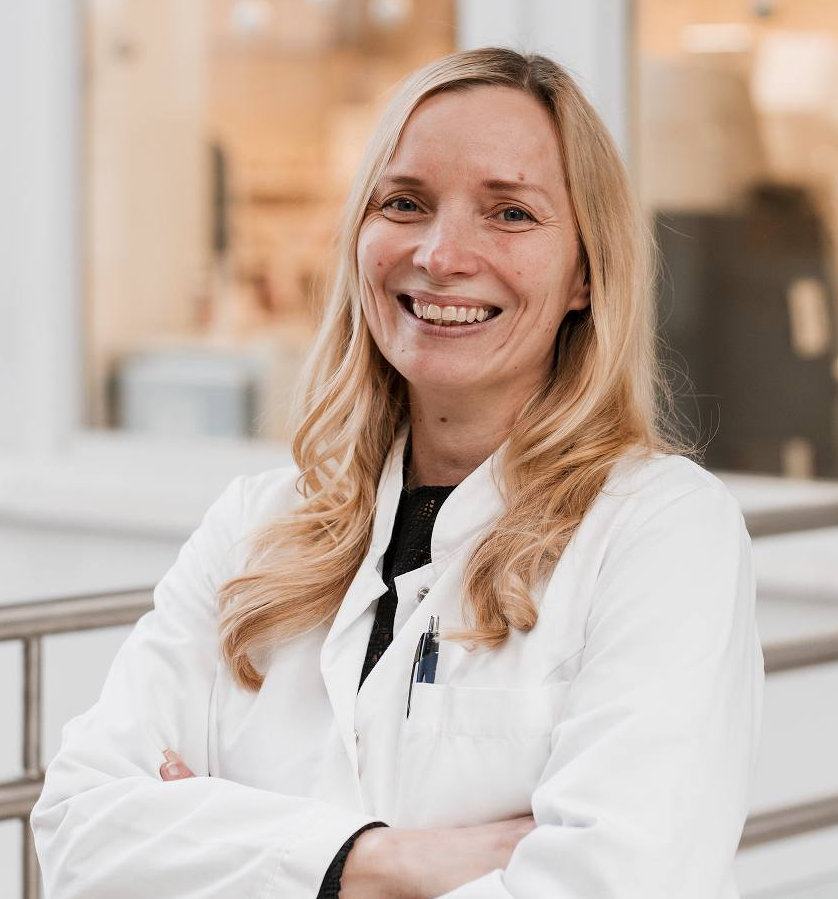
Chief Scientific Officer
Faron Pharmaceuticals
In this Xtalks Clinical Edge conversation, Maija discussed why she sees macrophages as the “generals” of the antitumor immune response, how researchers are trying to reprogram them and what the bone marrow can reveal about treatment resistance. She also discussed separating causal targets from bystander genes using functional testing.
Why Macrophages Are Important in the Tumor Microenvironment
Maija forayed into macrophage research during her PhD work in cancer biology. This was when she started looking more closely at the different cell populations found inside tumors.
“What fascinated me the most was the abundance of macrophages in those tumors. So a tumor can consist of over half the mass of macrophages,” she said. “And to me that was fascinating and I wanted to really understand what they were doing there.”
Her research moved into cancer cell-macrophage crosstalk, including how cancer cells can influence macrophages to support tumor growth. More than 15 years later, the biology has held her attention because researchers still have much to learn about these cells.

Get industry leading pharma and biotech news, events and expert insights delivered to your inbox.
Macrophages are important upstream organizers of the immune response, suggested Maija. “I’m going to be a bit provocative here because I’m kind of emphasizing that of course T cells are needed for the robust antitumor response,” she said. “But to me, macrophages are the generals of anti-tumor response. So they are actually telling T cells what to do.”
Depending on their state, macrophages can support T-cell activation or contribute to an immunosuppressive environment that limits T-cell activity. They can also release growth and angiogenic factors that support tumor growth and blood vessel formation. They also play a role in epithelial-to-mesenchymal transition (EMT), a biological process that can help cancer cells spread to other organs.
— Maija Hollmén, Chief Scientific Officer, Faron Pharmaceuticals
Harnessing Macrophage Plasticity Through Reprogramming
Macrophages are highly plastic in nature. This means signals from the tissue around them can shift their behavior toward functions involved in wound healing, inflammation, infection control and other biological processes.
And cancer can exploit this flexibility. Cancer can “promote the polarization of macrophages towards these wound healing macrophages or these immunosuppressive populations that then can support tumor growth,” explained Maija.
Macrophage reprogramming aims to shift these cells toward pro-inflammatory states that can support T-cell activation. As Maija put it, “what macrophage reprogramming means is that we want to utilize their plasticity so that we can convert them back to these pro-inflammatory, classically activated macrophages that are found during pro-inflammatory events and such.”
Researchers can approach this through different biological pathways, including cytokines and scavenger receptors.
What the Bone Marrow Can Reveal About Resistance
In myelodysplastic syndromes (MDS), the bone marrow creates a very different environment from the solid tumors Maija previously studied. MDS is a group of cancers in which abnormal blood-forming cells interfere with healthy blood cell production.
Cancer cells there interact with adipocytes, endothelial cells, macrophages, mesenchymal cells and other components of the marrow. These interactions can alter cytokine signaling, metabolism and immune activity.
Signals associated with inflammation can also behave differently in this setting. For example, blast cells in the bone marrow can use tumor necrosis factor alpha (TNF-alpha) to support their growth. Understanding resistance requires researchers to identify which local signals and cell populations are supporting disease within the marrow itself.
Maija added that the immune-cell composition of the bone marrow “can be very different from what we see in the circulation.”
In clinical studies, she and her colleagues examined bone marrow before and after treatment. Features such as the marrow’s ability to produce healthy immune cells may help researchers understand the biological conditions associated with response to a specific therapy. Some of those components may not appear clearly in circulating blood. “That’s why we think that bone marrow analysis is much more important than the peripheral circulating cells,” she said.
The components researchers need to look for will depend on the therapy being studied.
Which Macrophages Drive Tumor Growth and Treatment Resistance?
Single-cell RNA analysis can identify multiple macrophage subpopulations within the same tumor. Maija gave the example of a tumor containing 10 different macrophage populations. Finding those populations, however, does not establish which ones are actively helping the tumor grow or contributing to resistance.
Similarly, a highly expressed gene may not be responsible for the tumor-supporting behavior of that macrophage population. “It might be that the upregulation of some gene is just a phenomenon of what’s happening there, but it’s not the driving force of that macrophage subpopulation that supports tumor growth,” Maija explained.
Researchers therefore need something that tests what happens when a candidate gene or macrophage population is removed. Maija shared, “The only way we can actually address this is to make models that we can, functional models that we actually deplete this gene or deplete this subpopulation and see how it affects tumor growth.”
Maija also noted that many preclinical studies rely on mice, and findings in mouse models do not automatically translate to humans. It is a struggle to determine which macrophage populations are functionally driving resistance.
— Maija Hollmén, Chief Scientific Officer, Faron Pharmaceuticals
From a Biological Idea to a Clinical Trial
Once researchers identify a therapeutic hypothesis, moving it into a clinical study requires scientific, regulatory and operational preparation.
The first step is establishing a strong preclinical foundation, with researchers needing to “generate robust preclinical evidence showing that the therapy has strong biological rationale, demonstrates activity against the disease you want to treat and has an acceptable safety profile,” according to Maija.
In the US, this includes an Investigational New Drug (IND) application, which allows regulators and ethics committees to assess whether a proposed study is scientifically justified and appropriate for patients.
At the same time, sponsors must finalize the protocol, activate clinical sites, establish manufacturing and supply chains, prepare safety monitoring and data-management systems and secure the operational resources needed to run the study. Maija summed up the process: “So this is much work behind the scenes that needs to be there before the trial can start.”
Only after those scientific and operational requirements are in place can a study open for enrollment.
A Tumor Microenvironment That Changes Over Time
In cancer immunotherapy, the tumor microenvironment is dynamic. Its composition can differ between patients and can also change within the same patient.
Maija explained that “your drug might not work the same way in a treatment-naive setting compared to several lines of treatment.” Each therapy can alter the tumor microenvironment encountered by the treatment that follows.
These shifts can occur over relatively short periods. “It might be that the same patient that you treated one month ago, the tumor microenvironment in that patient is not the same as one month later,” Maija said.
Due to this variability, researchers may need increasingly patient-specific ways to characterize the tumor microenvironment, including how it changes with cancer type, immune activity and previous treatment.













Join or login to leave a comment
JOIN LOGIN